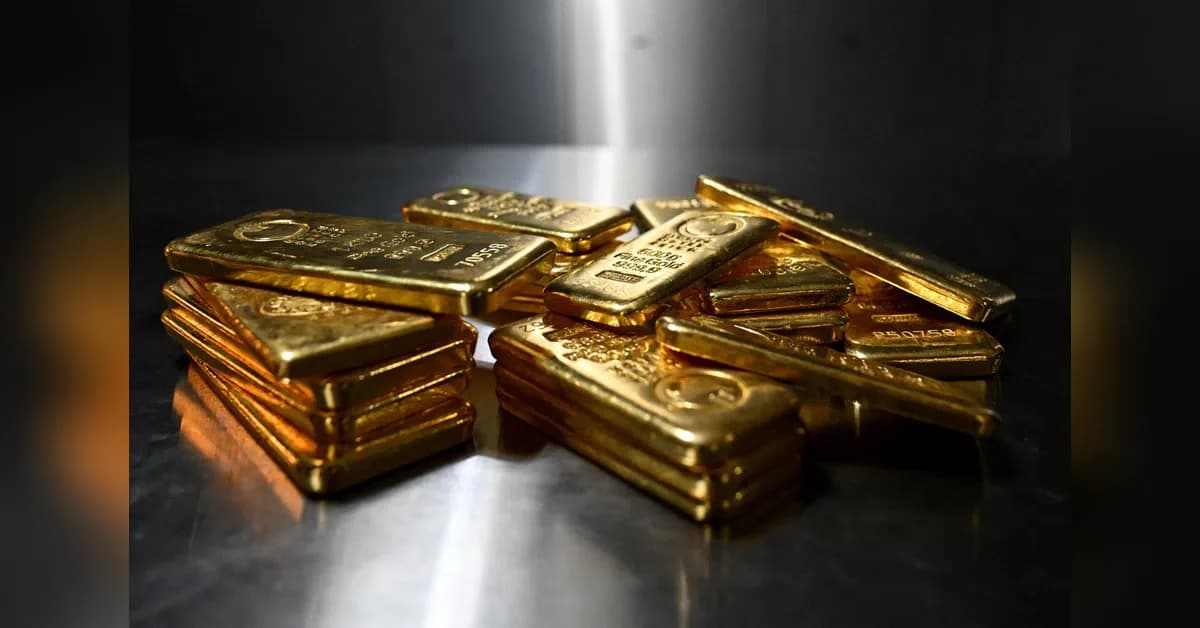
Gold prices have continued their downward trajectory, with 24-carat gold in Dubai falling below Dh500 per gram at Thursday's market opening, losing more than Dh55 per gram from previous levels. According to latest reports, this decline has pushed 22-carat gold down by Dh59 per gram, meaning a 20-gram purchase of 22-carat jewellery would now cost around Dh1,180 less compared to May 12 prices. The UAE has seen local rates move lower almost continuously in June, with the 24-carat rate standing at Dh539.75 on June 1, rising briefly to Dh542.50 on June 2, and then falling to Dh503.50 by June 10. The sharper move came after June 4, when 24-carat gold was still priced at Dh538.50. In international markets, gold prices fell to $4,330.11, down ₹145.34 or 3.25%, while silver dropped to $67.88, down ₹6.02 or 8.15%. The World Gold Council also reported that the LBMA PM gold price reached a record high of US$5,405 per ounce in January before correcting later in the quarter.
The continued decline is being driven by stronger-than-expected US jobs data and renewed inflation concerns that have pushed bullion below its 200-day moving average for the first time since October 2023. As per Saxo Bank's Ole Hansen, this level is closely tracked by institutional investors, momentum traders and systematic funds because it is often used to judge whether a longer-term price trend remains intact. A sustained break below it can trigger further selling and discourage fresh buying until prices recover. The current market is being driven by an energy-led inflation scare, with investors focusing on rising oil prices, higher inflation expectations, stronger bond yields and a firmer dollar. Gold often performs well during financial stress when investors expect central banks to cut rates, but the current environment is different because higher oil prices are feeding inflation fears, making central banks more likely to keep rates elevated. The World Gold Council identifies four key risks affecting gold prices: dollar strength making gold more expensive for non-US buyers, liquidity constraints leading to forced selling, private-sector demand volatility, and rapid position adjustments by ETF investors and leveraged funds.
In Delhi, retail 24-karat gold prices hover around ₹72,600 per 10 grams, driven by high institutional volume and a concentration of high-net-worth retail buyers. Meanwhile, Mumbai's Zaveri Bazar reported a slight spot discount of ₹150 per 10 grams due to high volumes of scrap gold recycling, which temporarily improved local liquid supplies. Across southern hubs like Bengaluru and Chennai, physical delivery requests remain steady despite the elevated price environment. Southern markets continue to lead overall volumes for physical gold bars, as traditional investment habits favor physical assets over electronic exchange-traded funds (ETFs). Traders in these cities anticipate that prices will remain in this consolidated range until clearer signals emerge from upcoming macroeconomic policy data releases.
Global gold demand has undergone a dramatic transformation in Q1 2026, with jewellery demand falling 23% year-over-year to 300 tonnes while bar-and-coin investment demand surged 42% to 474 tonnes. According to recent reports, this marks a fundamental shift where investment demand now exceeds fabrication for the first time in modern history. The World Gold Council's Q1 2026 data showed total gold demand, including over-the-counter activity, reached 1,231 tonnes. Gold-backed ETFs recorded inflows of 62 tonnes, far below the 230 tonnes recorded in Q1 2025, while jeweller demand volumes fell 23% year on year as high prices weighed on consumption. This decline was widespread across major markets, with China down 32%, India down 19%, and the Middle East down 23%, while central banks added another 244 tonnes and gold ETFs took in 62 tonnes more. Total demand reached a record US$193 billion in value, fundamentally altering the traditional relationship between jewellery and gold pricing.
The sharp price decline is expected to exert significant pressure on jewellery company margins in the June quarter. As reported by The Hindu BusinessLine, margins of leading jewellery companies have already come under pressure in Q4, and retailers carrying inventory bought at higher prices could potentially face mark-to-market losses. Jewellery retailers generate profits from two avenues - making charges and mark-to-market gain on jewellery inventory, with prices declining from their highs potentially creating inventory-related losses that could affect margins during the quarter. The traditional gold-to-oil ratio that jewellers relied on for decades has been shattered, with the ratio now stretching past 75 barrels before recent volatility brought it back toward 52. The World Gold Council notes that jewellery demand declined in response to elevated prices, highlighting how price sensitivity has become a critical factor for retailers.
Industry experts are suggesting fundamental strategic shifts as jewellers lose control of their raw material pricing. According to recent analysis, the traditional approach of cutting karat to hide gold prices actually trains customers to shop by the gram, a contest jewellers cannot win against bullion dealers. The durable position involves letting metal be honest pass-through while moving all margin conversation onto craftsmanship, design, and the story around the sale. While gold imports surged 24% to $72 billion in FY26, prompting Prime Minister Narendra Modi to appeal to consumers to reduce gold purchases, Canadian jewellery sales actually rose 10.5% year-over-year in Q1 2026, demonstrating that some markets are bucking the global retreat. The question now is whether jewellers can treat ₹6,000 gold as the permanent baseline and reposition high-gold pieces as portable store of value executed with design no bar or coin can carry. The World Gold Council emphasizes that central bank activity represents only one component of the broader market context, with more significant signals arising from interactions among official-sector demand, ETF flows, real yields, the US dollar, and price momentum.