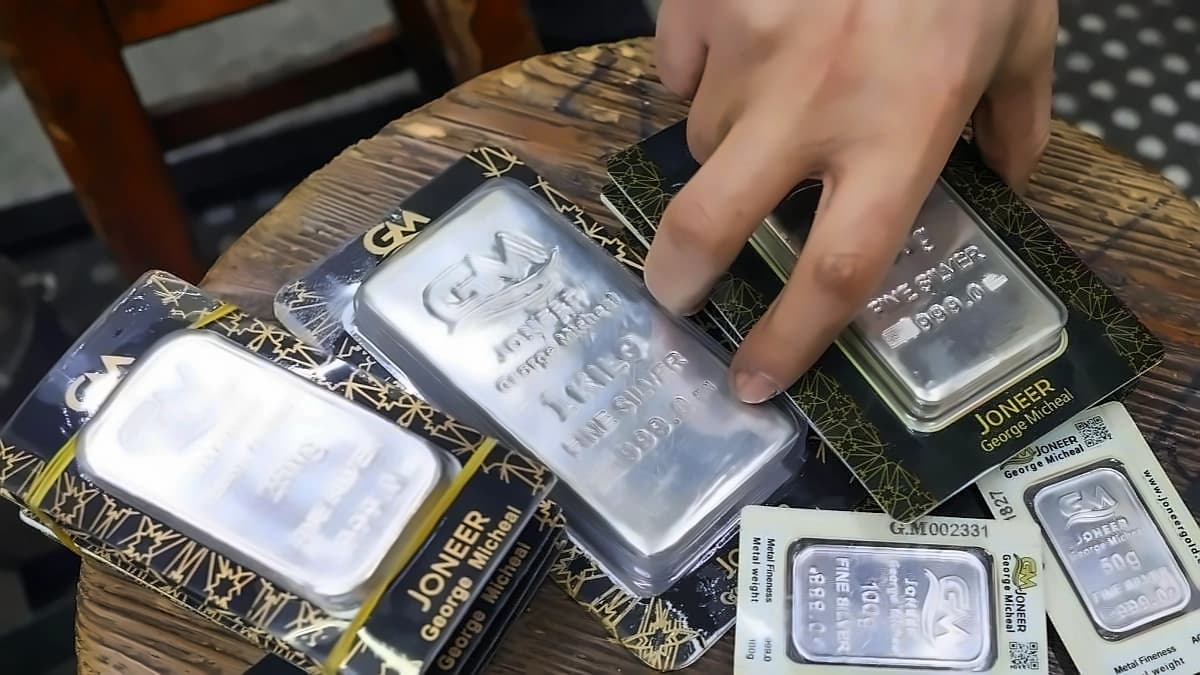
Gold and silver prices experienced significant declines on Wednesday, with MCX gold futures for August contract falling ₹1,701 or 1.19% to ₹1.40 lakh per 10 grams and silver futures for September contract declining ₹5,380 or 2.35% to ₹2.23 lakh per kilogram. According to latest market data, spot gold extended losses for a third consecutive session, slipping below the $4,000-an-ounce mark to its lowest level since November, as per NDTV Profit. The precious metals market continues to face pressure from a stronger US dollar and expectations of higher interest rates, with investors reassessing the outlook for interest rates by the US Federal Reserve amid ongoing volatility in inflation and oil prices. Fed Bank of Cleveland President Beth Hammack said interest rates may need to rise further as inflation remains above the central bank's target, reinforcing market expectations of a possible interest rate hike later this year. Kotak Securities expects MCX Gold August futures to find immediate support around ₹1.37 lakh, followed by ₹1,40,039 and ₹1,40,713, while international spot gold has support at $3,846.3 per ounce, followed by $3,923.5 and $3,947.4. In the latest session, silver ended 0.7% higher at ₹2,30,100/kg while gold closed marginally lower at ₹1.44 lakh/10 grams.
The scale of the decline has been staggering, with silver plunging 50%, or ₹2.25 lakh, from its January peak of ₹4.54 lakh per kilogram, while gold has fallen ₹60,000 (30%) from its record high of ₹2.04 lakh per 10 grams, both touched in January. As per The Economic Times, silver rallied 170% in 2025 and surged to a record high of ₹4.54 lakh per kilogram in January, while gold climbed to an all-time high of ₹2.04 lakh per 10 grams during the same period. The reversal came despite expectations that tensions escalated in West Asia, with the US, Israel and Iran exchanging missiles, which historically drives investors towards safe-haven assets. However, the opposite happened this time, with both metals witnessing a steep correction that left many investors who entered near the peak staring at significant losses.
S. Naren, Executive Director and CIO of ICICI Prudential AMC, which managed funds worth $3 billion as of May 31, 2026, has issued a stark warning against precious metal investments. According to CNBC TV18, Naren said investors who rushed into precious metal ETFs earlier this year ignored asset allocation principles and have since faced losses. He emphasized that gold remains useful for portfolio diversification, but prefers exposure through multi-asset funds, while warning that a potential cut in the 15% customs duty could weigh on returns from standalone gold and silver investments. This expert caution comes as the precious metals market continues to face pressure from multiple factors including a stronger US dollar, expectations of higher interest rates, and ongoing volatility in inflation and oil prices.
Gold prices in India declined to ₹1,42,950 per 10 grams while silver rebounded to ₹2,28,770 per kilogram amid subdued demand in the domestic market. In the retail market, 24-karat gold rates across major cities ranged from ₹1,40,650 to ₹1,42,950 per 10 grams, with 22-karat gold rates between ₹1,28,929 and ₹1,29,525 per 10 grams. Silver 999 Fine rates varied from ₹219,810 to ₹220,830 per kilogram across different cities. In Mumbai, 24-carat gold is retailing at approximately ₹1,42,700 per 10 grams, while Kolkata follows at ₹1,42,510 and Delhi stands at ₹1,42,450. Chennai leads the southern markets with a peak rate of ₹1,43,110, followed by Hyderabad at ₹1,42,920 and Bengaluru at ₹1,42,810. Silver rates show Mumbai at ₹2,28,350 per kg, Delhi at ₹2,27,960 per kg, Chennai at ₹2,29,020 per kg, Hyderabad at ₹2,28,720 per kg, and Bengaluru at ₹2,28,530 per kg.

Gold ended Q2 of calendar year 2026 down nearly 14%, its worst quarterly performance since 2008 as expectations of higher US interest rates, easing US-Iran tensions, a stronger US dollar, and resilient US economic data reduced safe-haven demand. After touching a record high above $5,600/oz in January, spot gold has corrected nearly 29%, with elevated Treasury yields continuing to weigh on the non-yielding metal. The weakness has extended into the new quarter, with gold falling for a fifth consecutive week and slipping below $3,980/oz, its lowest level since November. Soaring crude prices have revived inflation concerns, prompting traders to factor in at least one US Federal Reserve rate hike this year, with markets pricing in nearly a 67% chance of a rate hike by September according to the CME FedWatch tool. Rising interest rates reduce gold's appeal because the metal does not generate any yield, while a stronger dollar continues to pressure prices. Experts maintain that the next rally is unlikely to be driven solely by geopolitics, instead watching for Fed policy pivot, weakening US dollar, falling bond yields, slowing global economic growth or renewed central bank gold buying.