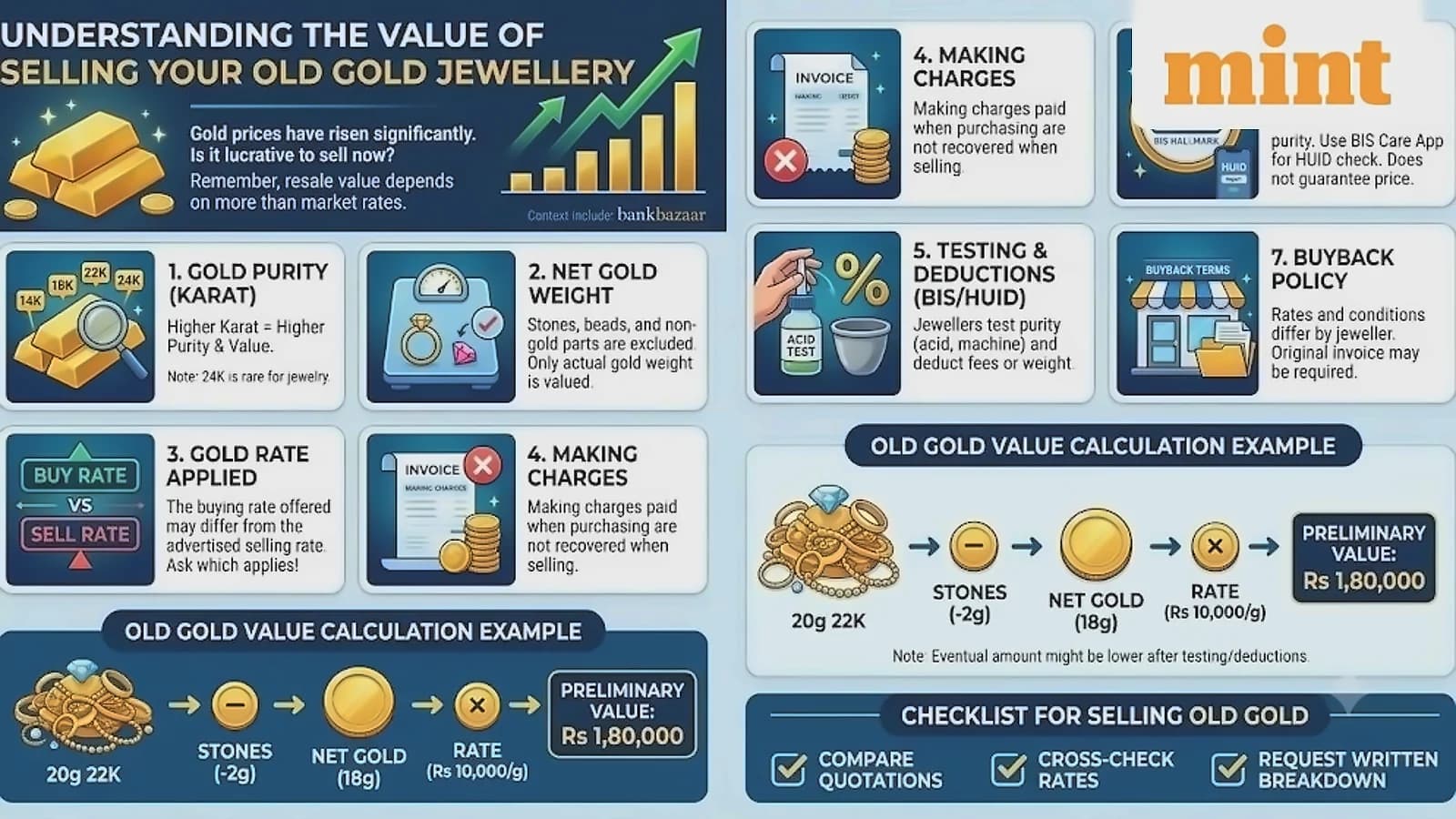
Gold hallmark numbers are tiny stamps that reveal the most important detail about jewellery - its gold purity. According to reports from [source], these numbers work as an international language for gold content, used across countries to standardise value and quality. Each number represents how many parts out of 1,000 are pure gold, with higher numbers indicating more gold content and lower numbers meaning more mixed metals.
The most common hallmark numbers represent specific gold purity levels with distinct applications. 375 represents 9 carat (37.5% gold) for everyday jewellery and lower-cost pieces, while 585 stands for 14 carat (58.5% gold) commonly used in the US and parts of Europe. 750 indicates 18 carat (75% gold) for fine jewellery, engagement rings, and premium designs, and 916 represents 22 carat (91.6% gold) popular in South Asian and Middle Eastern jewellery. 999 denotes 24 carat (99.9% gold) mainly used for gold bars and coins rather than daily wear.
According to reports from [source], lower carat gold usually feels tougher because more metals like copper or zinc are mixed in, while higher-carat gold has more pure gold content, making the colour look deeper and richer. However, higher-carat gold becomes softer over time, making it more susceptible to marks and dents with frequent wear. A 9K piece is often chosen for everyday use due to its practicality and longevity, while a 22K piece is more about tradition and appearance but requires additional care.
In 2000, the government appointed the Bureau of Indian Standards (BIS) as the sole agency responsible for implementing gold hallmarking in India. As reported by [source], the objective was to ensure purity, protect consumers from cheating, improve export competitiveness, and strengthen India's gold jewellery market. The Government of India made hallmarking mandatory for gold jewellery in selected districts through a Quality Control Order issued on 23 June 2021, applying to 14, 18, and 22-carat gold jewellery.

Under the BIS hallmarking system, jewellers must register with BIS to sell hallmarked jewellery and submit items to BIS-recognised Assaying and Hallmarking centres for purity testing. According to reports from [source], BIS has introduced a fully digital and automated hallmarking system that generates a unique six-digit alphanumeric Hallmark Unique Identification (HUID) code for each jewellery item. The new hallmark contains three marks: BIS logo, purity/fineness mark (such as 22K916), and the six-digit HUID code.