
Gold prices experienced significant declines on Tuesday, with spot gold falling 4% to $5,136 per ounce, marking a sharp reversal from previous session highs. The precious metal had hit an over four-week high in the previous session before the dramatic selloff. U.S. gold futures lost 3.4% to $5,132.60, reflecting the broad-based selling pressure across bullion markets. The decline was attributed to a stronger U.S. dollar and fading prospects of an interest rate cut as inflation concerns intensified, as reported by market analysts. The U.S. Dollar Index rose 0.5% to a three-month high of 98.73, recovering some of its appeal as a safe-haven asset during the geopolitical uncertainty. However, safe-haven gold rose 2.1% to $5,389 an ounce on Monday, showing some recovery from the Tuesday decline.
The decline was primarily attributed to a stronger U.S. dollar and fading prospects of an interest rate cut as inflation concerns intensified, as reported by market analysts. Bob Haberkorn, senior market strategist at RJO Futures, explained that "the move lower in gold appears to be driven by a flight to liquidity - a flight to cash. We have a strong dollar and bond yields trading higher." The U.S. dollar posted sharp gains, making dollar-priced bullion less affordable for holders of other currencies, while U.S. Treasury yields rose for a second consecutive session. According to market experts, the euro slid to its lowest level against the dollar since January, down 0.74% at $1.1603, and the dollar strengthened 0.22% to 157.68 yen against the yen. However, analysts noted that gold's appeal will remain unchanged despite some investors preferring the dollar as a safe haven, with experts suggesting the sharp drop would likely attract buyers as the fundamentals remain unchanged.
Despite the price decline, geopolitical tensions continued to provide some support to precious metals markets, with the Iran conflict escalating to a new chapter as reported by market analysts. Israel launched new air strikes on Monday targeting Iran and expanded its military campaign to include attacks on Iran-backed Hezbollah militants in Lebanon, while Tehran fired missiles and drones at Israel, Gulf states and a British air base in far-away Cyprus. Tehran's threat to attack any vessel attempting to transit the Strait of Hormuz, combined with production halts by several Middle Eastern oil and gas producers, has driven up global shipping rates and prices of crude and natural gas. The Strait of Hormuz, a critical chokepoint carrying roughly one-fifth of the world's total oil consumption, faces potential supply disruptions that could keep energy prices elevated for an extended period. An official of Iran's Revolutionary Guards announced on Monday that there is no end in sight to the hostilities and that the Strait of Hormuz will be closed to all marine traffic, immediately impacting global energy markets.
The geopolitical tensions have created significant disruptions in global energy markets, with Brent crude futures surging 9% to $78.9 a barrel, set for its biggest daily jump since 2020's COVID-19-related turbulence and just surpassing its surge after Russia launched its full-scale invasion of Ukraine in 2022. Brent briefly topped $82.00 at one stage, while US crude climbed 8.4% to $72.66 per barrel. Benchmark European gas prices surged 37.5% to one-year highs, highlighting the widespread impact of the conflict on energy markets. The air war is already having an impact on energy production, with Qatar halted production of liquefied natural gas, Saudi Arabia shut its biggest domestic oil refinery as a precautionary measure, and shipping has ground to a near halt in the Strait of Hormuz. Secretary of State Rubio announced that the U.S. will take steps to reduce rising energy costs due to the spike in oil prices caused by the conflict with Iran.
The precious metals decline was part of a broader market selloff as investors worried about the impact of the widening Middle East conflict on global markets. Wall Street's main indexes fell more than 2% on Tuesday, with the S&P 500 hitting its lowest in over two months at 6,739.71 points. U.S. West Texas Intermediate crude settled up $3.33, or 4.7%, at $74.56, the highest settlement since June, while Brent futures settled up $3.66, or 4.7%, at $81.40 a barrel, its highest settlement since January 2025. Europe's benchmark STOXX 600 index fell 2.7% in early trading, following a 1.7% drop on Monday, as investors braced for the impact of elevated oil prices on inflation and global trade. MSCI's broadest Asia-Pacific index outside Japan dropped 2.9%, extending losses for a second day, with Korean shares falling 7.2% in their largest one-day loss since August 2024. Egypt's blue-chip index fell 0.6% outside the Gulf region, reflecting global market concerns about the escalating conflict. However, defense stocks saw outsized gains with Northrop Grumman rising 6%, Lockheed Martin up 3.37%, and RTX Corporation gaining 4.7%, while airline stocks fell significantly with American Airlines down 4.2%, Delta Air Lines dropping 2.2%, and United Airlines declining 2.9% as investors grappled with Middle East uncertainty affecting major cities like Dubai.
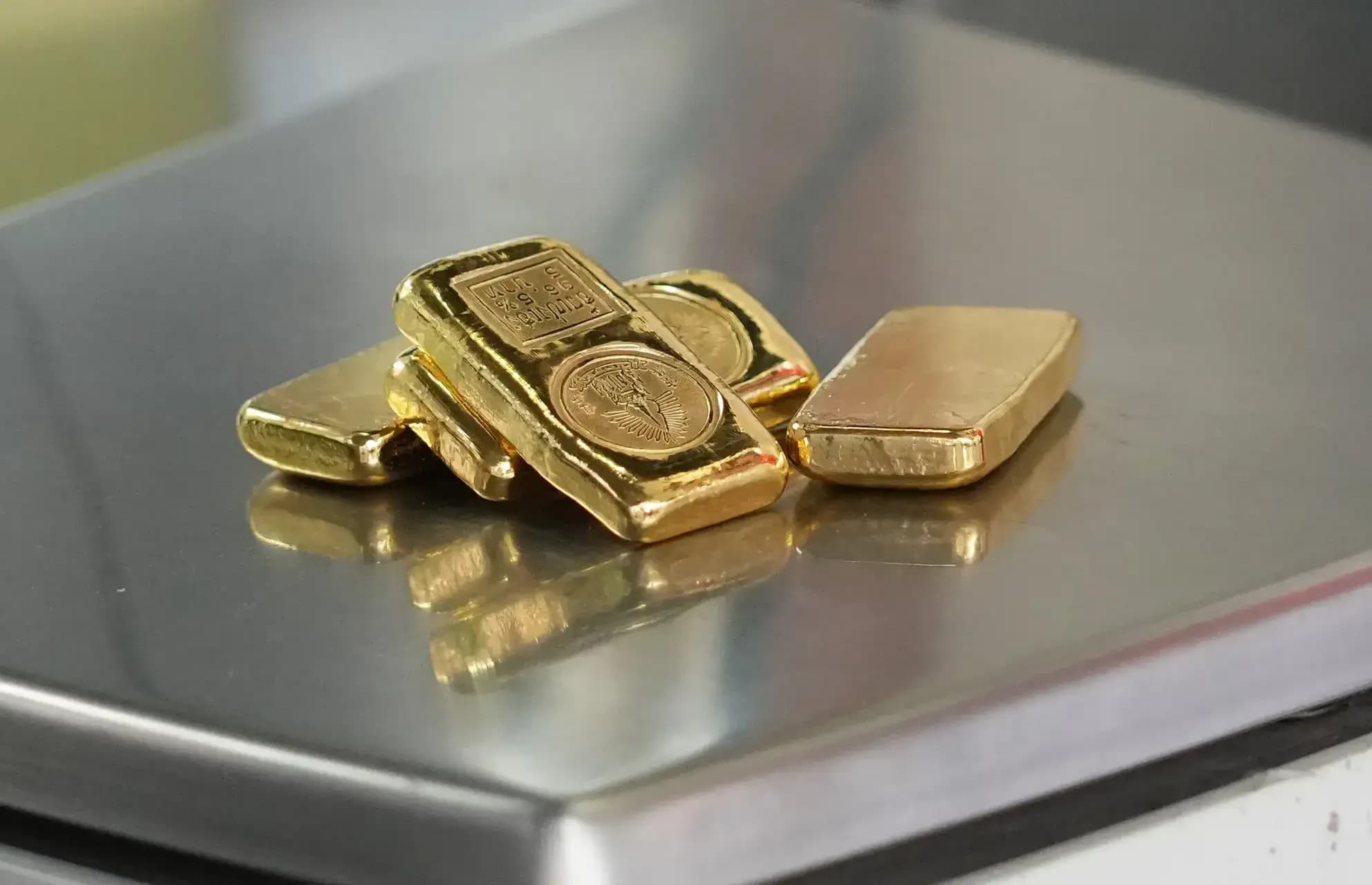
Despite the recent decline, gold has maintained strong performance over the longer term. Spot gold has gained over 18% so far this year, supported by global uncertainties, following a stellar 64% rise in 2025. Silver is up 16% for the year, while gold is typically preferred in a low-rate environment as it yields no interest. The current weakness reflects the market's response to changing monetary policy expectations and inflation dynamics amid ongoing geopolitical tensions, with analysts noting that "this dip in prices is likely to be short-lived, and flight to safety flows driven by geopolitical risk should support higher gold and silver prices." BNP Paribas has raised its average gold price forecast for 2026 by 27%, to $5,620, with a peak of $6,250 likely by the end of 2026, while a precious metals trader stated that the fall of gold to $5,100 will continue to attract Asian demand as safe haven buying continues.