

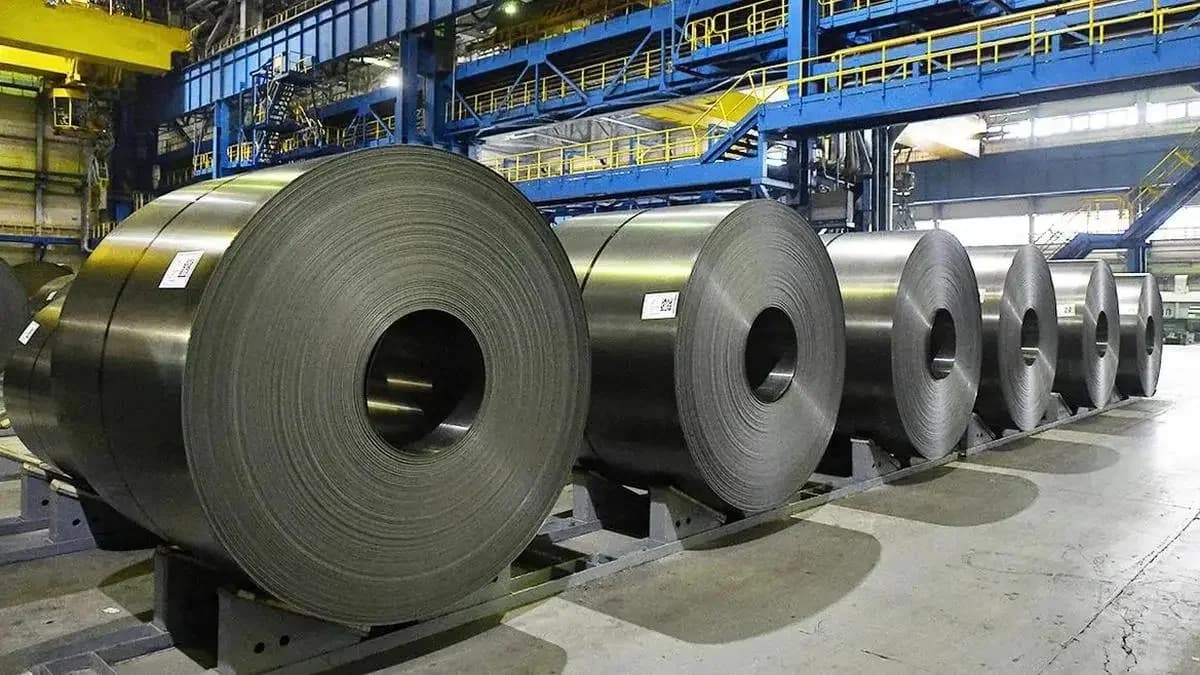

Global crude steel production declined for the fourth consecutive month in April 2026, falling 1.9% year-on-year to 153.4 million tonnes across 69 countries, according to data released by the World Steel Association. This decline was primarily driven by reduced output in China, the Middle East, and Russia, reflecting continued weakness in key steel-producing regions.
China, the world's largest steel producer, manufactured 83.6 million tonnes of crude steel in April, representing a 2.8% decline from the previous year. The country's output for the January-April period fell 4.1% to 331.1 million tonnes, as reported by the World Steel Association. This continued weakness reflects ongoing challenges in China's property and construction sectors, which have been major drivers of steel demand.
India demonstrated robust growth, producing 13.8 million tonnes of crude steel in April with a 3.9% year-on-year increase. The country's output for the first four months of 2026 rose 9.4% to 58.7 million tonnes, as reported by the World Steel Association. India maintained its position as the second-largest steel producer globally after China, supported by infrastructure spending and strong manufacturing activity.
The United States posted one of the strongest gains among major producers, with output rising 9.4% to 7.2 million tonnes. Germany and Türkiye also recorded robust growth of 9.5% and 9.4% respectively. However, Asia and Oceania, which account for the bulk of global steelmaking, saw production decline 1.3% to 114.2 million tonnes. The sharpest contraction came from the Middle East, where output plunged 27.6% to 3.7 million tonnes amid geopolitical disruptions and weaker demand conditions.
For the January-April period, global crude steel production declined 2% year-on-year to 613.3 million tonnes, indicating continued pressure on the industry from uneven demand recovery and geopolitical uncertainties. Production in Russia and other CIS countries, including Ukraine, fell 13.4% year-on-year to 6 million tonnes in April, while North America bucked the global trend with a 6.9% increase to 9.4 million tonnes.