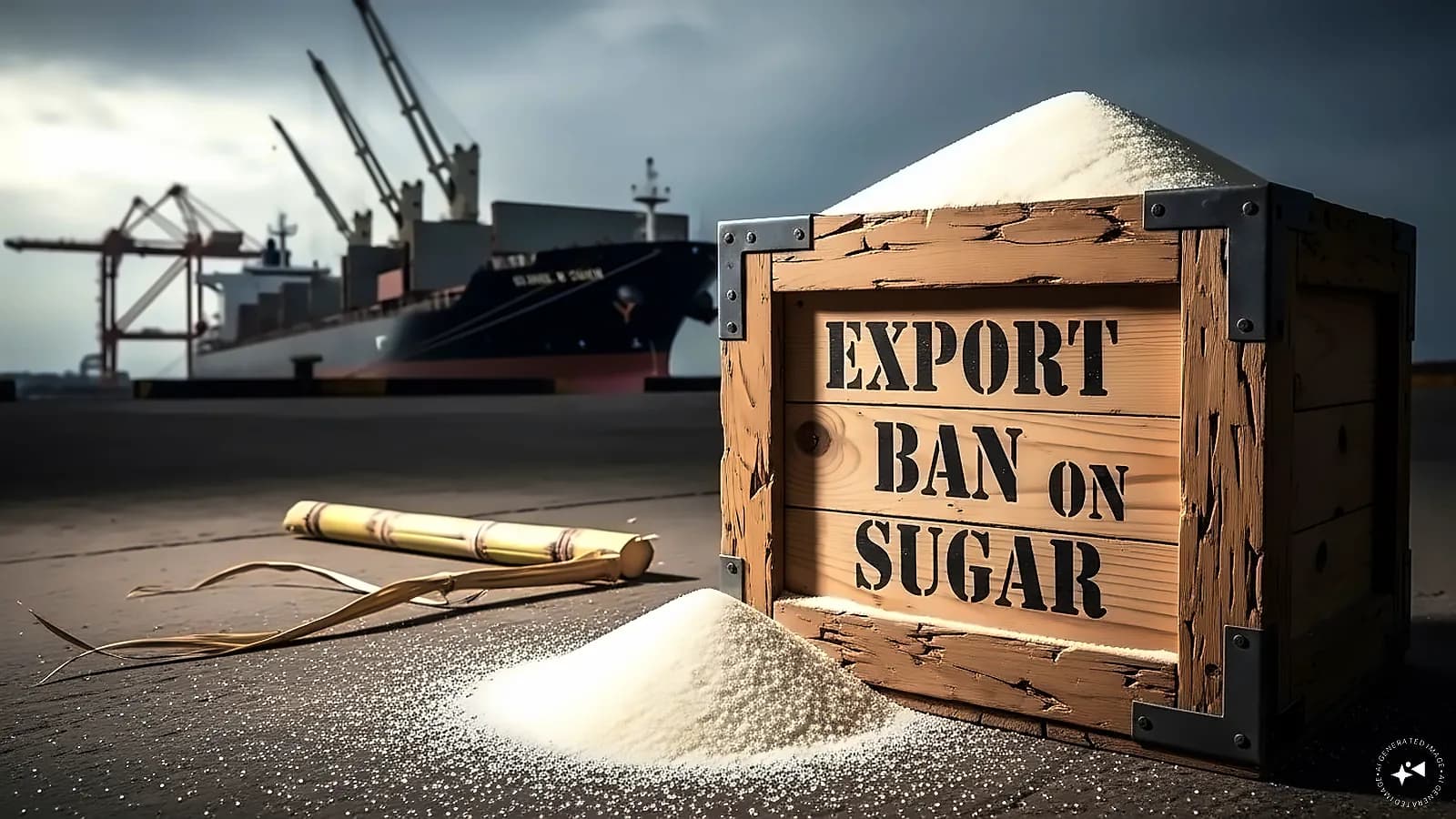
The government has extended the deadline for duty-free imports of up to 1 million tonnes of raw sugar by two months till December 31, 2026, as reported by Business Standard. According to a finance ministry notification dated October 22, 2026, the deadline specified in its August 20 notification has been extended from October 31 to December 31, 2026. The extension comes at a time when domestic sugar production estimates for the 2025-26 marketing year have been lowered to 306 lakh tonnes from the earlier forecast of 343 lakh tonnes, with annual domestic sugar demand estimated at 280-285 lakh tonnes. Industry sources indicate that around 2.6 lakh tonnes of raw sugar has been imported so far under the duty-free window, though imports have remained subdued due to lack of price parity making overseas supplies commercially unviable at prevailing prices. The extension is aimed at securing supplies whenever international prices ease enough to make imports viable, particularly during the festive season rush when demand typically peaks.
The Food Ministry has implemented a comprehensive ban on sugar-to-ethanol production for the upcoming Ethanol Supply Year (ESY) 2026-27, which runs from November 2026 to October 2027. According to reports from The Hindu BusinessLine, the Ministry issued letters to all sugar mills and state excise departments, stating that diversion of sugar to ethanol is not permitted during this period. The ban specifically prohibits production from sugarcane juice and B-heavy molasses, two key sugar-based feedstocks used in ethanol manufacturing. On October 16, 2026, the Government of India officially excluded ethanol made from sugar-based raw materials from its ethanol procurement tender, with oil marketing companies no longer procuring ethanol made from sugarcane juice, sugar syrup and B-heavy molasses under this tender. The policy completely bans the purchase of ethanol produced directly from sugarcane juice, sugar syrup, and B-heavy molasses, with the government now only procuring ethanol manufactured using C-heavy molasses.
The government has implemented additional measures beyond import extensions to manage sugar supplies during the tight availability period. Stockholding limits have been imposed on traders to ensure adequate supplies and prevent price manipulation. In Himachal Pradesh's Bilaspur district, authorities have cut sugar inventory limits for traders by half, from 2,000 quintals to 1,000 quintals to curb hoarding during the festive rush. As per PTI reports, District Controller Sheetal Sharma confirmed that the Ministry of Consumer Affairs, Food and Public Distribution issued new guidelines amending sugar stock limits across the country, with revised provisions coming into effect on October 15, 2026. Sugar dealers, traders and wholesalers must now regularly update their stock details on the Food Stock Monitoring Portal, with those yet to register instructed to do so immediately. Department inspectors have been instructed to carry out surprise inspections to check compliance with the guidelines.
State-run oil marketing companies have excluded ethanol produced from sugar-based raw materials from their latest procurement tender for the 2026-27 supply year. The tender, issued by Bharat Petroleum Corporation Ltd (BPCL) on October 16 on behalf of the OMCs, seeks bids for around 11 billion litres of ethanol for the supply year from November 2026 to October 2027, to meet the requirement of blending 20% ethanol with petrol. As per the tender document, "The Government of India has issued directions that sugar diversion for ethanol be reduced to zero for ethanol supply year 2026-27" and "No offers have been sought for ethanol produced from sugarcane juice, sugar or sugar syrup and B-heavy molasses in this quantity bid tender." The tender allows bids for ethanol produced from maize, broken rice, surplus rice procured by the Food Corporation of India (FCI) and C-heavy molasses, with the government reducing the procurement price incentive for maize-based ethanol to ₹68.86 per litre from ₹71.86 per litre.
The policy decision has dealt a severe blow to sugar factories and standalone ethanol units in Maharashtra, where the sugar industry faces significant financial risks. According to IANS reports, the restrictions have put investments worth nearly ₹40,000 crore in the ethanol manufacturing sector at severe risk. Maharashtra houses 16 standalone and grain-based distilleries with a combined annual ethanol production capacity of approximately 56 crore liters. Industry sources claim that producing ethanol exclusively from C-heavy molasses is financially unviable compared to current market selling prices. The Maharashtra State Cooperative Sugar Factories Federation Ltd data shows that sugar factories have an installed ethanol production capacity of around 3,750 million litres, with the high-level ministers' committee estimating that Maharashtra during the 2026-27 sugar season is expected to have around 99 million tonnes of sugarcane available for crushing. Despite the short-term challenges, The Economic Times reports suggest that the long-term blending roadmap still points to rising ethanol use, with the move aimed at addressing a short-term sugar-supply problem rather than eliminating ethanol production entirely.