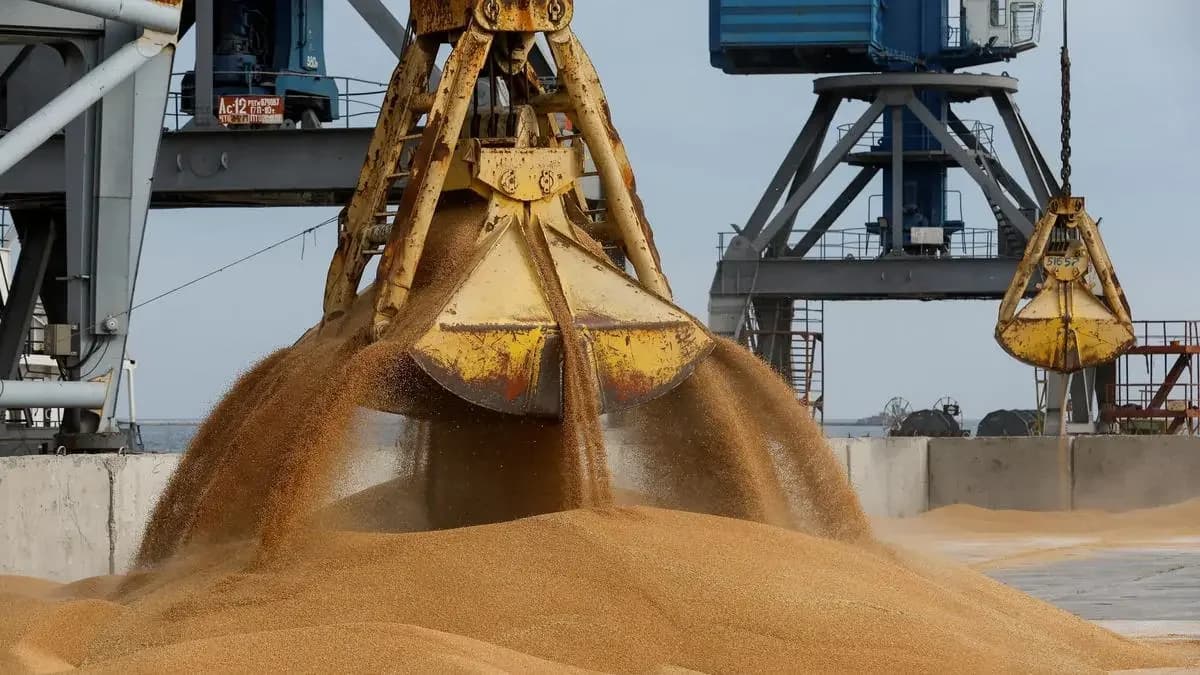
The Black Sea region has become a critical chokepoint for global grain markets as Russia is preparing to intensify attacks on Ukraine, including infrastructure targets, after concluding that negotiations for a peace deal have reached a dead end, according to people close to the Kremlin. Russia halted navigation through the Azov-Don Shipping Canal following Ukrainian attacks on 13 Russian vessels in the Sea of Azov, including 10 tankers. Russia's border guards told shipping companies they would no longer accept new requests for passage through the Kerch Strait, creating a complete blockade of the Sea of Azov-Black Sea route. The escalation has turned the Sea of Azov into a battlefield, with Ukrainian forces damaging dozens of Russian vessels and targeting ships supporting Russia's military capacity, while Russia stepped up strikes on Ukrainian ports including Odesa, Chornomorsk and Pivdennyi. As Chris Nikolaou, general manager of Advantage Grain, noted: "The market is very concerned about logistical constraints if the conflict escalates, and if we don't get a resolution in the Black Sea, and an improvement in shipping access without threat to their security, the rally will continue."

Chicago wheat futures extended their rally to three-year highs, rising as much as 2.6% to their highest since July 2023, after jumping 6.4% in the previous session and surging 19% this month due to Black Sea disruptions. According to latest reports, the conflict has damaged ports and grain terminals, significantly curbing shipments from a top exporting region. Russia and Ukraine account for more than a quarter of global exports, as well as large amounts of barley, corn and sunflower oil, raising the prospect of another bout of food inflation for consumers already struggling with higher energy and transport costs. Ukraine is already facing a drop of more than half in its agricultural exports this season from previous estimates, according to its agriculture ministry, while Russia's wheat shipments are expected to fall by more than 50% in August from a year earlier. The rally marks a sharp shift from abundant supplies that had kept prices subdued in the global grain market.
Corn futures reached lifetime highs on Wednesday, with the most-active contract rising 13 cents to $5.36-1/2 per bushel on spillover strength from soaring wheat futures and poor yield expectations for the U.S. corn crop. According to Reuters, the benchmark earlier rose to $5.38-3/4 per bushel, surpassing a previous three-year peak from Tuesday and marking the highest level since the summer of 2023. The rally was fuelled by results from a widely followed Midwest field tour last week that projected this year's U.S. crop well below the U.S. Department of Agriculture's current forecast. All CBOT corn contracts set life-of-contract highs on Wednesday, with the rally driven by poor crop conditions and adverse summer weather that have hurt crops across key production states. However, corn edged lower after rising 2.5% on Wednesday as the market shifted focus to wheat's stronger performance.
The Ukrainian side of the crisis has intensified significantly, with damage and bottlenecks from attacks on Odesa, Chornomorsk and Pivdennyi reducing monthly grain-shipping capacity from about six million tonnes to four million tonnes. According to the Ukrainian Agrarian Council, four of Ukraine's 13 large grain terminals stopped buying crops, while Kernel, the country's largest grain exporter, suspended operations at Chornomorsk. The escalation reached a tragic peak on July 20 when three Russian missiles struck a maize carrier off Odesa, killing 10 people, demonstrating how seafarers and merchant ships have become part of the battlefield in this critical food-producing region. The stakes extend well beyond futures markets, as Russia and Ukraine are key suppliers to the Middle East, Africa and Asia, with many consumers reliant on cheaper grain from the region at this time of the year. Importers are now scrambling to secure more expensive supplies from further afield, including Australia and Argentina, which would increase costs and push up prices.
Large speculators significantly increased their net long positions in CBOT corn in the week to August 18, according to regulatory data reported by Reuters. The geopolitical tensions continue to curtail exports from Black Sea ports, while adverse weather conditions in key U.S. production regions have raised concerns about global supply availability. CBOT soybeans ticked 28-1/4 cents higher to $12.66 a bushel as China continued purchasing U.S. soybeans and crude oil prices recovered. The U.S. Treasury Department on Monday announced new sanctions on 60 individuals, entities and vessels that the U.S. said were trading partners with Iran, though the list did not include any Chinese financial institutions. Market analysts noted that China's exclusion from the sanctions list provided optimism that China would continue buying soybeans, with Dan Basse of AgResource Company stating that "a lot were surprised China was excluded from the sanction list from, and it gives us more heart that China will continue to buy soybeans."