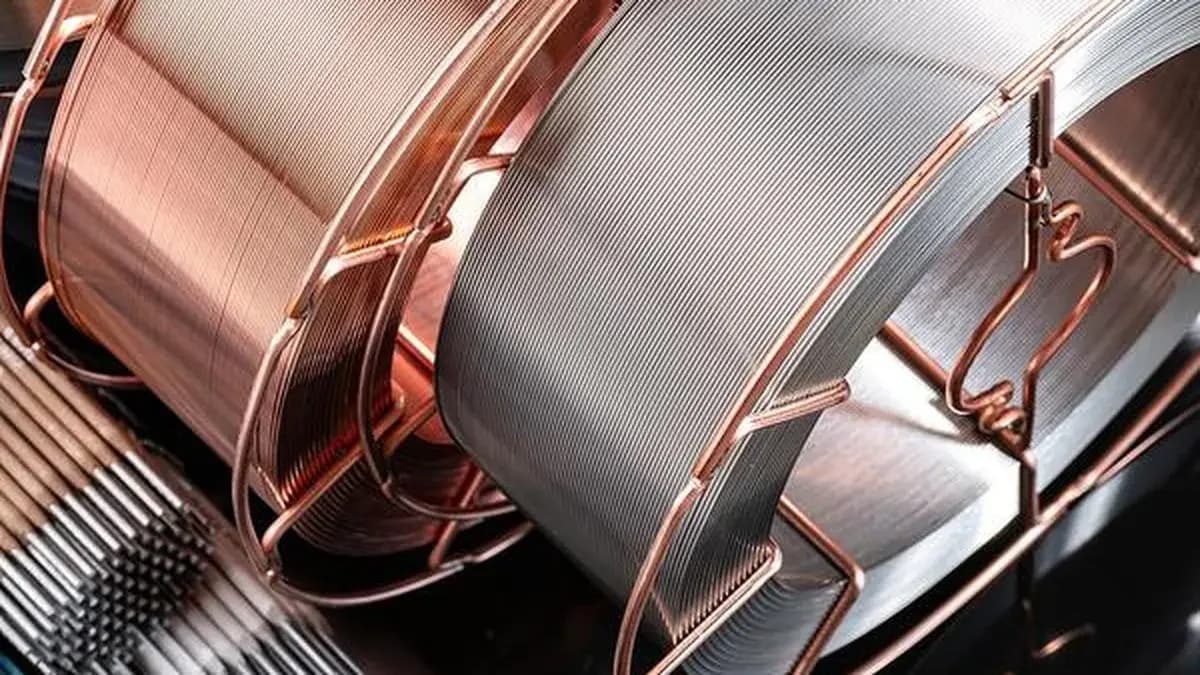
Copper prices have experienced a dramatic surge, with copper prices on the London Metal Exchange climbing more than 1% to $14,153 per metric tonne on Thursday, bringing the metal closer to its record peak of $14,527 touched in January this year. According to reports from The Economic Times, since tensions escalated around Iran and the Strait of Hormuz, copper prices have already surged 9%, while year-to-date gains are now approaching 15%. The metal is increasingly viewed as a strategic commodity for the AI era, with markets anticipating a prolonged supply crunch due to underinvestment and long lead times for new mining projects. As per European Business Magazine, traders increasingly believe this is structural rather than a war spike, with the metal being repriced as a strategic asset at the intersection of AI infrastructure, energy transition, and geopolitical supply chain fragility.
A critical factor driving the copper rally is the growing shortage of sulfuric acid linked to the Iran conflict and disruptions around the Strait of Hormuz. As reported by The Economic Times, nearly half of the world's seaborne sulfur supply originates from the Middle East, and shipping disruptions have significantly tightened global availability. China has imposed restrictions on sulfur and sulfuric acid exports to protect domestic industries, further worsening shortages across global markets. According to European Business Magazine, China's May-to-December sulfuric acid export ban removes roughly 3 million tonnes from the seaborne market, while Hormuz disruptions have cut Middle East sulfur flows simultaneously. Sulfur prices have broken through $1,200 per metric tonne, a record high confirmed in Mosaic's latest quarterly report. The acid problem compounds existing mine supply issues, with Chilean Q1 2026 copper production already down 6% year-on-year before the acid crunch hit, and Codelco reporting a 5% rise in production costs since March attributable directly to the Middle East sulfur shock. As noted by Enrich Money's Ponmudi R, the impact is now being felt across major copper-producing nations such as Chile, Peru and Indonesia, with several large mining operations grappling with lower output, operational disruptions and rising refining costs.
The AI boom is fast becoming one of the biggest long-term copper demand stories in decades, with every AI data centre, semiconductor fabrication facility, hyperscale cloud infrastructure project, electric vehicle ecosystem and renewable energy grid expansion requiring enormous amounts of copper. According to The Economic Times, markets had previously underestimated the scale of copper demand tied to AI infrastructure, with investors now increasingly viewing copper as one of the foundational metals powering the AI revolution. AI data centres are projected to consume 500,000 metric tonnes of copper annually by 2030, driven by mega-projects including the $500 billion OpenAI Stargate initiative, with each hyperscale site requiring up to 50,000 tonnes. The scale of copper required for green and high-tech infrastructure is staggering, with a single 1 GW wind turbine requiring 2,866 tonnes of copper. Oregon Group analysis projects that AI data centres alone will consume 500,000 metric tonnes annually by 2030, significantly outpacing current supply capabilities. The Economic Survey 2025-26 has highlighted that this warning was underlined by the government, noting that the scale of copper required for green and high-tech infrastructure is staggering, with a single 1 GW wind turbine requiring 2,866 tonnes of copper.
The current rally is being fuelled by a rare convergence of geopolitical disruptions, structural supply shortages, AI-led demand growth and years of underinvestment in global mining capacity. As reported by The Economic Times, copper mining projects typically take more than 15 years to move from discovery to production, while ore grades continue to decline globally and environmental approvals have become more difficult. The International Copper Study Group has flipped its 2026 balance to a 96,000-tonne surplus against a previously forecast 150,000-tonne deficit, but J.P. Morgan's Gregory Shearer confirms this surplus exists only on spreadsheets - it does not exist where copper is actually produced. The binding constraint is sulfuric acid availability for SX-EW extraction, with China's export ban removing 3 million tonnes from the seaborne market. The world may also be heading toward a serious copper shortage as power demand rises sharply, partly due to the rapid proliferation of AI data centres. The International Energy Agency has already warned that copper could face a major structural supply deficit by 2035 if current trends continue. The two new major supply projects, Freeport's El Abra expansion ($7.5 billion, 300,000 MT/year) and KoBold's Mingomba (300,000 MT/year, started March 2026), together add 600,000 tonnes of annual capacity, but neither comes online before the early 2030s.
From a technical perspective, copper has now entered a strong bullish momentum phase after breaking above key resistance levels near $13,000–13,500 per tonne on the LME. According to The Economic Times, as long as geopolitical tensions remain elevated and sulfuric acid shortages persist, prices are likely to stay structurally firm despite periods of heightened volatility. Immediate resistance is now seen near the historic $14,500 zone, while support has shifted higher toward the $13,200–13,500 range. However, after such a sharp rally, near-term corrections and phases of profit booking remain highly likely, with investors advised to avoid aggressively chasing vertical spikes. J.P. Morgan's bear case puts copper at $11,100–11,200 per tonne if macro conditions deteriorate, specifically if Brent oil holds above $110 per barrel for the rest of 2026, which would strip 1.4 percentage points from global copper demand growth. The bulls need a sustained close above $14,527 to confirm the next leg, until which copper trades entirely on war headlines.