IGL shares jumped about 3% on Monday, rising to ₹152.39 apiece following the weekend CNG price announcement. According to The Economic Times, Citi maintained its 'buy' rating on IGL with a target price of ₹180, implying around 22% upside from the previous close. The brokerage described the nearly 5% CNG price hike as a "well-calibrated" move that is unlikely to meaningfully affect volume growth. However, analysts expect the latest increase may not be enough to fully restore IGL's margins, with Probal Sen of ICICI Securities telling CNBC-TV18 that the price hike was crucial after the company suffered massive margin compression in the June quarter. As per The Economic Times, Citi noted that IGL has lagged its peers who have raised CNG prices since October 2024, but expects the latest hike could improve realisations and support margins.
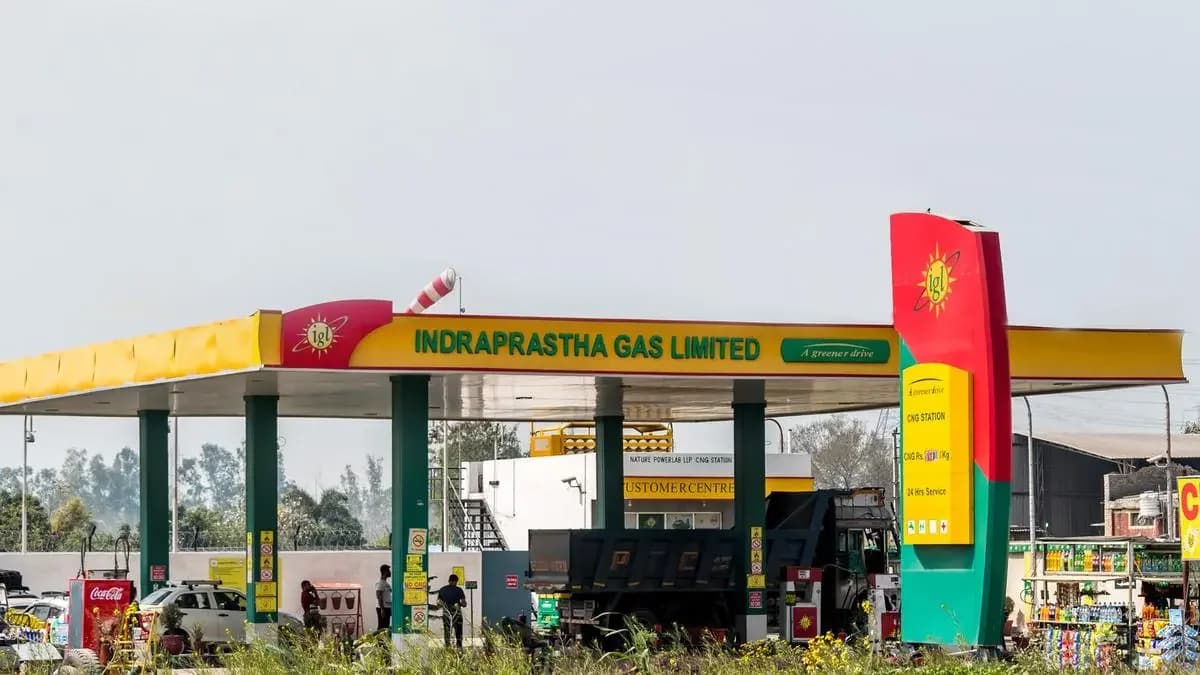
Indraprastha Gas Ltd (IGL) announced on Saturday that CNG prices in Delhi and adjoining cities increased by ₹3.89 per kg from Saturday morning, with the revised rates taking effect from 6 am on August 29. Following the increase, the retail price of CNG in Delhi now stands at ₹86.98 per kg, compared with the previous ₹83.09 per kg. As per The Economic Times, this marks the fifth CNG price hike in Delhi-NCR this year and the first since May, with CNG prices in Gurugram now costing ₹92.01 per kg, Noida and Ghaziabad at ₹95.59 per kg, and Meerut at ₹95.47 per kg. According to NDTV Profit, consumers using compressed natural gas in Delhi-NCR will have to pay more from August 29 as higher international gas prices and supply disruptions linked to the West Asia crisis push up input costs for city gas distributors. The company stated that a large portion of input gas for CNG is being met through imported LNG, whose rates in the spot or current market have seen a sharp spike since the beginning of the conflict in the Middle East earlier this year.
Citi expects the CNG price hike to lift IGL's blended realisations by around ₹1.8 per standard cubic metre (scm), all else being equal, and help arrest the steady erosion in margins. However, ICICI Securities' Probal Sen expects the increase to improve margins by only around ₹1.2-1.3 per scm, meaning some margin pressure is likely to persist despite the higher CNG price. IGL's EBITDA margin had fallen to a multi-year low of ₹3.4 per scm in the first quarter of FY27. The company's EBITDA margin had narrowed to 6.4% from 10% in the prior quarter, though revenue had increased 10% to ₹4,586 crore from ₹4,162 crore. On a consolidated basis, IGL's net profit declined 43.97% YoY to ₹240.41 crore in Q1 FY26, while net sales increased 17.19% YoY to ₹4,586.73 crore. According to CNBC TV18, ICICI Securities' Probal Sen expects IGL's EBITDA to be around ₹4.5-5 per scm in the July-September quarter of 2026 (Q2FY27), based on current LNG prices. However, he noted this remains about ₹2 per scm below the company's annual target of ₹7 per scm in EBITDA, with September LNG prices being important in determining whether further price increases are needed.
ICICI Securities' Probal Sen indicated that IGL may need to raise CNG prices again if LNG prices remain elevated and domestic gas supplies stay constrained. As reported by CNBC TV18, Sen said the latest ₹4-per-kg increase in Delhi-NCR is likely to provide only partial relief to the company's margins. "If prices remain this high, of course, I think the company is going to take its call, in terms of what sustainable margins they want to work with in the near term," Sen explained. The analyst noted that a resolution around the Strait of Hormuz could also help bring down LNG prices, reducing some of the pressure on city gas distributors. "Either that, or gas prices soften," Sen pointed out as the two possible ways for IGL's margins to improve. The pricing pressure is not limited to IGL, with other city gas distribution companies, including Mahanagar Gas and Gujarat Gas, also taking staggered price increases.
IGL's CNG volumes increased 6% from last year, while domestic PNG volumes were up 7% in the June quarter, as reported by CNBC TV18. To meet this demand, a significant portion of the gas used for the CNG segment is being sourced through imported Spot LNG, adding to input costs. According to NDTV Profit, IGL said international liquefied natural gas prices remain elevated, making the cost impact increasingly significant. The company stated that the ₹3.89 per kg increase was necessary to partially offset the rise in input gas costs while maintaining the continuity and reliability of CNG supplies. IGL added that in order to meet this rising demand for CNG, a significant portion of input gas for the CNG segment is being met through imported Spot LNG, with the latest revision still leaving CNG in Delhi among the more economical fuel options for consumers. The company also pointed to the re-escalation of the West Asia crisis, including the US-Iran war, and its impact on cargo movements through the Strait of Hormuz.
CNG prices vary significantly across different cities in the National Capital Region due to different value-added tax structures. According to The Times of India, CNG is now priced at ₹95.59 per kg in Noida and Ghaziabad, ₹95.47 per kg in Meerut, and ₹92.01 per kg in Gurugram. The latest data shows in adjoining Gurugram, CNG will cost ₹88.12 per kg, while in Meerut, Muzaffarnagar and Shamli, the cost is ₹91.58. In other major cities, Kanpur commands the highest price at ₹98.31 per kg, while Mahoba, Banda and Chitrakoot offer the most competitive rates at ₹93.31 per kg. This pricing structure reflects the varying tax implications across different states within the NCR region, with Gurugram offering the most competitive rates while Noida and Ghaziabad command premium pricing due to higher local taxes. The price increase will affect private car owners as well as auto and taxi operators and public transport users across the Delhi-NCR region, as reported by NDTV Profit.