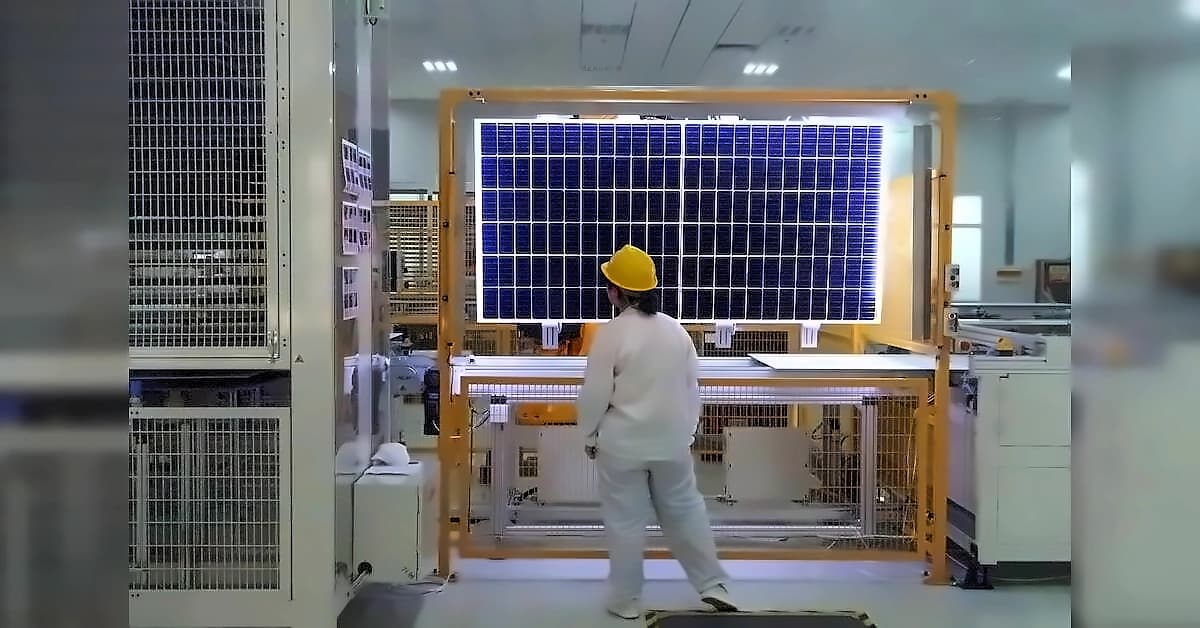
China has proposed prohibiting or restricting the export of 12 solar photovoltaic manufacturing technologies, including processes used to produce perovskite and tandem solar cells, thin silicon wafers and polysilicon. According to the Chinese government's draft announcement, the proposed changes would add these technologies to China's 'Catalogue of Technologies Prohibited or Restricted from Export'. The public consultation will run until November 15, 2026, and the proposed prohibitions have not yet formally taken effect. China's Ministry of Commerce announced the proposal on Friday as part of a broader revision of its technology export-control catalogue, covering artificial intelligence and biotechnology. The ministry stated that tighter oversight was necessary because photovoltaic technologies are increasingly used in sensitive sectors, including aerospace and national defence. As reported by Reuters, Chinese officials held initial talks with manufacturers about potential curbs on advanced solar-panel manufacturing technologies in April, a move that could threaten plans by US firms such as Tesla to expand production in the US. Beijing has also curbed exports of solar-manufacturing technology to India, according to Reuters reports. The ministry emphasized that export restrictions aim to "guard against the risks of technologies from running out of control or being improperly disseminated, while safeguarding normal international exchanges and cooperation in science and technology."
China has also proposed export controls on 23 AI-related technologies, including large models, AI agents, chip designs and computing clusters, raising questions about future access to Chinese open-weight models. According to the Associated Press, the proposed restrictions cover core technologies associated with AI models trained using important Chinese data, as well as models meeting specified technical thresholds. These include computing requirements of 10-to-the-power-26 floating-point operations (FLOPs), parameter counts of two trillion or more, and models ranking among the world's top 10 on relevant leaderboards. The controls specifically target AI agents designed for sensitive environments including national defence and critical information infrastructure. However, China's Ministry of Commerce has stated that access to certain AI services through application programming interfaces (APIs), websites, mobile applications and software-as-a-service platforms would remain outside the proposed restrictions. As reported by the South China Morning Post, a ministry spokesperson said licensing requirements for open-source AI technologies would be expedited, with immediate clearance upon filing, though analysts question the practical meaning of this process.
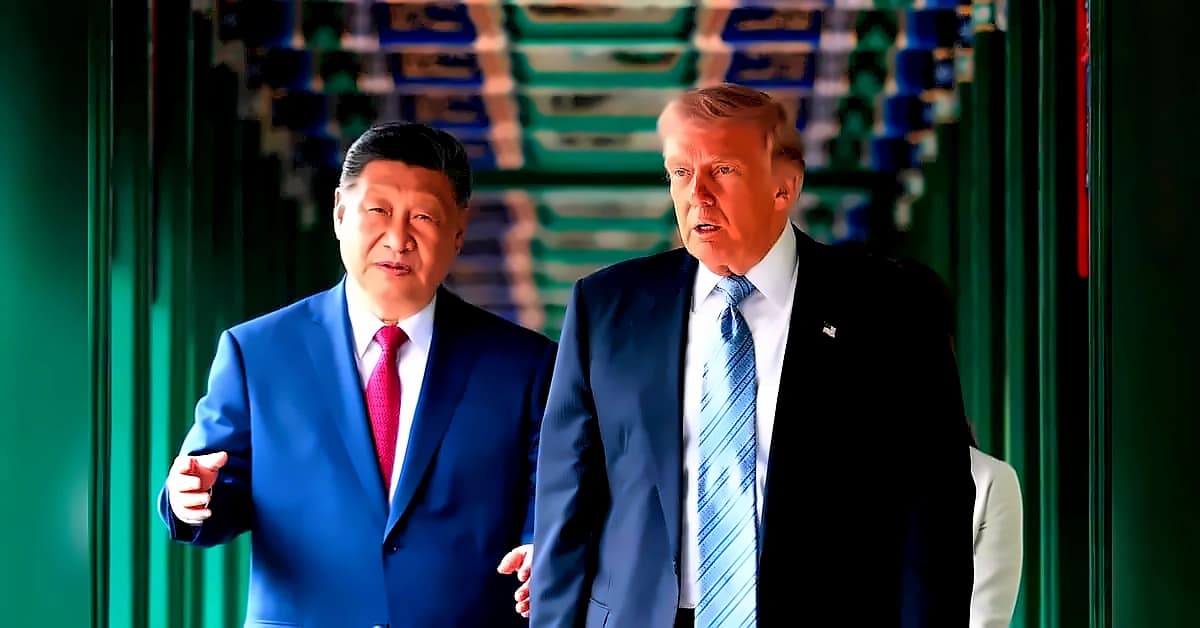
The latest developments highlight growing tensions between the US and China over artificial intelligence technologies. The US Department of Homeland Security issued a notice on Monday blocking federal civilian agencies from using Chinese AI startup DeepSeek's products and services, citing security concerns. The department alleges that DeepSeek's models "present multiple threat vectors," including servers located in China and potential access by Chinese authorities to private company infrastructure and sensitive US data. Chinese Foreign Ministry spokesperson Mao Ning responded by stating that China "will resolutely safeguard the legitimate rights and interests of Chinese companies" and opposes "the overstretching of the concept of national security and the politicizing of science, technology, economic and trade issues." The US has also accused Chinese AI startups including DeepSeek of engaging in large-scale "distillation" of capabilities from frontier American AI models, claims that Beijing has dismissed. US President Donald Trump and Chinese President Xi Jinping are set to meet in mid-November on the sidelines of the APEC summit in Shenzhen, with AI expected to be on the agenda.
China announced new export controls on Monday affecting key machinery items that could significantly impact Indian infrastructure projects. The restrictions on tunnel boring machines (TBMs) and related equipment will take effect on November 18, 2026, according to China's Ministry of Commerce (MOFCOM). The controls cover walking excavators designed for all-terrain conditions, plateau-type wet shotcrete machines for high-altitude areas, and dredger-related items including slurry pumps with specific technical specifications. These restrictions could affect several Indian projects, including underground metro systems, high-speed rail lines and tunnels in various locations, including border areas. As reported by NDTV, Commerce Minister Piyush Goyal previously told German Vice Chancellor Robert Habeck in 2024 that Beijing was not allowing a German company manufacturing TBMs in China to export them to India. Under the new measures, exporters must apply for licenses from MOFCOM in accordance with China's Export Control Law and Regulations on Export Control of Dual-Use Items, and provide detailed technical parameters to substantiate their declarations. The latest announcement also includes new drone types and components, expanding the scope of previous restrictions.
India has expanded its solar module manufacturing capacity but remains heavily dependent on imported upstream components. According to a report by The Energy and Resources Institute (TERI) published in 2026, India had nearly 120 gigawatts (GW) of annual solar module manufacturing capacity in 2025 and around 30 GW of cell capacity. However, domestic ingot and wafer capacity stood at about 2 GW, while commercial-scale polysilicon production was absent. As reported by NITI Aayog and CRISIL Intelligence in August 2026, India's import dependence was close to 100% for solar-grade polysilicon, above 90% for wafers and above 60% for solar cells. India imported 70-100% of production equipment for wafer and cell manufacturing and module assembly, with most high-technology production machinery coming from overseas suppliers, predominantly Chinese companies. The proposed Chinese export restrictions could complicate overseas manufacturers' efforts to expand domestic solar production, with Chinese officials previously discussing potential restrictions with manufacturers, raising concerns about expansion plans by U.S. companies, including Tesla. Analysts say China is seeking to preserve its dominance as India tries to build up domestic manufacturing and shake off reliance on China.
China maintains apparent dominance in global solar manufacturing across multiple stages. According to the NITI Aayog report, in 2024, China accounted for 93-98% of global polysilicon production, 95% of global wafer manufacturing capacity, 91% of solar cell capacity and 82% of solar module capacity. The International Energy Agency's Special Report on Solar PV Global Supply Chains, published in 2022, documented China's dominance across all manufacturing stages, with China's share exceeding 80% across all stages at the time. The IEA attributed this position to investment, economies of scale and industrial policies that supported domestic demand and innovation. Perovskite technology offers the potential for higher solar conversion efficiency, while tandem cells combine materials to capture a broader spectrum of sunlight, and fluidised-bed polysilicon production is more energy-efficient and less expensive than the conventional Siemens process.