The Centre has categorically rejected media reports claiming that Bhutan turned down an Indian proposal to import E20 petrol, clarifying that no such offer was ever made by Indian Oil Marketing Companies (OMCs). According to a statement posted on Facebook by the Ministry of Petroleum and Natural Gas (MoPNG), the reports were described as 'incorrect', stating that 'no such offer has been made by the OMCs, and there is no proposal for export of E20 petrol to Bhutan'. The ministry emphasized that claims of Bhutan rejecting such an offer were unfounded, with the Centre reiterating that no proposal to export E20 petrol to Bhutan had been made by Indian OMCs. The ministry specifically urged the public to 'rely only on official information from MoPNG and the Oil Marketing Companies' and warned against relying on unverified reports. The clarification came days after reports suggested Bhutan had declined an offer from Indian Oil Marketing Companies (OMCs) to supply E20 petrol.
The clarification came a day after the Congress alleged that multiple countries had refused India's fuel proposals. In a post on X, Congress Kerala wrote, 'Bhutan, Nepal, Bangladesh and Srilanka said no to Gadkari's Ethanol contaminated fuel. Only we Indians are left at the mercy of these idiots'. This political statement appears to have prompted the Ministry of Petroleum and Natural Gas to issue the official fact-checking statement, emphasizing that no such offers had been made to any of these countries. The timing suggests the government's response was directly linked to the political allegations made by the Congress party regarding India's fuel export proposals.
Reports had suggested that Bhutan had declined an Indian proposal over concerns related to its fuel storage infrastructure and the compatibility of higher ethanol-blended fuel. According to reports citing Bhutanese officials, the country had requested Indian OMCs to continue supplying conventional petrol instead of E20 fuel due to technical and infrastructure-related constraints. Bhutan's concerns centred on the hygroscopic nature of ethanol, which absorbs moisture more readily than conventional petrol. As reported by The Bhutanese, the Himalayan kingdom's fuel storage infrastructure was deemed inadequate to handle E20 petrol because ethanol readily absorbs moisture from the atmosphere, making storage more demanding than conventional petrol. If moisture enters storage tanks, ethanol-blended fuel can separate into different layers, reducing fuel quality and potentially affecting engine performance. The concerns were particularly significant because many of Bhutan's fuel storage facilities are located in mountainous regions, where seepage and moisture intrusion are difficult to prevent.
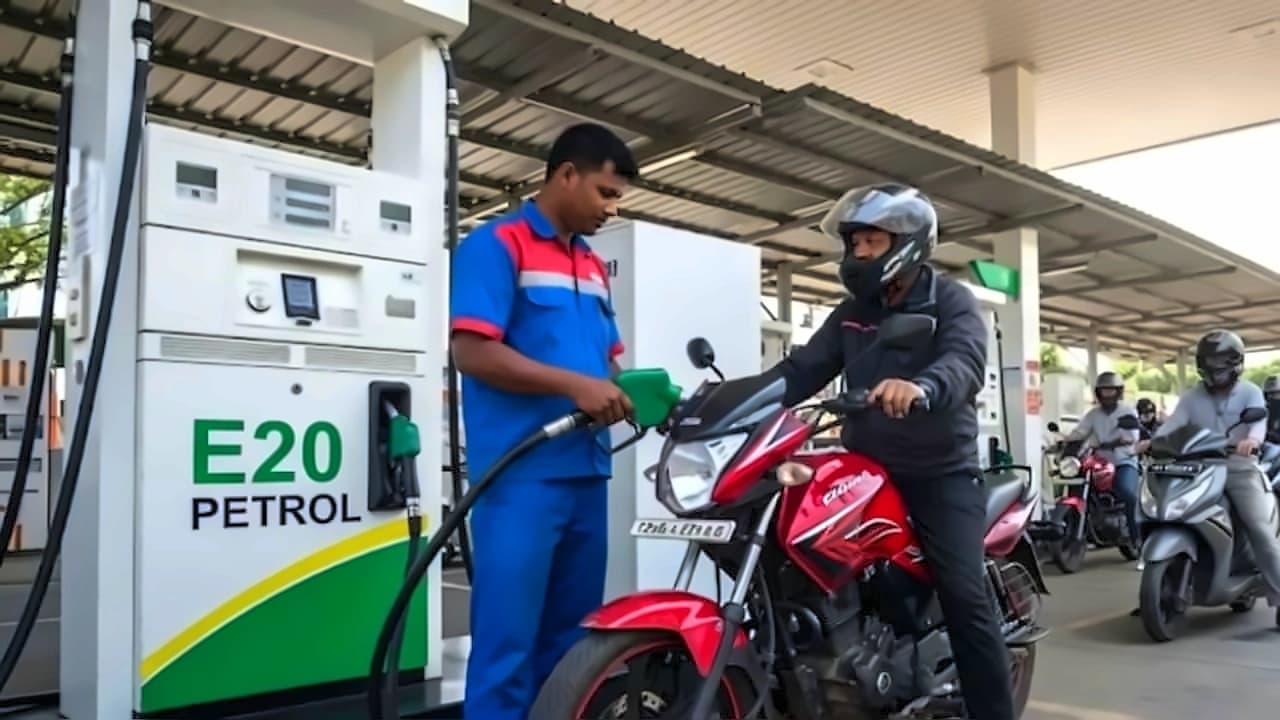
India's E20 petrol programme, which blends 20 per cent ethanol with petrol, forms a key part of the government's strategy to reduce dependence on crude oil imports, lower vehicle emissions and promote domestic biofuel production. Containing 20 per cent ethanol, E20 petrol is now available nationwide as part of India's shift towards cleaner fuels. The government reaffirmed that India's nationwide E20 rollout is aimed at cutting emissions and reducing crude oil imports, emphasizing that the programme remains focused on domestic implementation rather than international exports. The ministry noted that 'E20 fuel was introduced only after extensive laboratory, vehicle, and field testing by India's leading technical institutions' and that 'science led the way, ensuring reliability, performance, and confidence on every journey'. The government further clarified that 'ethanol blending is a scientifically designed, internationally accepted fuel formulation implemented under India's Ethanol Blended Petrol Programme' and is 'governed by established fuel quality standards and is not fuel adulteration'.