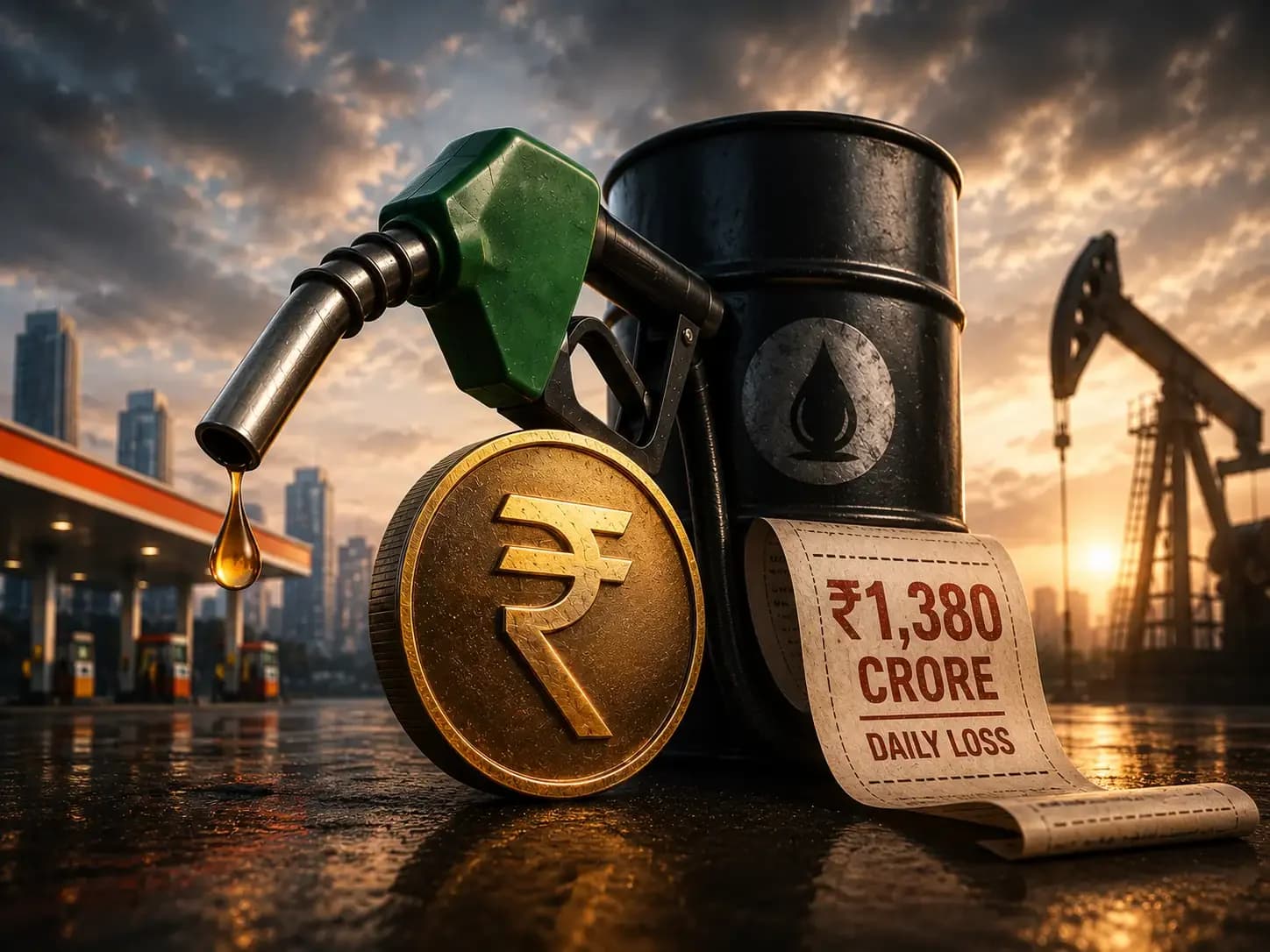
Oil-linked stocks traded lower by 2-5% on Friday, with HPCL, BPCL, and IOCL declining 3% each as crude oil prices surged to $114.7 per barrel. According to Moneycontrol, BPCL shares dropped over 2%, HPCL declined around 3%, and IOC slipped around 1.9% at the time of filing. The decline was primarily attributed to escalating tensions in West Asia and concerns over potential supply disruptions around the Strait of Hormuz. Brent crude, the international benchmark, was up as much as 1.4% at $114.72 a barrel, extending recent gains amid fears of renewed escalation of the conflict in the Middle East. On a weekly basis, Brent is set to close higher for a third successive week, with the benchmark gaining 4.2% over the past week and 12.5% over the past month. As per Moneycontrol, crude oil prices have surged 81.4% year-to-date, reflecting the sharp impact of geopolitical uncertainty on energy markets. The heightened risk of disruptions to crude production and supply fears has sustained a geopolitical risk premium in oil prices.
State-run oil marketing companies are increasingly blending up to 5% biodiesel at select outlets as crude oil costs rise and marketing margins face pressure. According to Sandeep Chaturvedi, chairman of the Biodiesel Association of India (BDAI), vegetable oil-based biodiesel is being blended wherever it is available, primarily in Gujarat, Rajasthan and the Delhi-NCR region. As reported by Business Standard, companies able to source raw materials at lower rates are now offering biodiesel at competitive prices. A random survey of petrol pumps across Karnataka and Uttar Pradesh confirmed that no retail outlet explicitly displayed the quantity of biodiesel blended in regular diesel, but some dealers confirmed the development, showing invoices mentioning blends in the range of B2 and B5 on strict confidentiality, fearing reprisal. An industry executive confirmed that Indian Oil Corporation (IOC), Bharat Petroleum Corporation Ltd (BPCL) and Hindustan Petroleum Corporation Ltd (HPCL) were supplying biodiesel-blended diesel at certain locations, with the biodiesel content ranging from 0.5% to 5%, with the latter known as B5. The move comes as the Indian crude oil basket has averaged around $122 per barrel in October, up 77% from nearly $69 per barrel in February before the West Asia crisis began.
Biodiesel is currently priced at ₹88 per litre, significantly lower than conventional diesel at ₹95.20 per litre in Delhi-NCR. According to rating agency Icra, OMCs' underrecoveries were estimated at ₹8 per litre on petrol and ₹9 per litre on diesel as of September 23. The move comes as the Indian crude oil basket has averaged around $122 per barrel in October, up 77% from nearly $69 per barrel in February before the West Asia crisis began. As reported by HT, India imports more than 88% of crude oil it processes, with the average crude oil import price jumping by over 13.4% to $122.33 a barrel on October 13 from $107.84 on May 25 when public sector fuel retailers last raised fuel rates. Despite the increase in crude costs, state-run oil marketing companies continue to sell petrol at ₹102.12 per litre and diesel at ₹95.20 per litre in Delhi, maintaining retail rates while facing mounting losses. The decline in OMC shares can also be attributed to a 6% fall in September quarter net profit as losses on sale of fuels like petrol, diesel and cooking gas LPG wiped away bumper gains from refining margins.
The surge in crude oil prices is creating significant pressure across multiple sectors beyond oil marketing companies. Tyre companies face cost pressures as crude-linked derivatives like synthetic rubber become more expensive, with Apollo Tyres falling over 3%, CEAT declining over 4%, and JK Tyre & Industries also under pressure. In the aviation space, InterGlobe Aviation (IndiGo) declined nearly 3% and SpiceJet shares slipped over 4%. Among paint stocks, Asian Paints fell about 1%, while Kansai Nerolac Paints and Berger Paints traded 1% lower. Upstream oil producers were also under pressure, with Oil India trading over 1% lower, though ONGC was trading positive as higher oil prices are expected to support their realisations. The selling extended to other crude-sensitive sectors as well, with Hindustan Petroleum Corporation Ltd (HPCL), Bharat Petroleum Corporation Ltd (BPCL), and Indian Oil Corporation (IOC) among the major losers. Higher crude prices typically hurt OMCs because retail fuel prices do not always immediately reflect higher input costs, compressing marketing margins. Airlines also face pressure as aviation turbine fuel is one of their largest operating expenses, while tyre and paint manufacturers are vulnerable to rising costs of crude-linked raw materials.
While private fuel retailers Nayara Energy and Jio-bp have raised petrol and diesel prices in response to elevated crude costs, state-owned OMCs have kept retail rates unchanged. As reported by HT, this has squeezed marketing margins at the three public-sector oil companies — Indian Oil Corporation Ltd (IOCL), Bharat Petroleum Corporation Ltd (BPCL) and Hindustan Petroleum Corporation Ltd (HPCL). In October, both private retailers raised petrol prices by ₹5 per litre and diesel prices by ₹3 per litre. An executive with an OMC noted that biodiesel blending is as per the approved National Policy on Biofuels, with average nation-wide blending around 0.5% only. However, some dealers said biodiesel doping in diesel in certain locations is now more than the national average of 0.57% as claimed by IOC. A dealer noted that consumers were shifting from private fuel stations to outlets operated by state-owned companies, potentially increasing the public sector retailers' losses as demand moved towards their pumps.
Under the National Policy on Biofuels released in 2022, India has set an indicative target of 5% biodiesel blending in diesel by 2030. According to Indian Oil Corp website, the company has achieved an average blending of 0.57% of biodiesel in diesel during April 2024-February 2025 with procurement of around 200 million litres of biodiesel. However, according to Sai Giridhar, president of the Federation of Automobile Dealers Associations (Fada), biodiesel-blended fuel currently accounts for no more than 0.5% at most retail outlets. BDAI noted that blending biodiesel at levels up to 5% does not require disclosure by oil companies under IS 1460, the Indian Standard established by the Bureau of Indian Standards. The association stated that biodiesel improves overall compression and reduces particulate emissions by 85%.