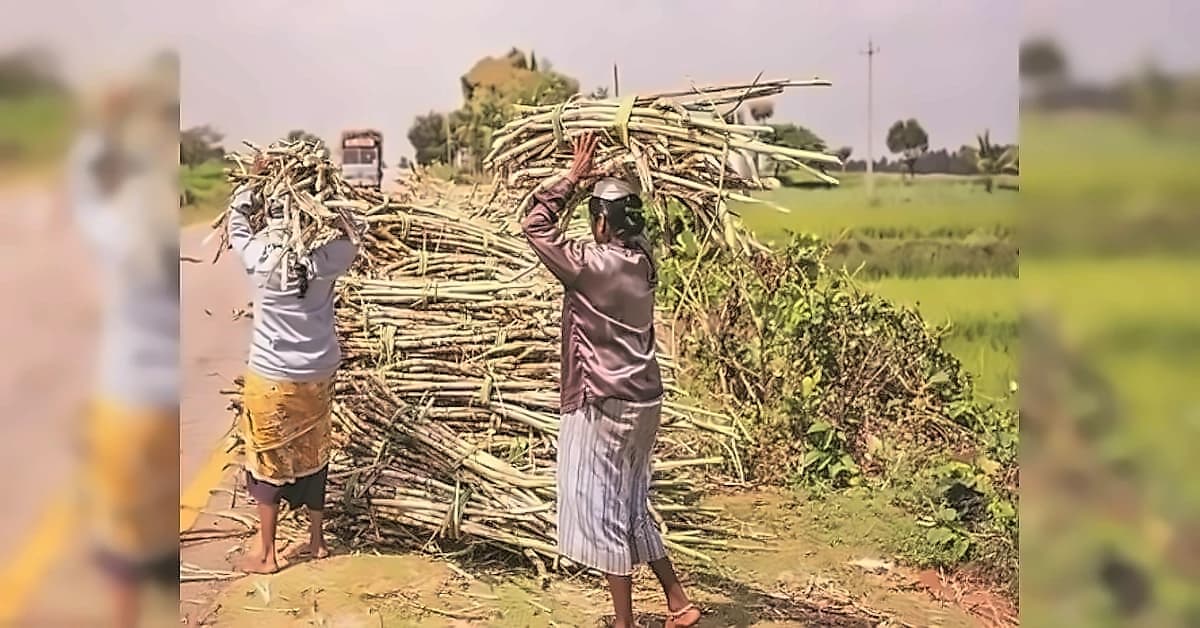
Australia has formally challenged India's sugarcane support policies at the World Trade Organization, alleging that New Delhi's assistance exceeded permitted limits during seven consecutive years. According to reports from The Pioneer, Australia submitted a paper to WTO seeking clarification on India's domestic sugarcane and sugar policies, claiming that support provided sugarcane AMS vastly in excess of the limits set out in Article 6, paragraph 4 of the WTO's Agreement on Agriculture. As a developing country without Total Aggregate Measurement of Support commitment, India can provide non-exempt product-specific support of up to 10% of the total value of production of agricultural products. Australia is ready to engage in discussions with India and other WTO member countries on the significance of India's market price support and resulting AMS for sugarcane.
Australia's submission revealed significant increases in India's market price support for sugarcane over the seven-year period from 2018-19 to 2024-25. According to the figures cited in the submission, market price support rose from ₹1.125 lakh crore ($15.9 billion) in 2018-19 to ₹1.52 lakh crore ($17.7 billion) in 2024-25, reaching a peak of ₹1.55 lakh crore ($18.9 billion) in 2022-23. As per The Pioneer, each sugar season, the Government of India sets the Fair and Remunerative Price (FRP) for sugarcane, which serves as an administered floor price for sugar mills purchasing cane from farmers, along with premiums paid to farmers for higher production efficiency and State-Advised Prices (SAPs) in some states. Australia calculated these figures using the Indian government's Fair and Remunerative Price system and is using these calculations to argue that India's sugarcane support has exceeded the WTO limit by a significant margin.
This latest challenge builds on previous WTO disputes involving India's sugarcane policies. In 2019, Australia, Brazil and Guatemala separately challenged India's sugar and sugarcane measures at the WTO, with panels established in August 2019. The WTO panel's report on December 14, 2021, found that India had provided non-exempt product-specific domestic support to sugarcane producers above the permitted 10% of production value for five consecutive seasons from 2014-15 to 2018-19. India appealed these findings on December 24, 2021, with the appeal filed with the WTO's Appellate Body, which remains unable to function.
Despite the ongoing WTO dispute, India's sugar industry is experiencing significant operational improvements. According to Joint Secretary Ashwini Srivastava from the Department of Food and Public Distribution, sugar mills across the country have paid nearly ₹1,11,270 crore, amounting to 97% of the total cane price due for the ongoing season to sugarcane farmers. The government has advanced the start of cane crushing this year to October 15, compared with the last week of October in the previous season, allowing mills to produce additional sugar in October itself. To address recent price volatility, the government has imposed stock limits on sugar dealers and bulk consumers, permitted duty-free export of 10 LMT of raw sugar, and allowed one-time conversion under the advance authorisation scheme for domestic sale of refined sugar. As per Srivastava, these measures, along with stock verification and market monitoring, have eased prices as accumulated stock moved back into the market.