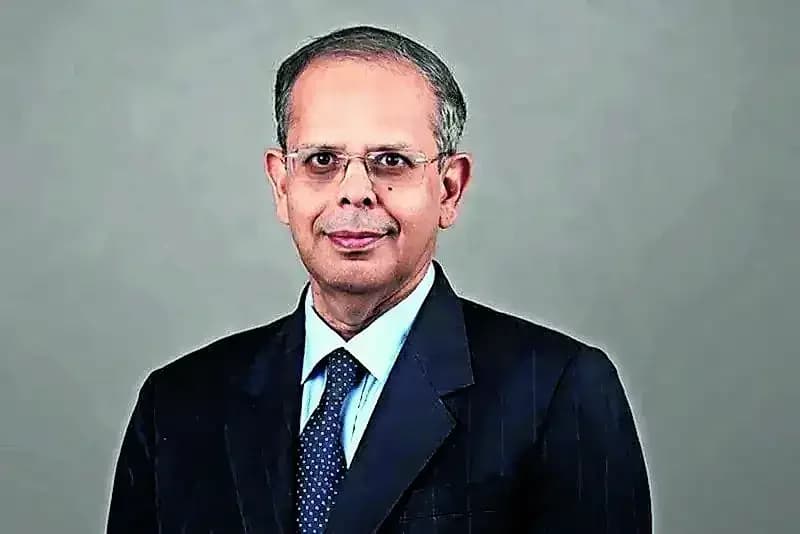
Nagesh Kumar, external member of the monetary policy committee (MPC), has indicated that India's economy could expand at a '7% plus range' this fiscal year, significantly higher than the RBI's current FY27 growth projection of 6.6%. As reported by Bloomberg, Kumar stated that oil prices at about $70 a barrel could reopen India's path to stronger growth, with Brent crude trading just below $73 per barrel as of Thursday in early Asian trade. The MPC member noted that the Indian economy's growth outlook had improved materially since the MPC's June meeting, citing stronger than expected economic data and a sharp retreat in crude oil prices following the signing of a peace accord in West Asia. This optimistic assessment comes as India's economy expanded at 7.7% in the January-March quarter, exceeding earlier estimates and demonstrating resilience despite global uncertainties.
Brent crude, which had surged to around $115 a barrel amid disruptions in West Asia, has since fallen below $80 a barrel, providing significant relief to India's economic outlook. According to Bloomberg, Kumar noted that recent easing of crude oil prices has also reduced concerns over inflation and the country's external balances. The RBI's FY27 core inflation was revised up to 4.7% from 4.4% at the April review, while headline inflation was projected at 5.1%, up from 4.6%. Kumar emphasized that a stable currency and softer oil prices would also create downside risks to inflation forecasts, suggesting that the combination of falling oil prices and stable rupee could provide additional support to economic growth projections. Oil prices have dropped throughout this week as the market hopes the tentative reopening of the Strait of Hormuz would boost crude supply in the coming months.
According to The Economic Times, current financial conditions remain restrictive enough that a rate hike is unnecessary, despite the policy repo rate being only 15 basis points above the FY27 forecast CPI inflation. Money market and short-term interest rates remain higher, with the repo rate at 5.25% and RBI maintaining system liquidity at appropriate levels. The gap between the repo rate and longer-term bond yields has risen much beyond steady state levels, though underlying inflation remains much lower with little signs of economy overheating. Kumar explained that the MPC's mandate is "to maintain price stability while keeping the objective of growth in mind," which is a complex exercise to operationalize, with the outlook for the growth-inflation balance remaining clouded even after the treaty.
As reported by The Economic Times, Kumar said recent measures by the RBI to attract foreign currency deposits, alongside government initiatives to encourage investment in sovereign debt, were likely to offset capital outflows and stabilise the rupee. This development addresses concerns about India's external balances and provides additional support to the economy's growth prospects. The MPC members had voted for a status quo in the June policy, citing resilient growth and the need to assess inflation impact while stating that the MPC would closely monitor incoming data. Kumar's optimistic outlook reflects the central bank's confidence in India's ability to weather global uncertainties while maintaining economic stability.
According to The Economic Times, growth concerns appear to be a bigger priority for the RBI in the current scenario, especially since inflation is projected at 5.1% and the repo rate is at 5.25%. Kumar emphasized that "if growth decelerates, the effects of lower disposable incomes on companies' pricing power, and hence on inflation, are difficult to predict at this point," with too many elasticities involved. The MPC's mandate to maintain price stability while keeping growth objectives in mind will likely influence future monetary policy decisions as the central bank navigates the current economic environment. Kumar noted that the effects of higher food prices on other discretionary consumption expenditure, given income constraints, need to be monitored as third-round effects, while maintaining that the RBI has maintained system liquidity at sufficient levels over the past many years.