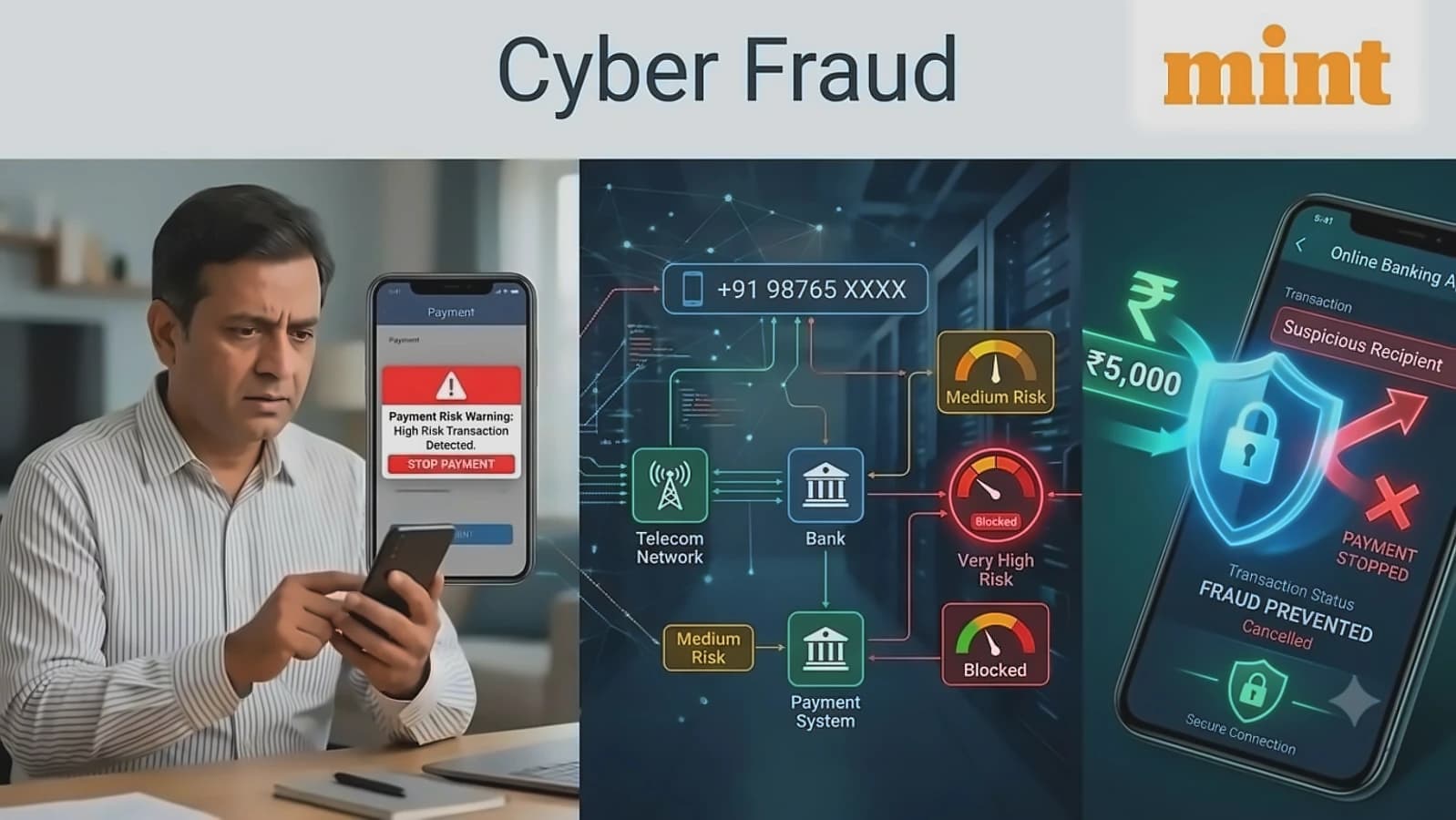
India's digital fraud landscape has reached alarming proportions, with 7.1% of all digital transactions involving consumers flagged as suspected fraud attempts in 2025, nearly double the global average of 3.8%, according to TransUnion's H1 2026 Top Fraud Trends Report. This data highlights a growing challenge for businesses as fraudsters increasingly shift from traditional scams to identity-based attacks targeting digital accounts and consumer credentials. The findings point to a threat landscape where fraudsters are weaponizing both consumer trust and emerging technologies, with the scale and sophistication of fraudulent operations growing faster than traditional security systems can adapt.
The Reserve Bank of India has issued a stern warning against customers allowing their bank accounts to be used by third parties for receiving or transferring money. According to reports from Mint, the advisory was issued through the 'RBI Kehta Hai' financial awareness campaign, emphasizing that such arrangements are often linked to cybercrime and financial fraud. The central bank stated that customers should maintain exclusive control over their accounts and banking credentials, adding that individuals who knowingly allow their accounts to be used for unlawful transactions could face legal consequences.
Among all sectors analyzed, logistics recorded the highest suspected digital fraud attempt rate at 16.3%, followed by telecommunications at 14.7% and insurance at 11.5%. According to TransUnion's report, telecommunications witnessed the most dramatic increase with suspected fraud volume jumping 308% between 2024 and 2025, while insurance recorded a 145% rise and logistics saw a 31% increase. In contrast, several sectors witnessed significant declines: retail (-99%), travel & leisure (-68%), financial services (-65%), and gaming (-36%). The data suggests fraudsters are increasingly targeting industries where identity verification remains complex and digital engagement is rising rapidly.

The report reveals a significant shift in fraud patterns, with account login representing the highest fraud risk at 3.9% of transactions, followed by account creation at 3.1% and financial transactions at 1.2%. Unlike the global trend where account creation remains the riskiest stage, fraud risk in India is concentrated at login stages. This trend suggests criminals are increasingly using compromised credentials to take over existing accounts, underscoring the need for businesses to strengthen identity verification and fraud prevention systems at the onboarding and login stages. These sectors are particularly vulnerable because they rely heavily on real-time interactions, distributed networks and high-frequency transactions, creating opportunities for fraudsters to exploit weaknesses in identity verification and authentication.
Several major institutions have intensified their anti-fraud measures in response to the growing cyber threat landscape. The Central Board of Secondary Education has filed a formal complaint with Delhi Police regarding coordinated cyber attacks on its post-result services portal, with all attacks successfully mitigated and no data breach occurring. IRCTC has deactivated millions of suspicious user IDs to combat fraudulent train ticket bookings, deactivating 3.03 crore suspicious user IDs and blocking 13,343 email domains in 2025. The corporation also recorded record online ticket bookings, averaging 14.53 lakh per day, while simultaneously monitoring over 800 railway kitchens using artificial intelligence to ensure improved food safety standards.