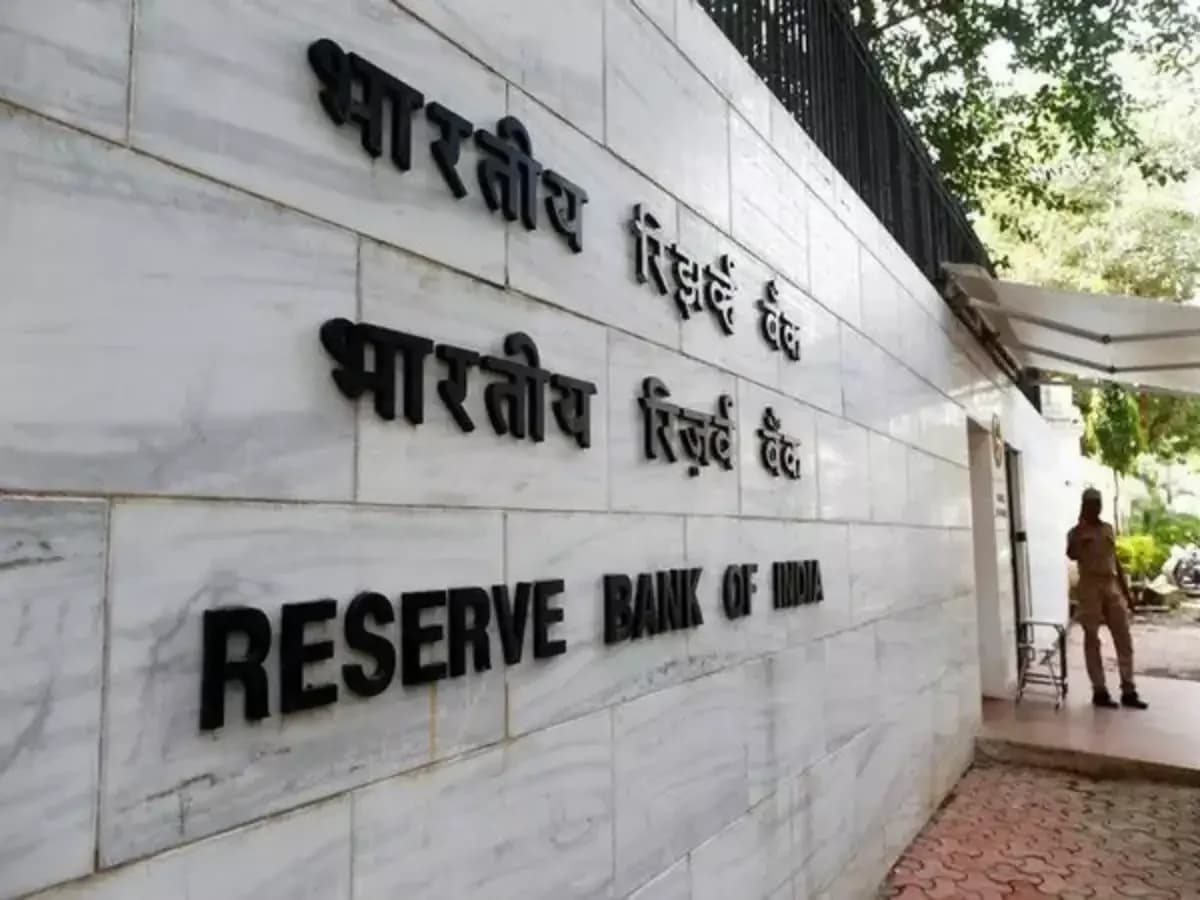
The Reserve Bank of India (RBI) has officially rejected Tata Sons' application to voluntarily surrender its certificate of registration as a non-banking financial company (NBFC), making a public listing mandatory for the holding company of the salt-to-software conglomerate. In a terse letter dated Friday, the RBI communicated its decision to Tata Sons, effectively ending the company's efforts to deregister itself as a core investment company (CIC). The rejection is anchored in three key provisions explained in the RBI's updated FAQ on NBFCs, which were released on Monday following the decision. The RBI has conveyed this development to Tata Sons, indicating the central bank's proactive approach to legal proceedings. This legal move comes after the RBI filed a caveat petition in the Bombay High Court on Tuesday, citing sources close to the development. The caveat means the RBI wants to be heard if any petitioner approaches the court challenging the decision or seeking a stay.
Within days of rejecting Tata Sons' surrender application, the Reserve Bank of India (RBI) Wednesday detailed FAQs that define what financial activity as a principal business is and what is a core investment company (CIC) for a non-banking finance company (NBFC). As per The Economic Times, the central bank's rejection has effectively shortened the odds in favour of a listing of Tata Sons, which is the unlisted holding company for the Tata Group of companies. The RBI said that a company is deemed to be engaged in a financial activity as a principal business when its financial assets constitute more than 50% of total assets, and income from financial assets make up more than 50% of the gross income. If companies are engaged in agricultural operations, industrial activity, purchase and sale of goods, providing services or purchase, sale or construction of immovable property as their principal business and are doing some financial business in a small way, they will not be regulated by the RBI. In case a single group has four to five prospective CICs with an aggregate asset size of more than ₹100 crore, all companies in the group that are CICs would be required to obtain a CoR from the central bank. In cases where an NBFC voluntarily seeks to become a CIC since it brings clarity to the holding structure in their organization, it would have to apply to the RBI with full details of the plan and exemptions on capital adequacy and exposure norms could be considered on a selective basis on the merits of the case.
The RBI's tightened scrutiny of Tata Sons stems from the 2018 IL&FS crisis, which fundamentally changed how regulators view large NBFCs and their interconnected financial structures. Infrastructure Leasing & Financial Services had more than 160 subsidiaries, joint ventures and associated companies when it began defaulting on debt payments, creating contagion risk concerns across the financial system. The crisis demonstrated that financial risks can build up outside traditional banks, leading to tighter regulatory oversight of large NBFCs. After the IL&FS crisis, the RBI introduced a layered regulatory structure for NBFCs, classifying the largest entities in the Upper Layer category, which includes Tata Sons. Under these rules, NBFCs placed in the Upper Layer must list their equity shares on stock exchanges within the prescribed period, making Tata Sons' voluntary surrender application futile. The regulator's post-IL&FS framework aims to prevent problems at interconnected companies from becoming wider financial-system issues.
Tata Sons could be valued at ₹9-12.5 lakh crore in a potential initial public offering (IPO), putting a steep discount on an underlying portfolio worth ₹15-16 lakh crore, according to multiple investment bankers and valuation experts. An analysis by the equity capital markets head of a top domestic bank estimates Tata Sons' underlying value at ₹15-16 lakh crore, comprising about ₹12 lakh crore from listed holdings and ₹4 lakh crore from unlisted assets. The valuation applies a 41-45% holding company discount to the listed portfolio and about 15% to unlisted assets, with a further 10-15% discount to fair value for the IPO. As per The Economic Times, Vimal Taparia, partner at Morphis Management Services, explained that "A conglomerate this size, you can't value the parent directly." He noted that investors should value each listed stake at market prices and estimate unlisted businesses using the last real transaction or closest comparable, while adding option value for businesses such as semiconductors and digital. Bajaj Holdings and Godrej Industries trade at similar discounts of 30-60%, according to Taparia. Shapoorji Pallonji (SP) Group owns 18.37% equity in Tata Sons, with its Tata Sons holding valued at about ₹2.3 lakh crore on a look-through basis.
The leadership battle has intensified with one board member opposed to Chandra's reappointment as chairman, as reported by Business Standard. The matter had been on hold for six months, with Tata Trusts chairman Noel Tata raising questions about the performance of certain group companies at a Tata Sons board meeting in February when Chandra's renewal came up for discussion. Sources indicate that the listing of Tata Sons has become a controversial issue in the leadership battle, with Noel Tata opposed to Tata Trusts being publicly listed, while the largest shareholder with 66% stake has passed a resolution against listing. In early August, Chandrasekaran announced that he would not seek reappointment when his term ends in February 2027, and has not participated in subsequent discussions regarding the buyback proposal. On Thursday, the Tata Sons board is meeting to discuss the RBI's letter and decide on next steps, with the board expected to place the RBI's communication before them. While Tata Trusts Chairman Noel Tata is opposed to share sale, two trustees — Venu Srinivasan and Vijay Singh — have earlier voiced their support for listing Tata Sons. Srinivasan and Tata are the trust nominees on the Tata Sons board, creating internal divisions within the trust structure.
A leading global brand valuation firm sees further constraints on Tata Sons' value, with future revenue potentially shaped more by regulatory policies than royalties earned from group companies, raising concerns about the infusion of trustees and directors once Tata Sons is listed. The firm also expressed concerns about the trust's agenda becoming less fluid, stating that "that could make the future outlook 'extremely conservative' from a valuation perspective." The Tata brand should not receive a separate premium, said the head of equity capital markets at the firm, explaining that brand benefits are already reflected in the market valuations of listed Tata companies, while group synergies are reflected in their revenues and margins. Adding a separate brand value would amount to double counting. About ₹40,000 crore of losses in the unlisted portfolio are being funded through dividend income, according to the analysis. A Tata Group executive noted that concerns about SP Group's financial health should not be a criterion for forcing Tata Sons to go public, emphasizing that 'We have been in discussions with the SP Group to provide them an exit. Surely, an IPO is not the only route to give them (SP Group) an exit'.