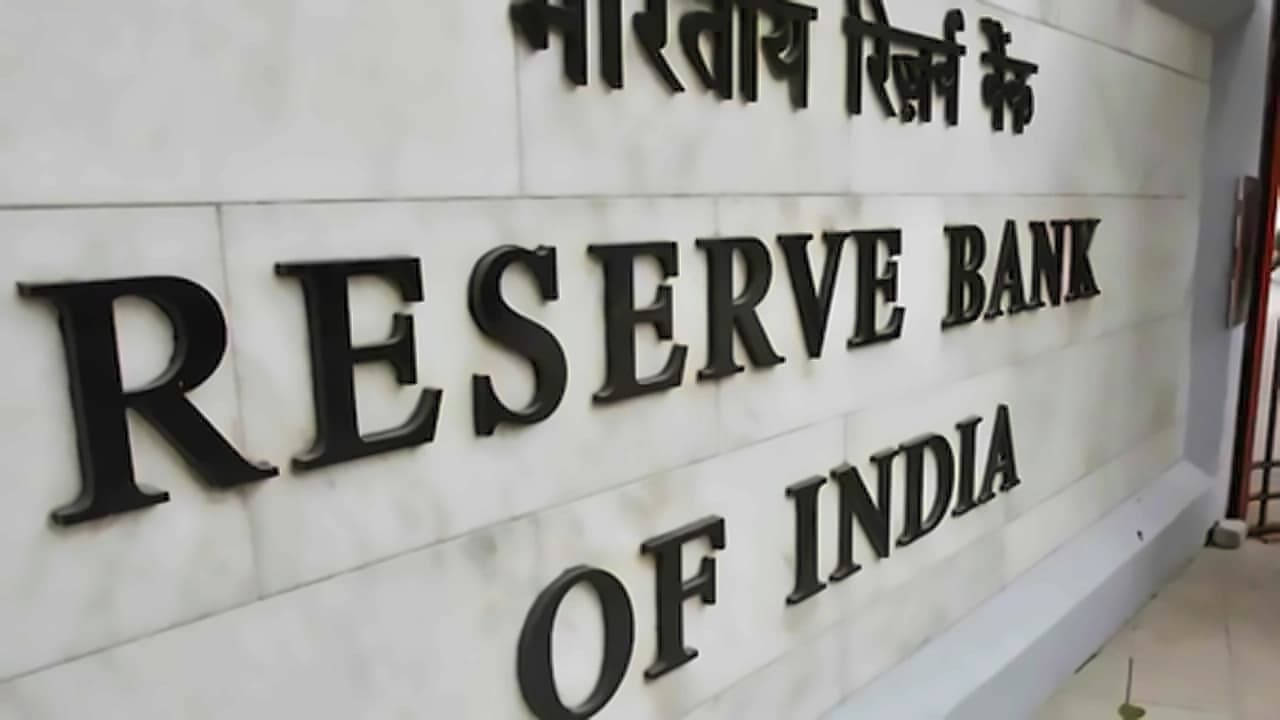
Indian government bonds climbed on Tuesday as investor sentiment shifted favorably to the Reserve Bank of India's recent temporary liquidity draining measures. The benchmark 6.94% 2036 bond yield ended at 6.9431%, down from 6.9607% on Monday, as traders found relief in the RBI sticking to variable rate reverse repo operations (VRRRs) rather than adopting more stringent measures. According to The Economic Times, India's banking system liquidity surplus hit a record ₹11.16 trillion on Sunday, up from ₹10.36 trillion, boosted by inflows from the RBI's dollar-attracting measures. The central bank's strategic approach to tightening liquidity is helping to stabilize overnight rates and counterbalance pressures from high crude costs, with the RBI indicating last month that it could consider interest rate hikes if inflation risks persist.
The Reserve Bank of India could raise its key repo rate to 5.75-6% in the second half of FY27 as it seeks to contain excess banking liquidity and rising inflation amid strong economic growth, according to a report by Union Bank of India. The report expects two to three rate increases of 25 basis points each from the current 5.25% with the rate hike cycle likely to begin in December under its base-case scenario. As reported by Union Bank of India, rate hikes are back on the table for H2 FY27, with December appearing to be the more likely starting point. The outlook follows a combination of strong economic growth, rising inflation and tighter global financial conditions, making monetary policy adjustments necessary to maintain price stability.
The *FCNR(B) scheme's $127 billion inflows should boost banking sector earnings by ₹10,000-11,000 crore annually, despite potential near-term margin pressure. According to Jefferies, after the scheme closed in August with a bumper accretion of more than $127 billion, the total inflows from such special schemes have reached $136.4 billion. The scheme was launched in June to boost dollar inflows and strengthen foreign exchange reserves, allowing banks to swap eligible overseas borrowings with the central bank at concessional rates, significantly lowering their cost of funds. For the banking sector, Jefferies expects domestic credit growth to moderate from 18% now to 15% by March 2027 as base resets in December 2026 and supply from bonds and ECB normalise. The strong FCNR(B) inflows can lift deposit growth from 12% pre FCNR-B to 17% (currently at 15%), with slight normalisation expected by March 2027 to 16%. Motilal Oswal Financial Services notes that ICICI Bank mobilised $17.9 billion, capturing 14% market share of the total FCNR-B inflows, while SBI garnered $9 billion and is expected to beat its $10 billion guidance.
India's balance of payments surplus is expected to be between $65-75 billion in FY27 due to measures taken by the Reserve Bank of India, according to a Bank of Baroda report. However, BofA Securities has significantly revised its estimates, now expecting FY27 BoP to swing to a large surplus of $90 billion, or 2.2% of GDP, up from its earlier estimate of $45 billion. The RBI's success in attracting foreign inflows through 136 schemes launched to attract foreign exchange has been a resounding success, providing India with substantial foreign exchange reserves firepower. The strong FCNR(B) inflows are expected to boost the balance of payments surplus to $66 billion in FY27 from a deficit of $23.6 billion in FY26, significantly improving the country's external position. Nomura notes that the bumper finale to the FCNR(B) scheme has given the RBI ample foreign exchange reserves firepower, with the challenge now being how to mop up the surplus liquidity.
Union Bank of India expects the RBI to announce measures to absorb excess liquidity before its October policy meeting. The report identifies short-term variable rate reverse repo operations (VRRR) and incremental cash reserve ratio (I-CRR) as measures having a high probability of being used. The central bank could also consider bond sales and foreign exchange swaps to absorb liquidity, with the report noting that the RBI could initially rely on temporary measures that can be reversed as credit demand strengthens in the second half of FY27. The PSU bank estimates that a 50:50 mix of short-term VRRR and longer-duration measures could be used to absorb the projected surplus, as the central bank seeks to manage the significant increase in banking system liquidity while maintaining its monetary policy objectives. BofA Securities notes that liquidity tightening will help align the RBI's liquidity stance with its interest rate stance, with the system unlikely to feel a squeeze since the tightening is coming from a place of flush liquidity.
Net interest margins (NIM) for banks will likely fall in the second quarter due to a timing gap in the placement of banks' fund-raising, according to Jefferies. The analysts noted that banks are likely to quantify the short-term non-recurring impact on NIMs in their earnings print for Q2. While FCNR-B deposits dilute NIMs and return on assets (ROA), they are accretive to net interest income (NII) and return on equity (ROE), with Jefferies estimating that at the sector level, FCNR-B deposits may boost earnings by ₹10,000-11,000 crore annually, which is 2% of PBT. The brokerage suggests banks may normalise margins over 2-4 quarters by reducing dependence on high-cost wholesale deposits and lowering share of low-margin overseas trade financing. Motilal Oswal notes that while net interest margins are expected to be under pressure in the near term on account of limited spread on the overseas leveraged portion of FCNR(B) deposits, the deployment of these deposits and an improving asset mix will drive faster balance sheet growth and support earnings. Concerns over higher interest rates globally on inflation and sovereign debt risks have however, dented demand for India's longer-dated bonds, limiting banks' scope to re-deploy cash into that part of the market, with banks currently favouring shorter-tenor instruments such as VRRRs, T-Bills, CPs and CDs.