The Reserve Bank of India's October Monetary Policy Report reveals that inflationary pressures are broadening significantly across India's consumption basket, with the weighted share of items recording price increases above the RBI's 4% target rising to around 37% in August from 23% in April. According to the central bank's diffusion index, the increase suggests that the recent rise in headline inflation is no longer confined to a few components of the consumer price index (CPI) basket. The distribution of inflation across the basket pointed to a progressive broadening of price pressures, with CPI inflation rising to 4.8% in August from 4.5% in July, while inflation excluding food and fuel increased to 4.2% from 3.9%. Core inflation excluding precious metals also rose to 2.9% from 2.7% in July, indicating that price pressures are becoming more broad-based and generalised across the economy.
Food and fuel inflation have emerged as the primary drivers of the broadening inflationary pressures, with food and beverage inflation rising to 5.9% in August, with animal protein and spices among the major contributors to the increase since April. The RBI noted that nearly 48% of the 200-basis-point increase in food inflation between April and August was accounted for by animal protein and spices. CPI fuel inflation rose to 5.2% in August from 0.4% in April, partly reflecting the pass-through of higher global crude prices. The central bank has flagged risks from a deficient southwest monsoon and El Niño conditions, which could affect food prices, while global energy prices have added to domestic inflation pressures. Services inflation also increased in August after the earlier rise was driven primarily by goods, indicating a wider spread of price pressures.
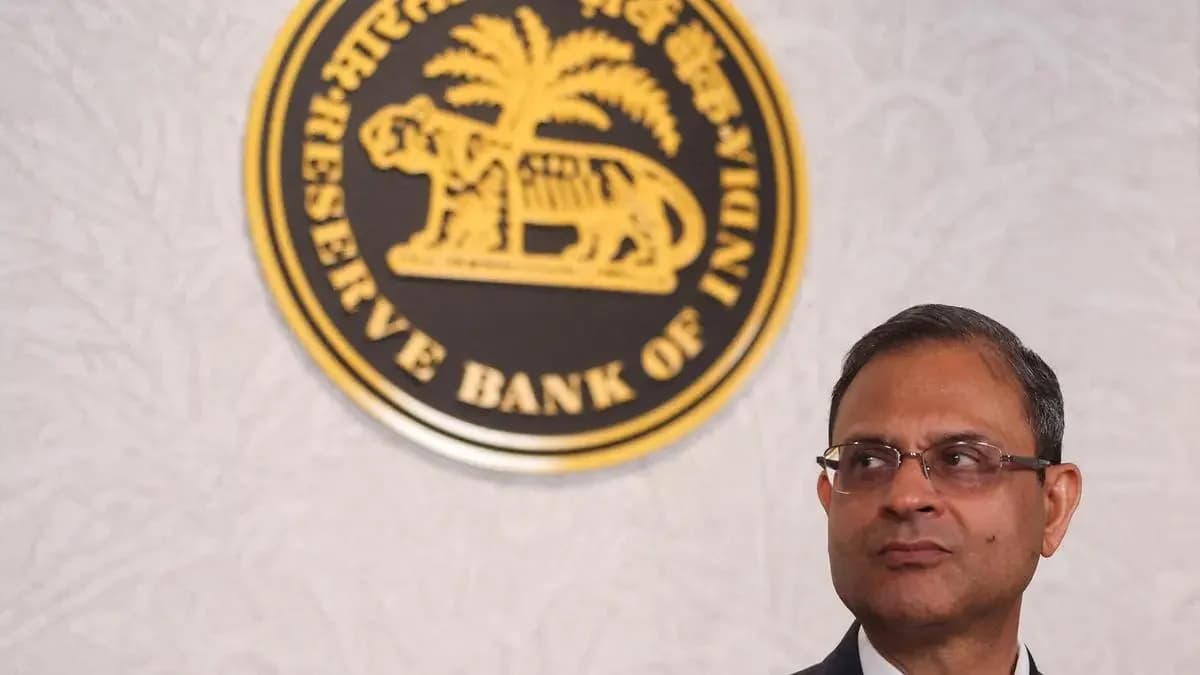
The Reserve Bank of India has delivered its widely expected 25 basis points repo rate hike, raising the benchmark rate to 5.50% from 5.25%, where it had remained for nearly 10 months. The six-member Monetary Policy Committee voted unanimously for the rate increase, while four members backed the change in stance to 'calibrated tightening', signalling that near-term interest rate cuts are off the table and future actions will lean toward measured, gradual rate hikes or a pause depending on incoming data. According to Governor Sanjay Malhotra, inflation and its outlook were no longer as benign as they were last year, with headline consumer price index (CPI) inflation expected to average almost 5.8 per cent over the next three quarters. This marks the first rate increase since February 2023, ending a four-month pause during which the RBI kept rates unchanged through its previous four policy reviews. The Standing Deposit Facility (SDF) rate stands at 5.25%, while the Marginal Standing Facility (MSF) rate and Bank Rate were raised to 5.75%.
The Reserve Bank of India has revised its inflation projections upward, with CPI inflation now expected to average 5.2% for fiscal year 2026-27, up from the earlier projection of 5% communicated during the policy review on 5 August. According to RBI Governor Sanjay Malhotra, inflation is inching up and will move up further, with inflation expected to average 6% in the December quarter, which is at the upper end of RBI's 4% +/- 2% target band. The encouraging part from a growth perspective was that the gross domestic product (GDP) growth projection for FY27 has been revised upward to an average of 7.1% over the year, up from 6.7% at the previous review meeting on 5 August. Real GDP grew 7.8% in the first quarter, supported by resilient private consumption and strong investment activity, which recorded an almost 12% increase. However, a meaningful share of private consumption is now financed by credit, as highlighted by robust 19% credit growth and household debt-to-GDP at 45% versus 39% in 2021.
Further rate hikes lie ahead, with the question being the extent of those increases. According to Mint, at least another 25bp rate hike is due, probably in the next review on 4 December 2026, as inflation is expected to average 6% in the December quarter, which is at the upper end of RBI's 4% +/- 2% target band. Thereafter, there may or may not be another hike of 25bps. Post December 2026, inflation is expected to inch down, averaging 5.7% in the March quarter and 5.6% in the June quarter of FY28. State Bank of India economists have predicted that the RBI will implement a steeper 0.50% rate hike at its December policy review, following the central bank's decision to raise the benchmark repo rate by 25 basis points to 5.50%. SBI noted that global conditions are likely to turn more volatile soon, and getting the repo rate to 6% from the present 5.50% will be the best option. Soumya Kanti Ghosh, group chief economic adviser at State Bank of India, expects a further 50-bps increase to 6% by December itself, while Kanika Pasricha, chief economic adviser at Union Bank, expects another 50-basis point increase in the policy rate by the end of this financial year.
Bank and NBFC shares rebounded strongly following the RBI's monetary policy decision, with Nifty Bank, Nifty Private Bank, Nifty PSU Bank and Nifty Financial Services trading up to 1% higher at 10:31 AM on Wednesday, as compared to a 0.38% decline in the Nifty 50. According to Business Standard, the Nifty Auto and Nifty Realty remained in negative zone, down 1% and 0.24% respectively, reflecting sector-specific impact of the rate hike. Kotak Mahindra Bank, Union Bank of India, Canara Bank, Punjab National Bank, Federal Bank and ICICI Bank gained up to 2% from the Nifty Bank index, while Bajaj Auto, Tube Investment of India, Bharat Forge, Hero MotoCorp and Mahindra & Mahindra from the Nifty Auto index were trading lower in the range of 1% to 2%. Brigade Enterprises, Prestige Estates Projects, Godrej Properties, DLF and Oberoi Realty were down 1% each in the realty space. NBFCs face higher funding costs following the rate hike, with Abhimanyu Munjal from Hero FinCorp noting that higher interest rates would affect funding costs for NBFCs, increasing the importance of disciplined pricing, diversified funding sources and prudent underwriting. Lakshmanan V, Group President & Head of Treasury at Federal Bank, noted that the MPC outcome on the rate hike was in line with market expectations, though most people did not expect the stance change, the markets had already priced in a clear hawkish tone, so the MPC outcome did not cause any substantial market move.