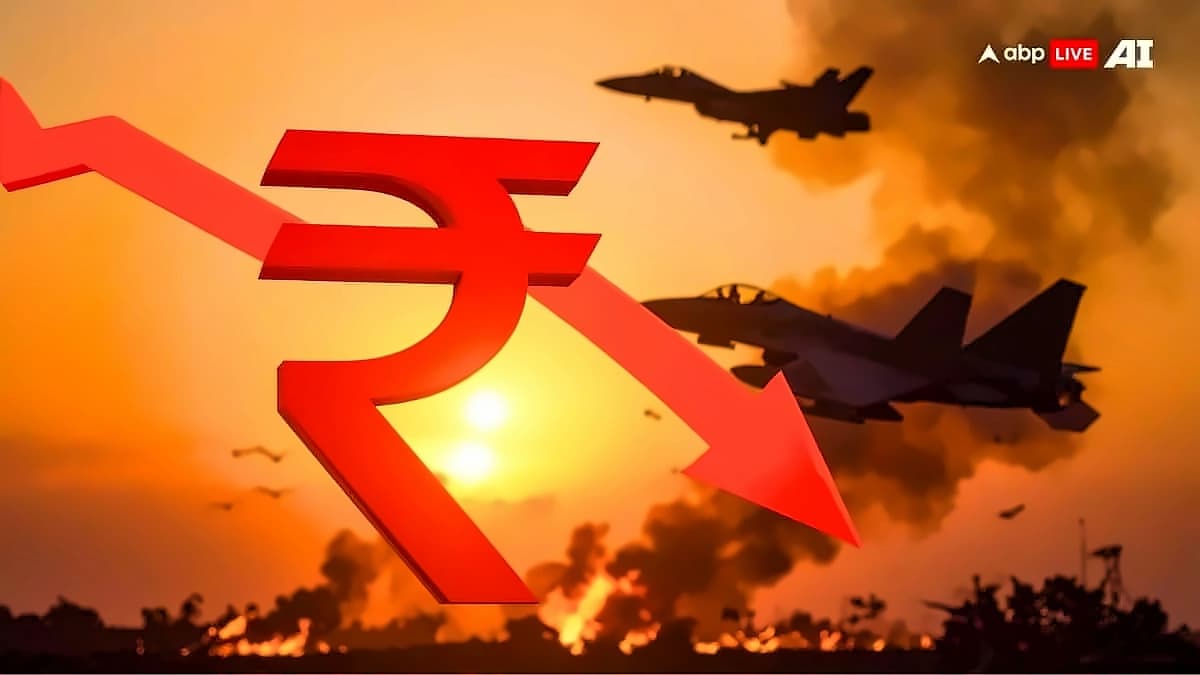
India's oil trade deficit is experiencing a significant deterioration as rising crude oil prices and weakening exports of refined petroleum products create mounting pressure on external balances. According to CRISIL's latest 'Quickonomics' report titled 'Oil's not well', the oil trade deficit had already begun worsening from fiscal 2024 onwards, despite softer crude oil prices, marking a significant break from historical trends. CRISIL forecasts India's current account deficit (CAD) to rise to 2.2% of gross domestic product in the current fiscal from an estimated 0.8% in the previous fiscal. The rating agency warns that a larger oil import bill, combined with possible pressure on remittance inflows from West Asia, could significantly widen India's current account deficit. This represents a structural shift in India's oil trade dynamics rather than a temporary price-led imbalance, with the situation likely to deteriorate further due to rising global oil prices.
CRISIL expects Brent crude oil prices to average between US$90-95 per barrel in fiscal 2027, sharply higher than the average price of US$70.3 per barrel recorded in the previous fiscal. India imports more than 85% of its annual crude oil requirement, making the economy highly vulnerable to global energy price swings. The report highlighted that higher oil prices could have wider macroeconomic implications for India, including inflationary pressures, stress on the rupee, and increased subsidy burdens if fuel prices are not fully passed on to consumers. India remains one of the world's largest crude oil importers, and changes in global oil prices have a direct impact on trade balances, inflation, fiscal management and household consumption.
India's inflation-targeting framework has delivered significant success since its introduction, reducing inflation from persistently high levels and establishing greater monetary policy credibility. According to reports from Business Standard, the post-inflation-targeting period has been markedly different from the era of double-digit inflation rates that hurt household savings and created macroeconomic uncertainty. However, the framework's success has come at a cost of excessive growth sacrifice, with the economy experiencing sharp slowdowns during periods of tight monetary policy.
The fundamental problem lies in the disconnect between reported inflation and real interest rates that affect future investment decisions. As reported by Business Standard, India's forward-looking real policy rate between 2015-16 and 2018-19 turned out to be close to 3 per cent, among the highest globally, despite the banking system being in crisis. Public-sector banks were burdened with stressed assets while credit growth weakened sharply, forcing borrowers to face double tightening from higher spreads and restrictive monetary policy. This approach ignored lessons from the global financial crisis, which emphasized that policy rates cannot ignore financial conditions and should fall when banking stress pushes spreads up sharply. The framework remained excessively focused on reported inflation while underestimating deteriorating financial conditions, with growth slowing sharply and falling below 4 per cent in 2019.
The Iran conflict has intensified oil price pressures, with CRISIL's latest projections showing Brent crude averaging US$90-95 per barrel in fiscal 2027, significantly higher than previous estimates. Warning signs were visible even before the conflict, including rising state government borrowing driven by freebie culture, indirect monetization of government borrowing through open market operations, and government bond yields rising more than 60 basis points despite lower short-term rates. The Iran conflict has made the situation far more complicated, with oil prices potentially rising sharply and the headline inflation rate may again cross the upper tolerance band. If that happens, there is a real danger that the RBI may once again react mechanically to reported inflation, with rates raised at precisely the wrong moment and kept high for too long, producing another episode of excessively tight real interest rates. This is the central problem with backward-looking inflation targeting in a volatile emerging economy.