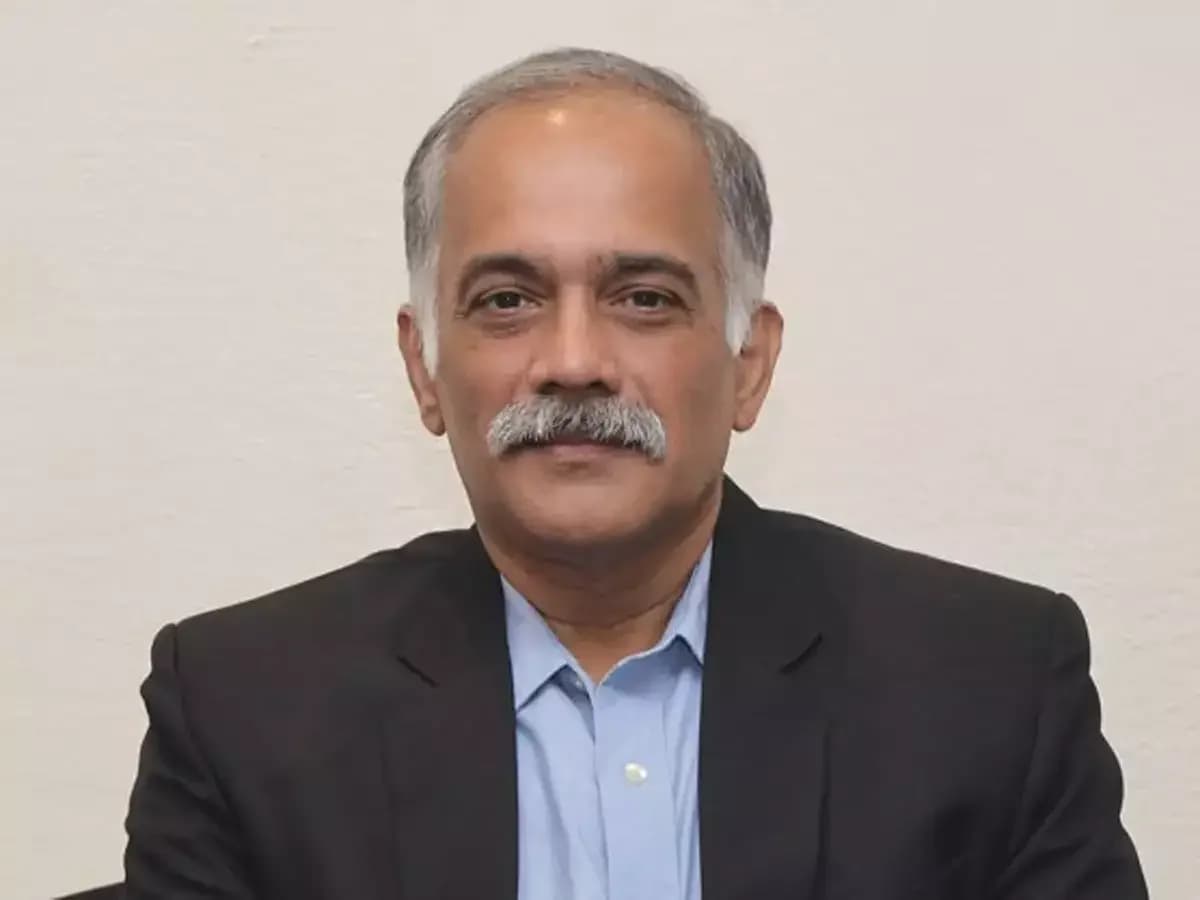
According to reports from Rediff Moneynews, Business Standard, and The Economic Times, Tata Capital Ltd's chief executive Rajiv Sabharwal confirmed that revolving credit comprises less than 5% of the company's loan book. Speaking on Tuesday at the FIBAC 2026 conference and at a banking conference organised by the Federation of Indian Chambers of Commerce & Industry (Ficci) and the Indian Banks' Association (IBA), Sabharwal emphasized that this small percentage limits the direct impact of the Reserve Bank of India's (RBI) proposal to bar non-bank lenders from offering such facilities. The company will submit its feedback on the proposal and commit to complying with final regulations once they are established. Sabharwal noted that it was 'not a big percentage' and emphasized that the company's focus remains on maintaining a 'comprehensive product suite' rather than specific revolving credit products. As of end-June, Tata Capital's gross loan book stood at ₹2.86 trillion, while its assets under management (AUM) stood at ₹2.90 trillion. Sabharwal told reporters that the current exposure is 'more about a comprehensive product suite, nothing else' and that there was 'not much' to be concerned about at this stage.
As reported by Rediff Moneynews, Business Standard, and The Economic Times, the RBI last week proposed that non-banking financial companies (NBFCs) be allowed to offer only term loans unless they hold a licence to issue credit cards. Under the August 6 draft norms, NBFCs require RBI approval and a minimum net owned fund of ₹100 crore to issue credit cards. The proposal could have a larger impact on some peers, with estimates by IIFL Capital Services showing flexi-credit products account for about 15% of Bajaj Finance's consolidated assets under management and nearly 20% of its standalone loan book. In contrast, the share is estimated to be less than 1% for Cholamandalam Investment and Finance Co. and below 1% for Tata Capital. The restriction shall not apply to an NBFC authorized by the RBI to issue credit cards, with the sanctioned limit disbursed in one or more instalments and repayable in accordance with a predetermined amortization schedule. According to PL Capital research analyst Shreya Khandelwal, any reusable credit line, overdraft facility or flexi-loan product offered by NBFCs in the corporate, MSME and unsecured personal loan categories is likely to be impacted. The move aims to curb the risk of evergreening, where borrowers service loans through fresh drawdowns rather than genuine cash flows, according to analysts.

According to Rediff Moneynews, Business Standard, and The Economic Times, the RBI defines revolving credit as a credit facility that does not meet the definition of a term loan. A term loan refers to credit with a fixed principal amount, disbursed in one or more instalments and repaid on a pre-decided schedule. Unlike revolving facilities, its limit cannot be replenished after the whole or part of the principal is repaid. Currently, only two non-bank entities issue credit cards in India—SBI Cards and Payment Services Ltd, and BOBCARD. The proposed restriction could matter for lenders because revolving facilities allow borrowers to draw, repay and redraw funds from a pre-approved limit without undergoing fresh underwriting each time. According to Anand Rathi Global Finance ED and CEO Jugal Mantri, NBFCs may no longer be able to offer line-of-credit facilities against collateral. The central bank has invited comments until August 28 on the draft norms, with the Finance Industry Development Council (FIDC), the self-regulatory organisation for the NBFC sector, meeting this week to discuss the issue.
As reported by Rediff Moneynews, Business Standard, and The Economic Times, Sabharwal stated that industry forums may also give feedback, but Tata Capital is definitely going to give its feedback on the RBI proposal. He emphasized that the company's focus remains on maintaining a comprehensive product suite rather than specific revolving credit products. Sabharwal noted that it was 'too early to assess the final impact' of the proposed regulations and the company was still 'collating data to determine the specific parameters' of its response. He added that there was 'not much' to be concerned about at this stage and that industry bodies could submit their feedback while Tata Capital would independently share its views with the regulator. According to PL Capital's Shreya Khandelwal, diversified NBFCs may be better placed to mitigate disruption through alternative product offerings, though the full impact will depend on final guidelines. Brokerages expect Bajaj Finance to be the most affected, while L&T Finance and Poonawalla Fincorp have negligible exposure.