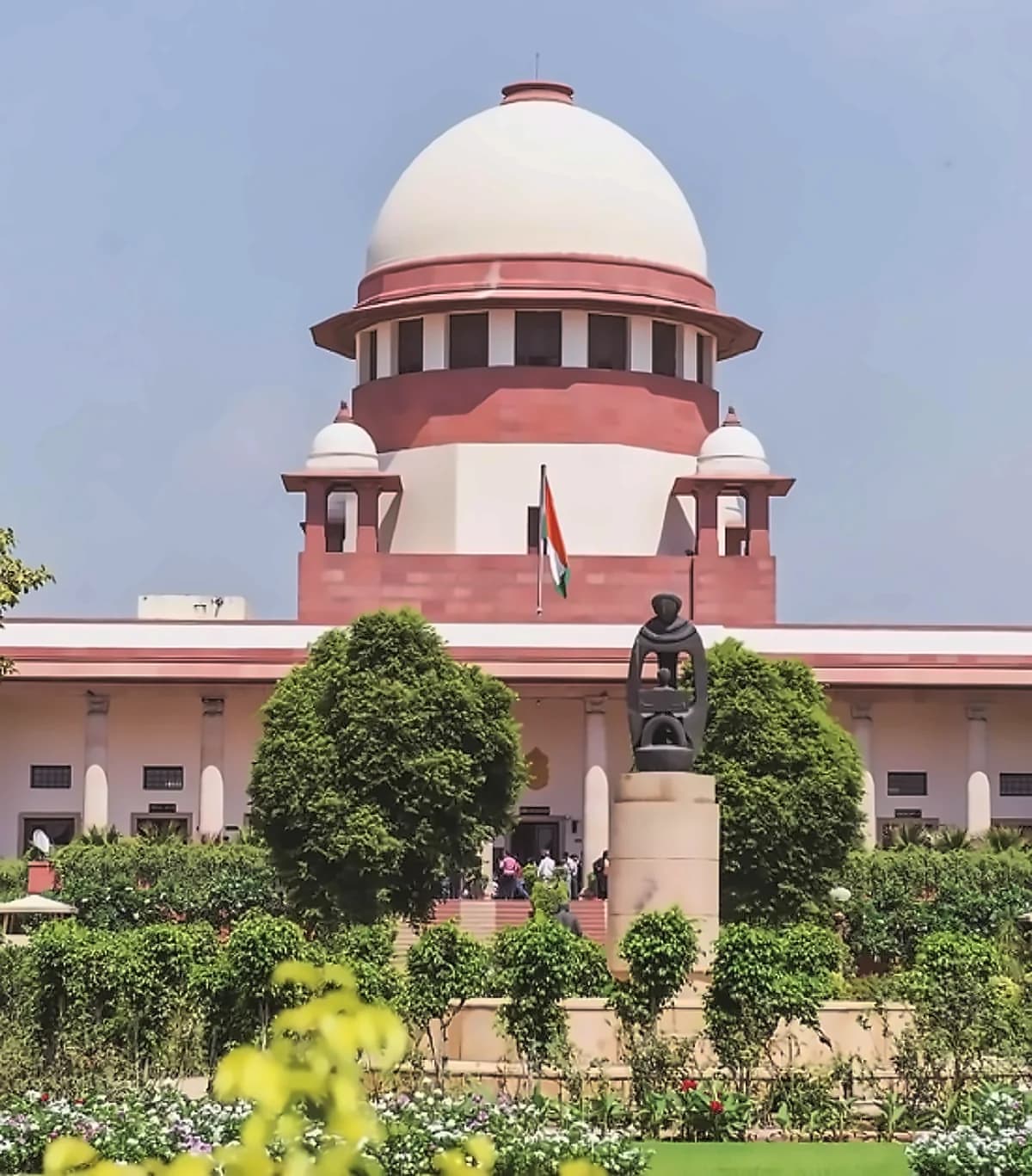
The Supreme Court has expressed displeasure over what it termed a troubling trend where banks like State Bank of India are casual in sanctioning massive loans to big corporate entities, while imposing stringent conditions and tedious process amounting to 'borderline harassment' on ordinary citizens seeking small loans for personal reasons. According to reports from The Economic Times, a Supreme Court bench comprising Justices Ahsanuddin Amanullah and R Mahadevan made these observations while hearing an appeal by Bhaskar International and others on May 19, 2026. "Banks disburse huge loans to big entities, adopt tedious process for ordinary citizens," the court stated, indicating broader concerns about banking practices. The court emphasized that while it was in no way suggesting easing of rules and requirements for loan facilities, which was best left to the Reserve Bank of India and banks to decide, the procedure could certainly be made easier and fairer for loan seekers.

Expressing its displeasure over the troubling trend, the Supreme Court bench said the government needs to frame a policy with respect to concessions or incentives in giving loans to ordinary people, so as to give the maximum benefit to those at the lowest rung of the social or financial strata. As reported by The Economic Times, the court emphasized that while it was in no way suggesting easing of rules and requirements for loan facilities, which was best left to the Reserve Bank of India and banks to decide, the procedure could certainly be made easier and fairer for loan seekers. The bench specifically noted that "the procedure so adopted could certainly be made easier and fairer for loan seekers or applicants and thereafter at the stage of recovery also."

The court was hearing an appeal by Bhaskar International and others challenging a Punjab and Haryana High Court order directing authorities to help SBI take physical possession of the borrower's properties under the Securitisation and Reconstruction of Financial Assets and Enforcement of Security Interest Act, 2002. According to The Economic Times, the court found negligence on part of SBI and its officials in granting/sanctioning a loan of over ₹8 crore to the company, as the company could not even start repaying the loan. The judgment stated that "this is a clear indicator that a proper assessment was not made of the capacity of the borrowers to repay." The court's findings highlight the broader issue of "negligence" in loan assessment processes that affect both individual borrowers and corporate entities.
The top court refused to interfere with an execution decree filed by SBI for taking over the properties of Bhaskar International, but allowed the company to seek relief from the Debts Recovery Tribunal. As reported by The Economic Times, the court said it was in no way suggesting easing of rules and requirements for loan facilities, which was best left to the Reserve Bank of India and banks to decide, but the procedure could certainly be made easier and fairer for loan seekers. The court's decision reflects a balanced approach, allowing the execution process to continue while providing relief mechanisms for borrowers who may have been unfairly treated in the loan assessment process.