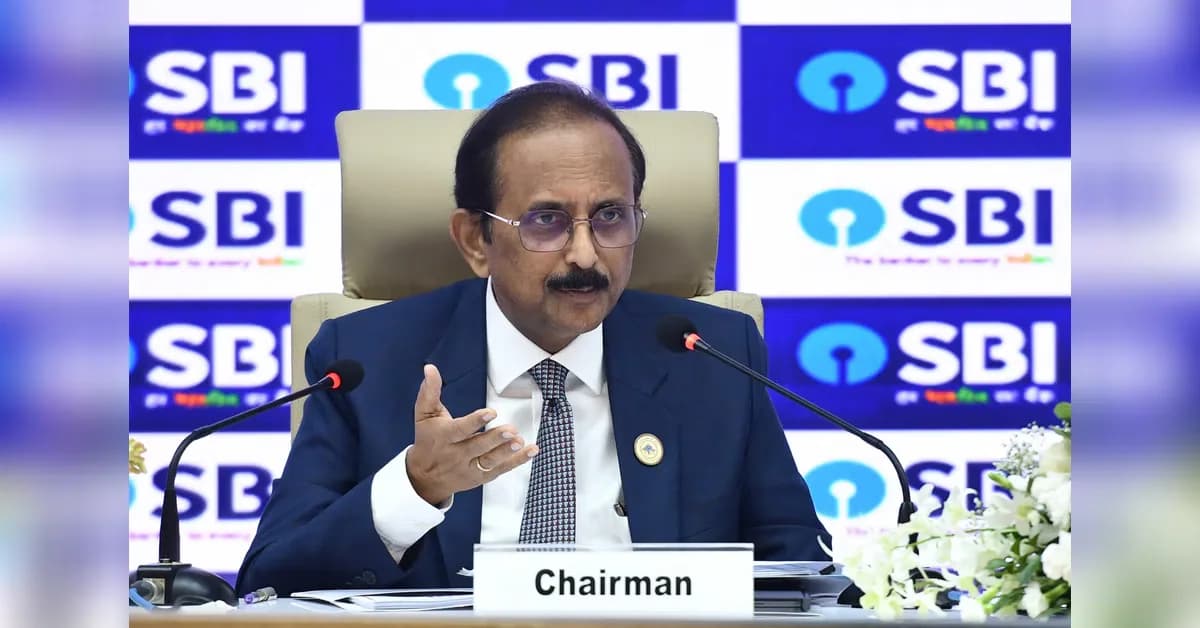
State Bank of India will continue to back its branch network even as it accelerates investments in artificial intelligence and digital banking, according to chairman C S Setty in the bank's latest presentation. As reported by ETBFSI, Setty emphasized that "physical banking will continue to remain an important pillar of our relationship-led model." The bank's strategy focuses on integrating the strength of its branch network with the speed and convenience of digital platforms to create a truly omni-channel banking experience for customers. The last financial year was described as a landmark year for the bank, with the institution strengthening its market leadership across key business segments while continuing its transformation into a technology-driven, customer-centric financial institution.
The next phase of SBI's transformation will focus on delivering deeply personalised, seamless, and intuitive banking experiences across all customer segments and channels, as reported by ETBFSI. Chairman Setty outlined that the bank's strategic priorities will continue to revolve around strengthening its 'Digital First, Customer First' strategy, with sustained investments planned across technology, data analytics, artificial intelligence, cybersecurity, and digital infrastructure. The objective is to build a more intelligent, agile, and responsive banking ecosystem capable of meeting evolving customer expectations while improving operational efficiency across the organisation. The bank will continue investing in technology, data analytics, artificial intelligence, cybersecurity, and digital infrastructure to create a more intelligent, agile, and responsive banking ecosystem.
As of May 27, 2026, State Bank of India stock price stands at ₹968.6, while HDFC Bank Ltd stock price is ₹779.0. According to latest market data, HDFC Bank Ltd has a market capitalization of ₹1,199,374 crore, significantly higher than SBI's market cap of ₹894,077 crore. The stock performance of both banks is primarily driven by their robust global client base, consistent revenue growth, strong operational efficiency, strategic investments in digital transformation, client acquisition, and the overall health of the industry. Both companies' performances are also influenced by macroeconomic conditions, currency fluctuations, and industry-specific trends.
The comments come at a time when Indian banks are increasingly investing in AI-led personalisation, digital servicing, and cybersecurity capabilities as competition intensifies across retail and digital banking segments. According to Setty, Project SARAL will continue to focus on process re-engineering, standardisation, digital integration, and greater adoption of automation and artificial intelligence across banking operations. The initiative will drive the bank's transformation journey, with the bank continuing to simplify processes, reduce turnaround times, and improve service quality through continuous innovation and operational excellence initiatives.