State Bank of India delivered robust credit growth of 18.2% year-on-year to ₹51.54 lakh crore in the second quarter of FY27, outpacing its nearest rival HDFC Bank's 16.4% growth to ₹31.95 lakh crore. According to reports from The Financial Express, SBI's loan growth momentum was significantly boosted by recently raised FCNR(B) deposits of $8.8 billion (₹83,600 crore) that contributed to strong quarterly performance. The bank's SME loans grew 22% year-on-year while agricultural loans expanded 22.6% year-on-year, with retail loans also advancing 14.5% year-on-year. As reported by The Economic Times, SBI's branches have extended loans of $8.8 billion against these FCNR(B) deposits, highlighting the strategic use of overseas funding for domestic lending growth. For H1FY27, loans or advances grew 17.8% year-on-year driven by agriculture, SME and corporate portfolios, with a corporate pipeline of around ₹7 trillion providing runway for H2 growth.
SBI's domestic net interest margin (NIM) improved 11 basis points sequentially to 3.11% in Q2FY27, clearing the bank's commitment of above 3%, with NIM expansion noteworthy given expectations of margin pressure from FCNR(B) deposits. Lower funding costs and improved loan yields translated into stronger core net interest income (NII) of ₹49,143 crore, with SBI's 15% year-on-year rise in NII being top-tier among large-cap banks according to Jefferies India. However, the improvement comes with a trade-off as FCNR(B) deposits cannot substitute for low-cost Casa deposits, with SBI's Casa ratio declining to 38.32% from 39.63% a year earlier. Net profit rose 14.28% year-on-year in Q2FY27, while operating profit increased 7.28% to ₹34,226 crore, including an exceptional gain of around ₹7,288 crore from stake sale in SBI Funds Management, partly offset by treasury and forex losses of approximately ₹1,300 crore amid rising bond yields.
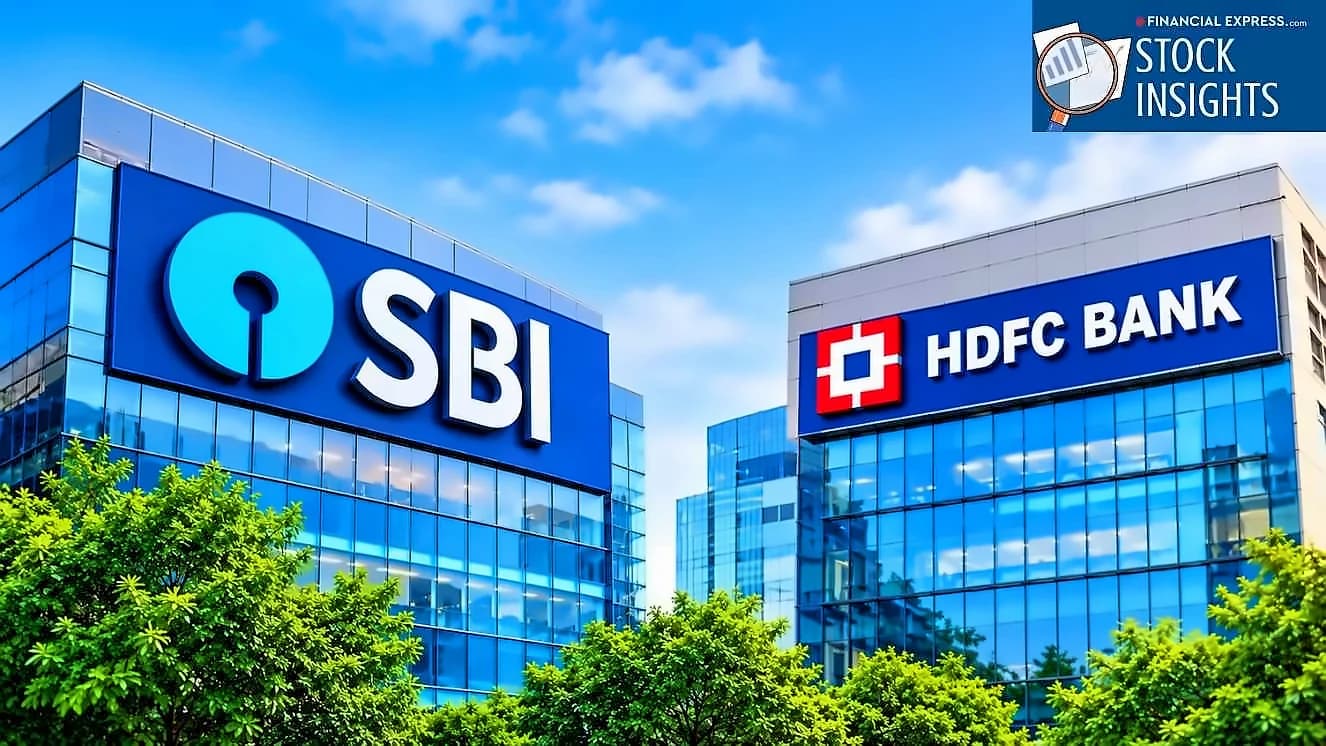
SBI reported standalone net profit of ₹23,038 crore, representing a 14.3% year-on-year increase, significantly outperforming HDFC Bank's ₹19,510 crore profit with only 4.7% growth. The bank achieved its lowest NPA ratio in more than two decades at 0.36% compared to 0.42% a year earlier, with gross NPA declining to 1.39% of advances from 1.73% a year earlier. Credit costs declined to 22bps from 39bps year-on-year, supported by lower slippages, improved recoveries and upgrades. As reported by The Economic Times, SBI's provision coverage ratio was 74.4% compared to 75.79% a year earlier, with provisions for NPAs at ₹4,216.9 crore versus ₹5,400 crore previously. For H1FY27, return on assets (RoA) and return on equity (RoE) were at 1.14% and 18.68% respectively.
Despite strong quarterly performance, SBI retained its conservative credit growth target of 14-15% for FY27, domestic NIM above 3%, RoA of 1% and RoE above 15%. As reported by Citi Research, whole bank loan growth in Q2FY27 was modest at 3.3% sequentially and 18.2% year-on-year, lagging the system, with expectations of SBI to clock 16% plus loan growth for FY27. The stock has declined 21% from its 52-week high of ₹1,234.70, ending 1.8% lower at ₹969.9 following investor disappointment with the maintained guidance. Management highlighted excess statutory liquidity ratio (SLR) holdings and available liquidity as buffers, though the gap between current performance and guidance may reflect uncertainties. JM Financial Institutional Securities noted that SBI's core fundamentals remain stable with lower exposure to insurance income than private peers at 2.6% of FY26 PBT versus 6.5% average for large private banks.