According to a working paper by the Economic Advisory Council to the Prime Minister (EAC-PM), public sector banks demonstrate superior efficiency compared to private and foreign banks. The study, authored by Soumya Kanti Ghosh (Part-time member, EAC-PM and Group Chief Economic Advisor at State Bank of India) and Tapas Kumar Parida (Economist at State Bank of India), analyzed 47 banks covering more than 95% of banking system assets for the period FY15 to FY26. The paper employed Data Envelopment Analysis (DEA) to calculate efficiency and productivity, studying 12 public sector banks, 21 private sector banks, and 14 foreign banks.
The study revealed significant improvement in public sector bank efficiency, with PSBs efficiency improving to 93.12% in FY26 from 72.46% in FY20. As reported by the EAC-PM paper, this improvement was attributed to subsequent capital infusion and technological upgradation in select PSBs. The paper noted that PSBs are relatively more efficient than private banks except during FY19-FY22, which may be due to merger and rationalization of business, branches, and employees. Mean technical efficiency improved from 77.99% in FY20 to 88.34% in FY26, demonstrating the broader efficiency gains across the banking sector.
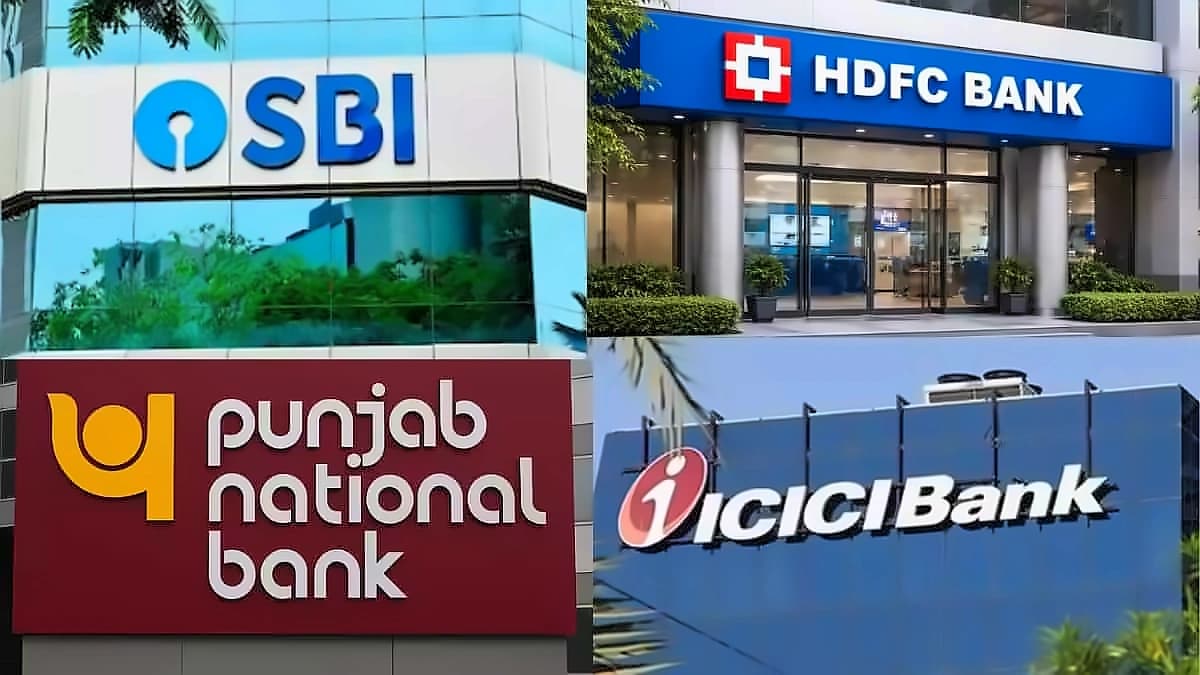
Among public sector banks, SBI performed relatively better with 97.49% efficiency during the full sample period FY15-FY26, followed by Bank of Maharashtra at 90.49%. In the private banking sector, HDFC Bank scored 97.54% followed by IDBI Bank at 96.51%. Among foreign banks, HSBC and JP Morgan achieved 100% efficiency during the study period, with JP Morgan and HSBC ranked first and second respectively, followed by Citibank at third position, HDFC Bank at fourth, and SBI at fifth. The paper noted that foreign banks' efficiency is better than domestic banks mostly due to their prevalent business models.
The latest EAC-PM paper highlights a critical challenge facing Indian banks - credit growth outpacing deposit growth by 5% in July 2026, with credit growth at 19.3% and deposit growth at 15.4%. This gap has widened significantly since FY23, when credit growth stood at 16.1% against deposit growth of 13.5%. The credit-deposit wedge has pushed loan-to-deposit ratios above 82%, forcing banks to rely more on certificates of deposit, money markets including TREPS, and domestic and overseas bonds to meet credit demand. The paper recommends that banks should focus on mobilising stable deposits to support credit expansion while avoiding excessive concentration in unsecured retail segments.
The paper emphasized that banking in India will change significantly with several key drivers including hyper-personalisation through AI that will tailor needs of young individual customers. As reported by the EAC-PM paper, there will be a shift from reactive to proactive service deepening customer relationships and increasing institutional loyalty. Banks are expected to focus on data-driven customer experiences, AI automation, and robust data security, with product offerings and delivery becoming customized in the coming years. The paper noted that given India's multi-language nature, creation of foundational AI models will gather pace, with banks exploring suitable opportunities to harness these India-specific models for multiple language onboarding and hyper-customisation of services. Additionally, the paper sees artificial intelligence and machine learning driving the next phase of banking productivity, stating that "the new breed of Artificial Intelligence and Machine Learning will beget more innovations for banks."
The EAC-PM paper maintained a positive long-term outlook for India, with India's sovereign rating remaining stable at BBB after its revision in August 2025. According to the paper, India's strong fundamentals include high savings rate, adequate FX reserves at more than $700 billion, well-capitalised banking system, and cash-rich corporate balance sheet, making high growth feasible. The paper concluded that given these strong fundamentals, the long-term outlook of high growth remains intact for the Indian economy. The banking sector's improved efficiency metrics, with gross NPA ratio falling to 1.68% in June 2026 from 11.5% in March 2018, and aggregate CRAR at 17.78% and liquidity coverage ratio at 126.94%, support this optimistic outlook.