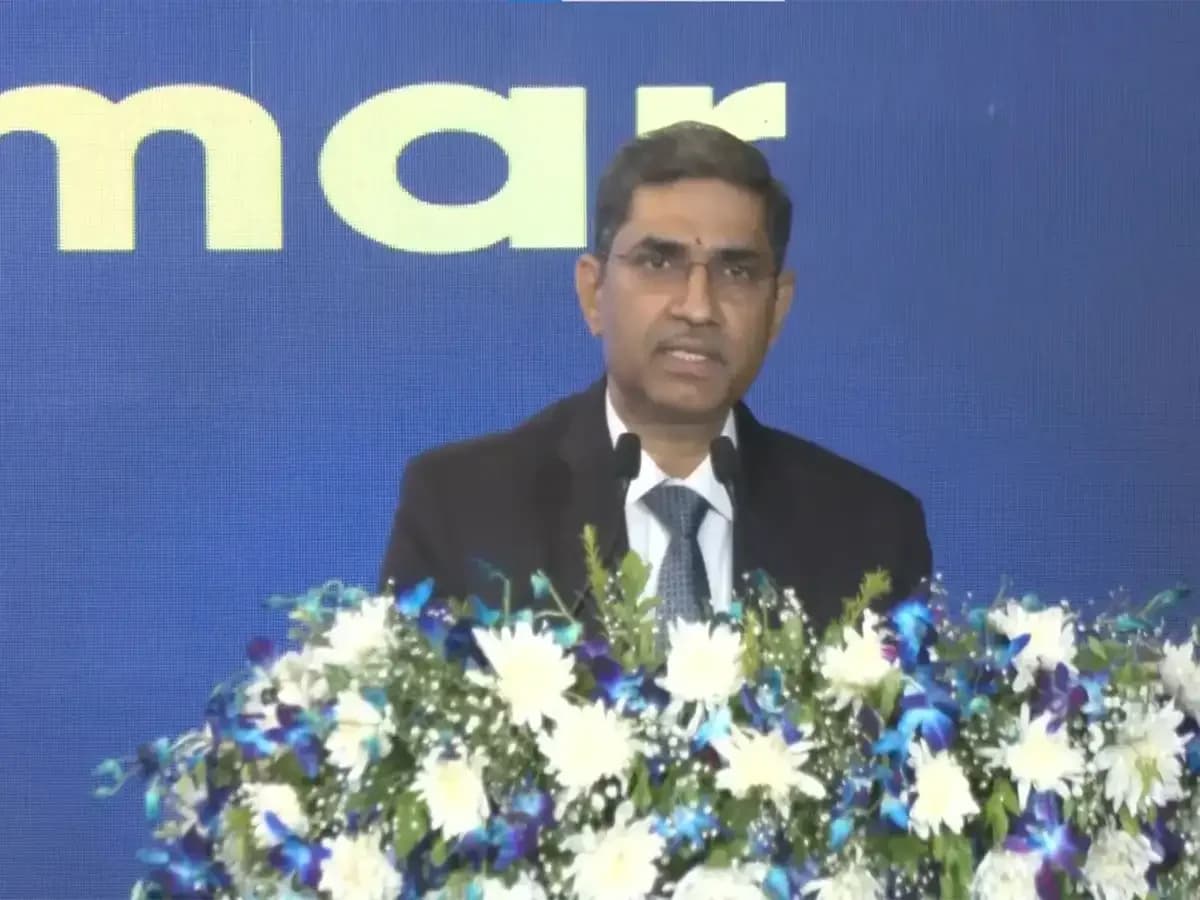
Indian Overseas Bank has achieved a historic milestone by completely wiping out nearly ₹20,000 crore of accumulated losses that had been carried forward since March 2020, as reported by Mint. According to MD & CEO Ajay Kumar Srivastava, the bank has been reducing these losses through consistent net profit generation over the years, and this quarter has finally liquidated all accumulated losses, making the balance sheet absolutely clean. The achievement makes IOB eligible to declare dividends for the first time in years, subject to board approval, with dividend eligibility expected to enhance investor interest ahead of the proposed capital raising plans.
The bank delivered impressive Q1 results for FY27, with net profit surging 49.32% to ₹1,659 crore compared to ₹1,111 crore in the same period last year. According to the bank's stock exchange filing, the government-owned lender's shares responded positively to the results, rising 3.4% to ₹35 on NSE today, closing at ₹35 compared to the previous close. The bank demonstrated significant improvement in both profitability and core income metrics during the June quarter, with the results being well received by investors who appreciated the healthy growth in core income and improved asset quality. Net Interest Income (NII) rose 34.3% year-on-year to ₹3,688 crore, while operating profit grew 14.21% to ₹2,693 crore. The improvement was driven by domestic net interest margin (NIM) improving to 3.48% from 3.17% a year earlier, and global NIM rising to 3.37% from 3.04%, with the cost of deposits reducing to around 4.7% from 5.04%.
Riding on its stronger balance sheet, Indian Overseas Bank is preparing to raise up to ₹5,000 crore through a qualified institutional placement (QIP) of shares in the second half of FY27 after obtaining the remaining statutory and regulatory approvals. As reported by Mint, MD & CEO Ajay Kumar Srivastava indicated that the board has already approved the proposed QIP and the bank is awaiting remaining approvals. "We are awaiting the remaining statutory and regulatory approvals. If we receive them during this quarter, which we expect, we may approach the market in the latter part of the third quarter or anytime during the fourth quarter, possibly in one or more tranches," Srivastava said. The proposed share sale assumes significance as the central government owns 92.44% of the bank, leaving a relatively small public float, with the QIP expected to strengthen the bank's capital base while diluting the government's holding and improving the public float over time.
The bank's non-interest income performance was exceptional, with non-interest income surging 45.85% year-on-year to ₹2,160 crore, led by a more than threefold rise in priority sector lending certificate (PSLC) commission to ₹863 crore, as reported by Business Standard. MD & CEO Ajay Kumar Srivastava explained that "Non-interest income has shown a growth of 45.85%, primarily driven by PSLC sales and recovery from technically written-off accounts, in addition to normal non-interest income." This substantial growth in non-interest income, combined with the strong performance in core banking income, reflects the bank's enhanced operational efficiency and business growth during the quarter, with the results being well received by investors who appreciated the healthy growth in core income and improved asset quality.
The bank demonstrated strong growth in its retail franchise, with retail advances increasing to ₹96,637 crore as of June-end 2026 from ₹70,803 crore a year earlier, registering a 36.49% growth. According to Mint, nearly 80% of the bank's credit portfolio comprises retail, agriculture and MSME advances, with the growth attributed to the decentralization of loan processing through 57 Loan Processing Centres (LPCs), which have significantly improved turnaround time and operational efficiency. On gold loans, Srivastava said the RBI's revised regulatory framework has not impacted business growth, with the bank having automated the entire gold loan process, with nearly 80% of its gold loan portfolio carrying a loan-to-value (LTV) ratio of around 60-65%. The bank's gold loan portfolio currently stands at around ₹1.26 trillion, and it expects 30-35% growth during FY27. The bank maintained strong asset quality with total NPA recovery at ₹654 crore during the quarter, which was 3.35 times the quarterly slippages, while total slippages reduced to ₹195 crore and the slippage ratio came down to a historic low of 0.06%.

Indian Overseas Bank has announced ambitious plans to raise $1 billion through non-resident deposits and external commercial borrowing, with $650 million targeted from foreign currency denominated deposits by September 2026. As reported by The Economic Times, the Chennai-headquartered state-owned lender has already secured $300 million without utilizing leverage options, managing the mobilization without any leverage, even as the Reserve Bank of India allowed banks to extend credit or loans to eligible non-residents to leverage their deposits parked in Indian banks. MD & CEO Ajay Kumar Srivastava indicated that "Mobilising higher deposits through a leverage route will be the last resort to us. We will think of it towards the end of August and September to meet the intended target of $650 million." The bank serves 4.5 lakh non-resident customers and has overseas centres in Singapore, Hong Kong, Bangkok and Colombo, providing a strong foundation for its foreign deposit mobilization strategy.