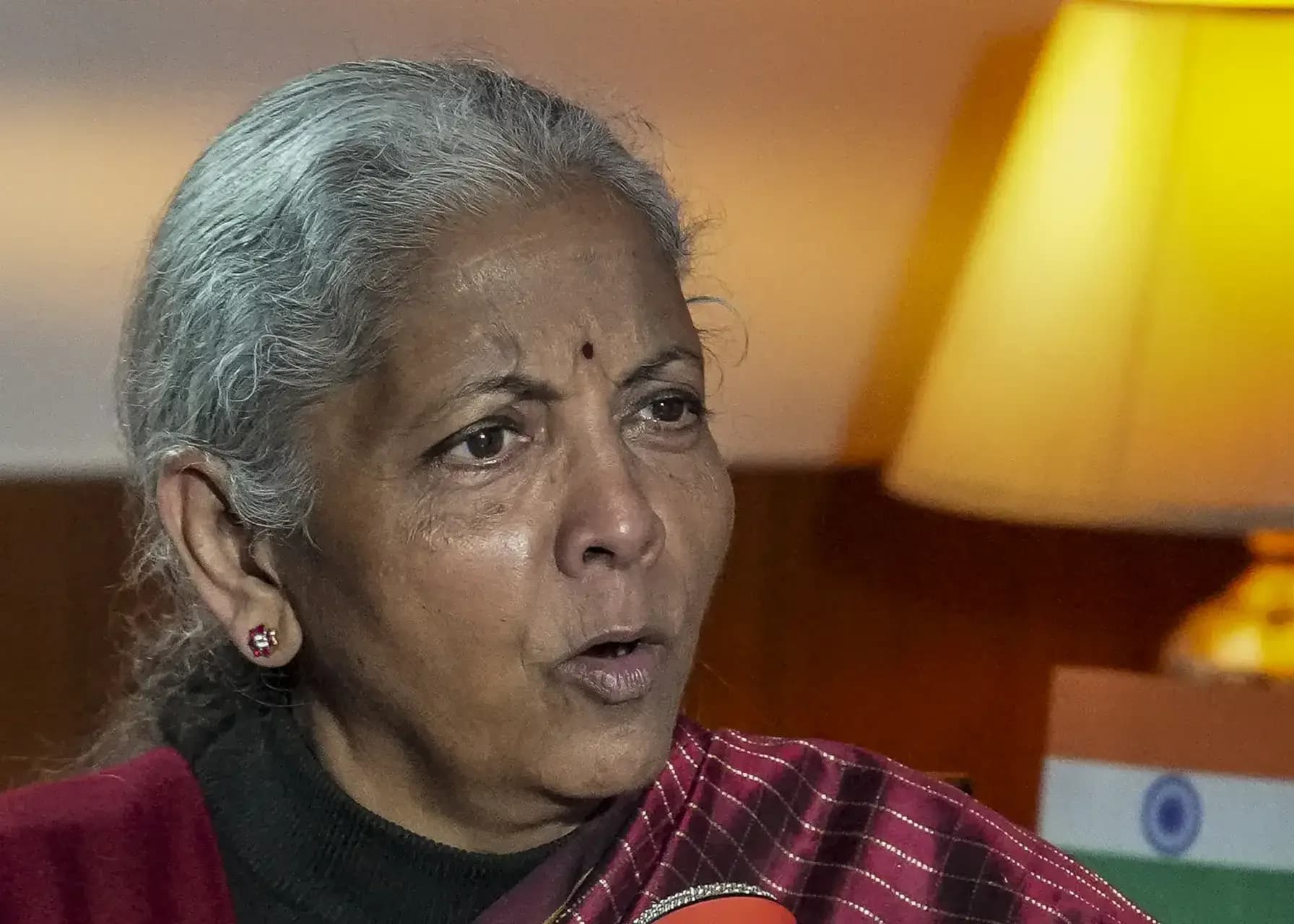
Finance Minister Nirmala Sitharaman announced that the government will soon constitute a High-Level Committee on Banking for Viksit Bharat to prepare a comprehensive roadmap for building large lenders capable of meeting the financing needs of a developed India. According to reports from The Economic Times, Sitharaman stated that the committee will suggest steps to strengthen the banking system and expand credit access to support growth. In her Budget speech on February 1, Sitharaman had proposed setting up this committee to comprehensively review the sector and align it with India's next phase of growth, while safeguarding financial stability, inclusion and consumer protection. The Budget 2026-27, framed as the first Budget of a new five-year fiscal cycle and the second quarter of the 21st century, is anchored in policy stability while laying the pathways for the long-term vision of a 'Viksit Bharat' at its core. As per PTI, Sitharaman emphasized that 'People want stability, and that is why they have elected Prime Minister Modi for the third time. Stability is inherent in that vote, and it is equally reflected in the way policies are executed through successive budgets'. The Prime Minister's third consecutive electoral victory represents a clear public endorsement of political and policy stability, which the government sees as central to India's long-term growth strategy.
As reported by The Economic Times, Sitharaman explained that the committee is intended to determine what actions are necessary to ensure banking is made available for funding Viksit Bharat. She emphasized that 'Viksit Bharat needs money, it needs financing, it needs credit, it needs banking facility to reach the common man'. The Finance Minister clarified that while the committee may suggest steps to strengthen the banking system, it should not be narrowed down to just considering mergers of public sector banks. When asked about specific merger possibilities, Sitharaman said 'A lot of work has happened in the ministry concerned. They have come up with this expectation. Let's see how they play it out', indicating that the implementation is under active consideration. This approach reflects the government's commitment to ensuring that the banking sector is adequately prepared to support India's development goals. According to PTI, the Budget marks the first year of the second quarter of the 21st century, the first year of a new government term, and the beginning of a new five-year fiscal cycle. 'We are also looking ahead to 2047 and beyond, up to 2050. The focus is on building a Viksit Bharat by the centenary year of Independence and preparing India over the next 25 years for future challenges and opportunities', Sitharaman said.
On February 6, 2026, the PFC board granted in-principle approval for the merger of non-banking finance company REC Limited with itself, following a prior Cabinet Committee on Economic Affairs clearance for PFC's acquisition of a 52.63% stake in REC. This board approval came after the Budget announcement made on Sunday regarding the merger. Both PFC and REC are Navratna central public sector enterprises, and this acquisition was a step toward consolidating companies operating in the same space. The merger involves REC, a subsidiary of state-owned power sector lender Power Finance Corporation (PFC), with both entities playing a key role in funding power generation, transmission and distribution projects. When asked about the merger's progress, Sitharaman said 'A lot of work has happened in the ministry concerned. They have come up with this expectation. Let's see how they play it out', indicating that the implementation is under active consideration. The market reacted with mixed sentiment; PFC shares saw a modest rise of 1.01% to ₹419.20 on February 6, while REC experienced a dip of 2.51% to ₹372.50, reflecting investor caution regarding integration complexities.
According to The Economic Times, the Budget also proposed to restructure the Power Finance Corporation (PFC) and Rural Electrification Corporation (REC) as a first step to achieve scale and improve efficiency in public sector NBFCs. In March 2019, PFC completed the acquisition of a majority stake in REC Ltd by transferring ₹14,500 crore to the government. PFC acquired 103.94 crore shares, constituting 52.63% stake, held by the government in REC, along with management control at ₹139.50 per share. This stake acquisition came following the in-principle approval from the Cabinet Committee on Economic Affairs. Both PFC and REC are Navratna central public sector enterprises, and this acquisition was a step toward consolidating companies operating in the same space. The merged company will retain its status as a 'Government Company' under the Companies Act, 2013.
The government's dual strategy of forming the High-Level Committee on Banking and approving the PFC-REC merger represents a deliberate effort to engineer financial entities of considerable scale and efficiency essential for underwriting the ambitious financing requirements of a developed India. As reported by The Economic Times, the initiative acknowledges the current strength of the Indian banking sector, characterized by robust balance sheets, record profitability, and improved asset quality. The Budget 2026-27 prioritises capital expenditure, infrastructure expansion and structural reforms over populist measures, while maintaining fiscal discipline. By emphasising predictable policymaking, sustained investment and multi-year planning extending to 2047 and beyond, the Budget seeks to strengthen economic resilience, crowd in private investment and position India for durable, export-led growth. The government's strategy is to build financial institutions capable of meeting the significant financing demands of a developed nation, moving beyond the current structure where only the State Bank of India ranks among the global top 50 banks by assets. The establishment of the High-Level Committee on Banking signifies a forward-looking approach to shaping India's financial landscape, with its recommendations expected to guide the sector's evolution for the next two decades, aligning with the nation's 'Viksit Bharat 2047' goals.