Former RBI Governor C Rangarajan has called for enhanced incentives to strengthen India's small finance bank segment, which currently comprises only around 11 banks nationally. Speaking at the formal inauguration of Equitas' Small Finance Bank's new corporate office in Chennai, Rangarajan urged the Reserve Bank of India to examine ways to incentivise the establishment of small finance banks, arguing that the existing framework does not provide sufficient motivation for new entrants. "I would appeal to the Reserve Bank of India to look at how to incentivise the setting up of small finance banks," he said, emphasizing that the current numbers would not be sufficient to meet unmet credit needs. "But this is not going to meet what they call the unmet credit needs of this sector," he added, noting that small finance banks today have an obligation to fulfil the same set of conditions as universal banks. According to Rangarajan, prospective promoters may have limited incentives to establish new SFBs because they are required to meet conditions similar to those applicable to universal banks.
According to reports from The Hindu BusinessLine, Equitas Small Finance Bank has demonstrated strong financial performance with gross advances of ₹47,641 crore as of June 2026, representing a 27% year-on-year growth. The bank's overall deposits grew 10% year-on-year to reach ₹48,976 crore. In the quarter ended June 2026 (Q1FY27), the company reported a quarterly PAT of ₹184 crore, compared to a loss of ₹224 crore in Q1FY26. The bank has completed 10 years as a small finance bank since its establishment in 2016, having originally started as a microfinance company and getting listed as a public entity in 2020. As reported by The Hindu BusinessLine, Rangarajan held Equitas up as a potential model for other small finance banks, noting that it has exceeded several regulatory requirements. He suggested that if a universal bank license is granted to the bank, it would not be a bad idea, as almost all small finance banks ultimately aspire to become universal banks.
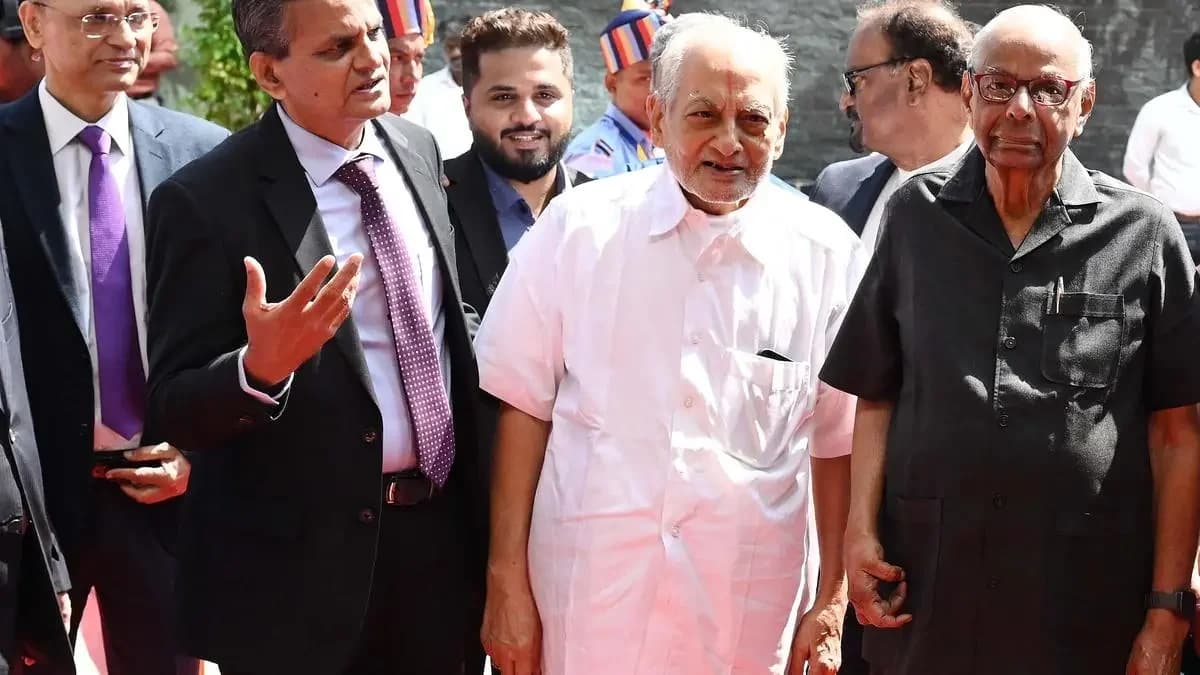
Rangarajan has strongly criticized the consolidation of Regional Rural Banks (RRBs), calling it "a step in the wrong direction" that undermines their local and regional character. "What has happened to Regional Rural Banks?" he asked while speaking at the event marking Equitas' 10th anniversary. According to a July 2025 written reply in the Lok Sabha by Union Finance Minister Nirmala Sitharaman, the government has progressively consolidated RRBs since 2005, reducing their number from 196 to 82 between 2005-2010, and further to 28 under the latest 'One State-One RRB' phase effective May 1, 2025. "To me, this is a step in the wrong direction. It essentially loses the local and regional character of these banks, and ultimately they may get merged with the universal banks as well," Rangarajan stated, noting that RRBs were originally set up with the idea that their local character would help distribute credit more evenly. He cautioned that while consolidation may create larger institutions, it could also weaken the close connection between rural banking institutions and the communities they were originally created to serve.
As reported by The Hindu BusinessLine, Rangarajan held Equitas up as a potential model for other small finance banks, noting that it has exceeded several regulatory requirements. He suggested that if a universal bank license is granted to the bank, it would not be a bad idea, as almost all small finance banks ultimately aspire to become universal banks. "I am sure that Equitas Bank will also make an application at the appropriate time. And if a universal bank license is given to them, it is not a bad idea," he added, as reported by The Hindu BusinessLine. Rangarajan was also critical of the merger of Regional Rural Banks, observing that RRBs have been reduced to essentially one per state, diluting their local and regional character. He noted that the performance of SFBs in their mandated areas would count and they had done extremely well in the areas in which they were required to work. He emphasized that creating institutions alone will not solve credit gaps, arguing that the effectiveness of an institution depends significantly on how its management approaches its mandate.

According to The Hindu BusinessLine, the inauguration event was attended by key guests including Vasudevan PN, Founder & MD of Equitas Small Finance Bank, who reflected on the bank's journey from not being able to find office space in the initial days to moving into the multi-storied Equitas Towers. The bank also announced the launch of 'When Organisations Win – Governance, Trust and the Values of Equitas Small Finance Bank', a book authored by Sangeeta Shankaran Sumesh, chronicling the bank's governance journey. Speaking at the inauguration event, Vasudevan PN thanked the Murugappa Group-owned Cholamandalam Finance and its senior executives, where he had started his career and then subsequently left to start Equitas. Rangarajan emphasized that the record of small finance banks showed that the spirit with which management took on the task was important, while cautioning that India's response to gaps in credit delivery had repeatedly been to create new institutions, noting that "creating an institution by itself is not the answer, because institutions can come and still the problems will continue."