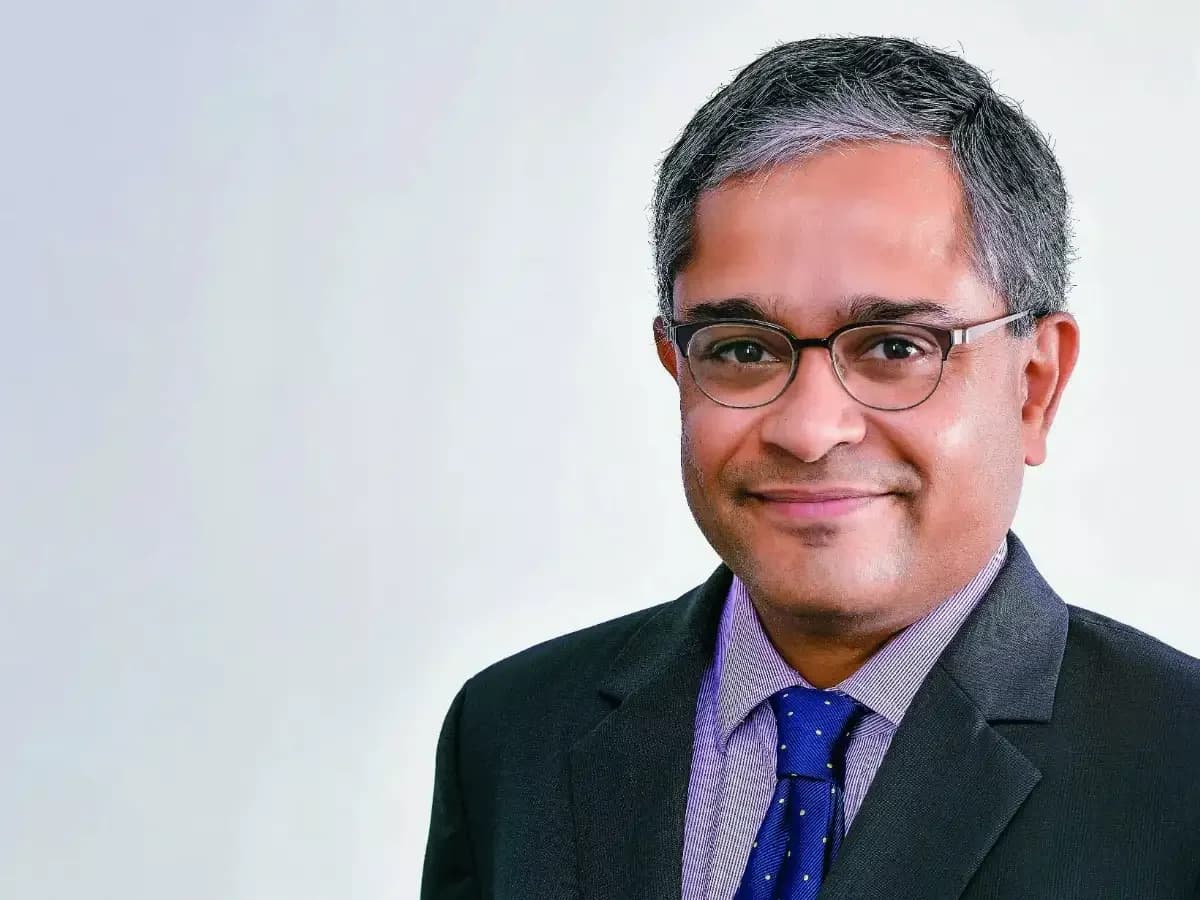
ESAF Small Finance Bank has set an ambitious target to achieve ₹1 lakh crore total business by 2030, up from the current ₹50,140 crore. As reported by The Hindu BusinessLine, Managing Director & CEO K. Paul Thomas stated that "Our aspiration is to reach ₹1 lakh crore in total business by 2030. It took us around nine years to reach ₹50,000 crore. Historically, we grew at around 40 per cent, later moderated to around 33 per cent, and growth slowed further during Covid. Under normal conditions, we believe a sustainable annual growth rate of around 25 per cent (plus or minus 2 per cent) is achievable." The bank plans to apply to the RBI for transitioning to a universal bank, requiring another two years of continuous profitability since it reported losses during FY25 and FY26. Thomas emphasized that becoming a universal bank would strengthen customer perception and enhance brand value, while potentially reducing deposit costs.
ESAF Small Finance Bank shares surged 16.06% to ₹42.35 following the company's return to profitability in the June quarter. The bank reported a standalone net profit of ₹80.08 crore compared with a net loss of ₹81.22 crore in the year-ago period. This turnaround was supported by strong growth in net interest income and significant improvement in asset quality metrics, with the latest results showing net profit of ₹80.1 crore for the June quarter. Total income increased to ₹832.32 crore from ₹577.87 crore a year ago, with interest income growing by 54.6% to ₹584.08 crore during the period under review. The Kerala-based lender's transformation journey continued with Net Interest Margin (NIM) improving significantly to 7.9% compared to 6% in Q1 FY26.
The bank demonstrated robust operational performance with Pre-Provision Operating Profit (PPOP) increasing by 179.4% to ₹348.98 crore in the June 2026 quarter from ₹124.92 crore in the same period last year. Profit before tax stood at ₹107.02 crore, compared with a pre-tax loss of ₹109.2 crore in the corresponding quarter last year. The bank's Profit Before Depreciation and Tax (PBDT) nearly tripled to ₹107 crore from ₹109.2 crore in the previous year. Provisions (other than tax) and Contingencies rose by 3.3% YoY to ₹241.96 crore in Q1 FY27, reflecting continued caution toward potential credit risks. Net interest income climbed 54.6% year-on-year to ₹584.08 crore from ₹377.87 crore in the year-ago quarter, while operating profit nearly tripled to ₹348.98 crore from ₹124.92 crore a year earlier. The retail banking division functioned as the largest revenue channel, contributing ₹1,141.36 crore to the overall revenue pool, with treasury operations adding ₹154.30 crore and wholesale banking bringing in ₹22.21 crore.
The bank's asset quality showed significant sequential improvement, with the gross non-performing asset (GNPA) ratio easing to 5.40% of gross advances as of June 30, 2026, from 7.48% by the end of first quarter of the previous fiscal. According to The Hindu BusinessLine, net NPAs as a percentage of net advances declined significantly to 0.83% from 3.77% a year earlier. The provision coverage ratio improved to 85.5% compared to 73.2% as of June 30, 2025. On a year-on-year basis, GNPA improved from 7.48%, while net NPA nearly halved from 3.77%. The bank set aside provisions of ₹241.96 crore during the quarter, compared with ₹234.12 crore in the year-ago period and ₹214 crore in the March quarter, reflecting continued caution toward potential credit risks. Gross non-performing assets stood at ₹1,253.34 crore, while net NPAs dropped down to ₹184.12 crore. The strategic shift focused on reducing microfinance dependence, with microfinance loans declining to about 10% of gross advances from 31% in the year-ago quarter due to adverse weather conditions, elections and policy changes at the state level during 2024-25.

Despite achieving ₹50,000 crore total business milestone, the bank faces challenges in geographic diversification with 71% of total deposits (₹26,924 crore) originating in Kerala as of June-end 2026. As reported by The Hindu BusinessLine, Thomas noted that the bank has 820 branches spread across 26 states, with only 300 branches based in Kerala. The bank operates through around 1,100 Customer Service Centres through business partners and 35 institutional business correspondent partners. Thomas expects the proportion of Kerala-based deposits to gradually decline to around 50% by 2030 from about 71% currently, emphasizing that unlike asset growth, deposit growth takes time because building customer trust in new markets is a gradual process. The bank's credit-to-deposit ratio improved to 82.32% as of June 30, 2026, compared to 80.29% as of June 30, 2025, indicating stronger asset mobilization.