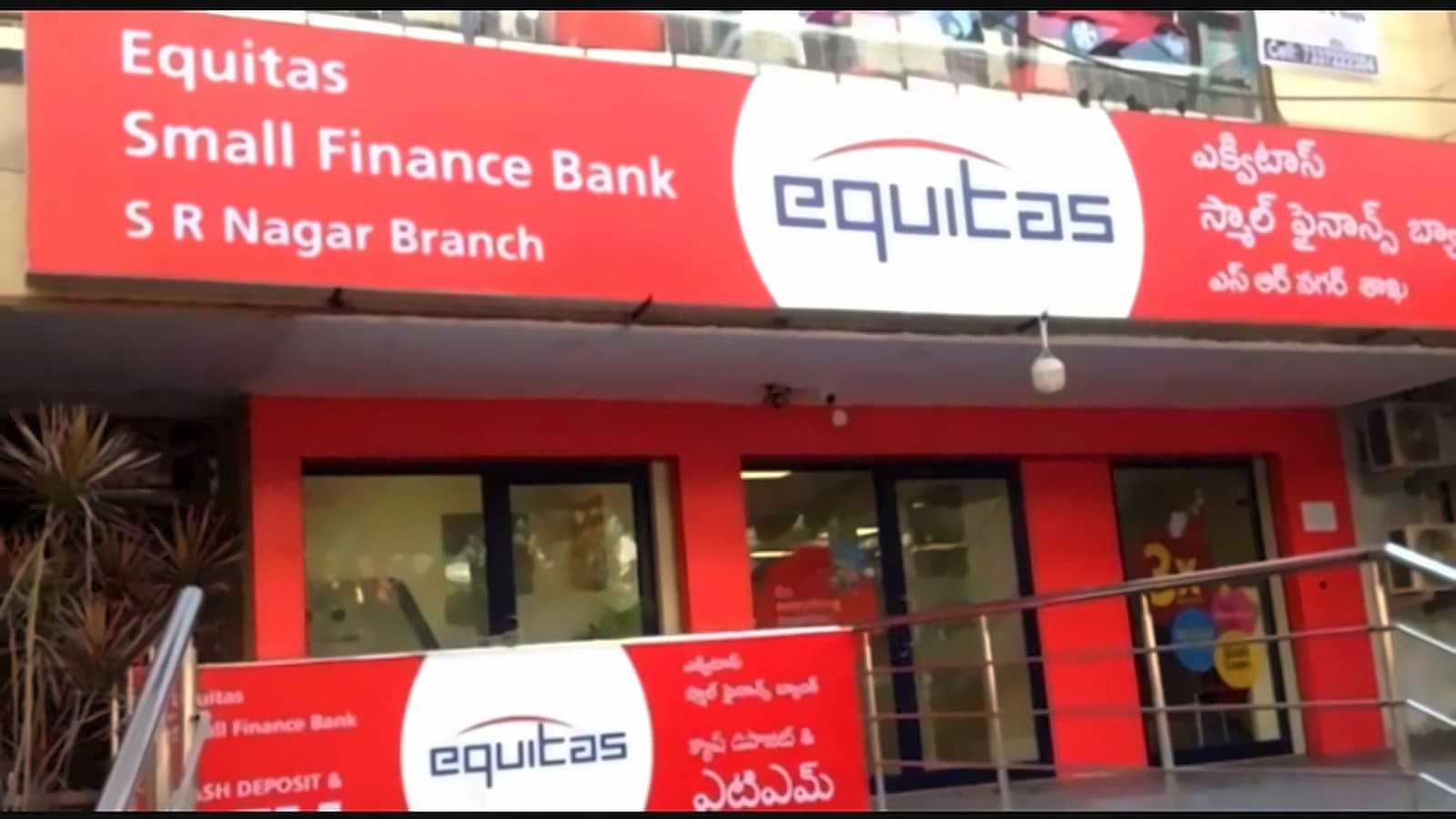
According to reports from Stock Market News, Equitas Small Finance Bank outlined an ambitious 2030 roadmap during a Thursday analyst meeting, targeting sustained 20% credit growth alongside a 1.5% return on assets (RoA) and 15% return on equity. The bank's stock responded positively, rising more than 3% on Friday and approaching its 52-week high of ₹76.93 from June 9. Management indicated that most challenges associated with the company's transition from a non-banking financial company to a diversified retail bank are now behind it, with focus shifting to execution. As per Centrum Broking, the bank's 68% retail deposit mix gives it a funding advantage that most NBFCs cannot replicate, positioning it well for sustained growth.
As reported by Stock Market News, the bank has significantly transformed its loan portfolio, with secured assets accounting for 88% of advances in FY26 versus 75% in FY20. This shift is driven by small business loans (SBLs), which accounted for 40% of advances in FY26 and have achieved a 27% compound annual growth rate (CAGR) over FY18-26. The transformation includes affordable housing, vehicle finance and gold loans, diversifying beyond traditional lending. Meanwhile, microfinance institution (MFI) exposure has declined dramatically from 46% in FY17 to around 10% in FY26 through a calibrated approach, with the bank aiming to cap MFI exposure at these reduced levels. This lower dependence on MFI, which has been under stress, shields the bank from earnings volatility and strengthens franchise quality.

According to Stock Market News, deposit mobilization remains a key challenge despite the bank's strong lending capabilities. Deposits grew 42% annually from ₹1,921 crore in FY17 to ₹46,533 crore in FY26, though growth moderated to 8% year-on-year in FY26. The landed cost of funds declined from 12.7% in FY17 to 8.2% in FY26, with management expecting this trend to continue. The bank hiked savings account and term deposit rates in Q4FY26 to improve the CASA mix and help sustain net interest margin (NIM) around 7% over the medium term. As noted by Centrum Broking, improving branch productivity, coupled with declining cost of funds, should allow the bank to grow liabilities without proportional increase in operating expenses, supporting margins and profitability over the medium term.
According to Stock Market News, Equitas is taking a measured approach to branch expansion while focusing on productivity improvements. The bank's total branch network has increased to 630 from around 528 in FY17, reflecting strategic growth in key markets. However, higher operating expenses in Q1FY27 due to annual increments and credit cost normalization is likely to impact RoA in H1FY27. A lower cost-to-income ratio in H2FY27, driven by operating leverage and stable credit cost, could drive RoA to 1.5% by Q4FY27. The bank expects loan growth to remain robust at 20% in FY27 and anticipates sustained momentum in its diversified lending portfolio.
As reported by Stock Market News, Equitas is broadly compliant with Reserve Bank of India requirements to transition to a universal bank structure and plans to proceed with the application process once all regulatory conditions are met. Conversion to a universal bank would reduce capital adequacy requirements, improve leverage, and enhance return on equity. Importantly, it could boost deposits with the removal of the small finance bank tag, providing a significant competitive advantage. The stock has rallied 24% in the past six months and trades at 1.27 times its FY27 book value. After the analyst meeting, JM Financial Institutional Securities raised its FY27 and FY28 earnings-per-share estimates by 4% and 5% respectively. However, analysts caution that deposit mobilization and execution on profitability targets remain key areas to monitor.