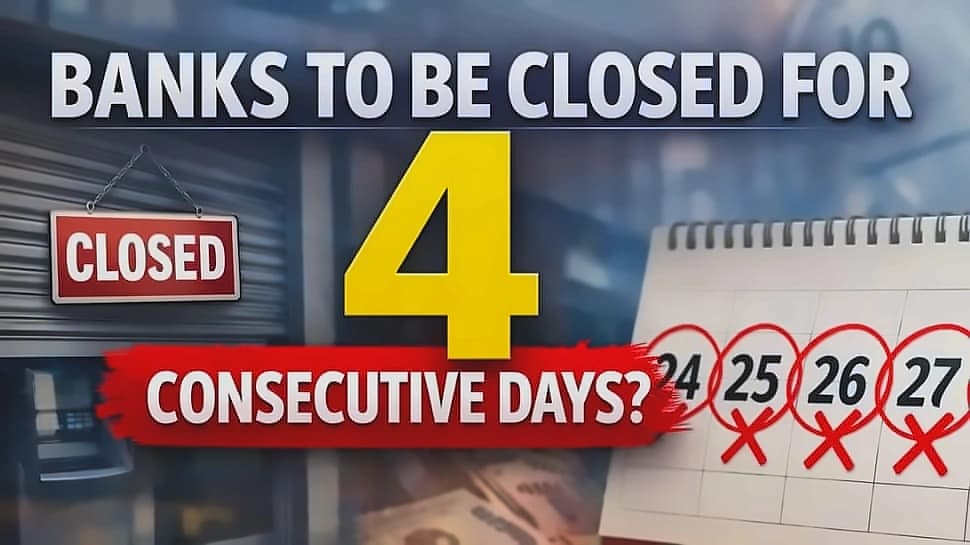
The United Forum of Bank Unions (UFBU) declared its nationwide strike on January 27 a success, with over 8 lakh bank employees participating across the country in demonstrations demanding implementation of a five-day work week. According to latest estimates from The Economic Times, cheques worth ₹4 lakh crore were held up for clearance, representing a massive disruption to the banking system. All India Bank Employees Association (AIBEA) General Secretary C H Venkatachalam confirmed that cash transactions were impacted and bill trading, bill discounting and trading were affected, with treasury operations at public sector banks shut at many places. Services at 12 public sector banks and a few old generation private sector banks were significantly impacted, with banking operations severely disrupted across multiple states. As per The Hindu BusinessLine, since bank staff up to the middle management grade, constituting majority of the banks' workforce, are part of the strike, banking services including cheque clearing were hit. The strike proceeded after conciliation meetings with the Chief Labour Commissioner on January 22 and 23 failed to resolve the issue. Union leaders emphasized that "this movement is not against customers, but for a sustainable, humane, and efficient banking system. A rested banker serves the nation better," as stated by Times of India.
In Uttar Pradesh's Ghazipur district, over 10,000 bank employees from nearly 250 banks joined the nationwide strike, disrupting transactions worth over ₹150 crore. As per Zee News, banking activities across the district came to a standstill, causing inconvenience to customers and businesses alike. Reports from Madhya Pradesh and Jharkhand indicate that banking services were impacted and many ATMs were running dry, according to The Economic Times. In Chhattisgarh's Raipur, around 25,000 bank employees from nearly 2,500 banks participated in the strike, with banking services across the state severely affected. Most branches of public sector banks across the country were either completely closed or partially closed as both employees and officers were observing Tuesday's strike. In Gujarat's Vadodara, employees of nationalised banks joined the strike in large numbers, with protesters stating that memoranda regarding the demand for a five-day work week had been submitted to the government on multiple occasions, but no concrete steps had been taken. Similar scenes were witnessed in West Bengal's Cooch Behar and Murshidabad district, where banks and ATM branches remained closed. The Hindu BusinessLine reports that it was business as usual at new generation private sector banks as their employees are not unionised.
Branch-level services such as cash deposits, withdrawals, cheque clearances and administrative work are hit at branches of all public sector banks (PSBs) and some old generation private sector banks. However, as per The Economic Times, operations at major private sector lenders like HDFC Bank, ICICI Bank, and Axis Bank are expected to remain largely unaffected as their employees are not part of the striking unions. Digital banking services, including UPI and internet banking, were working fine as there were no reports of outage. SBI specifically emphasized that customers can use net banking, the YONO app, mobile banking, and UPI to carry out transactions during this closure. UPI payments remain fully operational, along with IMPS/NEFT/RTGS transfers continuing normal operations throughout the strike period. Several public sector lenders, including the banking giant SBI, had informed stock exchanges about the potential impact, with State Bank of India stating in its regulatory filing that while the bank has made necessary arrangements to ensure normal functioning in its branches and offices on the day of strike, it is likely that work in the bank may be impacted by the strike.
An urgent meeting was held on Monday under the chairmanship of the secretary, department of financial services, with the chairman of SBI, managing directors and CEOs of nationalised banks, and the chief executive of the IBA, as reported by Times of India. Banks were advised to take all necessary steps to ensure smooth functioning of customer services, digital channels, clearing and settlement systems, government business and services delivered through business correspondents. Sources said banks have conveyed that ATMs are being adequately loaded with sufficient cash and arrangements made for timely replenishment. While branch operations may be impacted, digital banking services are expected to remain available seamlessly. Several public sector banks, including SBI, have also informed stock exchanges about the possible impact, with State Bank of India stating in its regulatory filing that while the bank has made necessary arrangements to ensure normal functioning in its branches and offices on the day of strike, it is likely that work in the bank may be impacted by the strike.
The unions are demanding that all Saturdays be declared holidays, a proposal they say was agreed upon during the 12th Bipartite Settlement signed with the Indian Banks' Association (IBA) in March 2024 but is yet to be notified by the government. All India Bank Officers' Confederation (AIBOC) General Secretary Rupam Roy told The Economic Times that in December 2023, after discussions it was agreed that the daily working hours from Monday to Friday will be increased by 40 minutes and the remaining Saturdays will be declared as holidays. This has been duly recommended to the government but unfortunately it is pending approval for the past two years, he said. C H Venkatachalam, General Secretary, All India Bank Employees' Association told The Hindu BusinessLine that "Foreign exchange market, money market, stock exchanges, etc, are not working on Saturdays. Central and State Government offices are not working on Saturdays. Hence, there is no reason why banks cannot introduce five-day banking." Currently, while RBI, LIC, GIC etc are working 5 days a week, with all Saturdays of the month being a holiday, banks have only second and fourth Saturdays as holiday. S Nagarajan, General Secretary, All India Bank Officers' Association said pending staff service conditions agreed to under bipartite wage negotiations, including five-day week, productivity-linked incentive to the workforce and updation of pension need to be implemented.
The United Forum of Bank Unions (UFBU) comprises nine unions - AIBEA, AIBOC, NCBE, AIBOA, BEFI, INBEF, INBOC, NOBW and NOBO. The Hindu BusinessLine reports that there are nine constituent unions/associations in UFBU -- All India Bank Employees Association, All India Bank Officers Confederation, National Confederation of Bank Employees, All India Bank Officers Association, Bank Employees Federation of India, Indian National Bank Employees Congress, Indian National Bank Officers Congress, National Organisation of Bank Workers and National Organisation of Bank Officers. While PSU banks like SBI, PNB, BOB, Indian banks may be impacted, private sector banks such as the HDFC Bank, the ICICI Bank, and the Axis Bank are expected to function normally, since their employees are not part of the unions participating in the strike. Bank branches are expected to resume normal operations on Wednesday, January 28 following the extended closure period. Customers are advised to plan transactions in advance and use alternative digital channels for routine banking needs during any future disruptions, with SBI advising customers to use digital services such as net banking, the YONO app, and UPI to avoid inconvenience.