SEBI has issued a regulatory censure against Axis Capital Limited, a wholly owned subsidiary of Axis Bank, concluding proceedings linked to September 2024 restrictions. The Securities and Exchange Board of India passed the final order on October 28, 2026, with the regulator noting that no allegation of harm to investors or default by fraudulent design had been brought on record. Axis Bank shares were trading 1.15% lower at ₹1,211 on the NSE, compared with the previous close of ₹1,225 per share. The matter dates back to September 19, 2024, when SEBI issued an interim order restraining Axis Capital from taking up new assignments as a merchant banker, arranger or underwriter for debt segment issues. According to Axis Bank's disclosure, Axis Capital's profit after tax for FY2023-24 was approximately 0.70% of Axis Bank's consolidated PAT, while income from the subsidiary's debt business accounted for approximately 5% of Axis Capital's total income in FY2023-24.
Axis Bank Ltd. experienced a challenging week from 19-23 October 2026, with its share price declining 5.63% to close at ₹1,214.05, underperforming the Sensex's 3.75% fall over the same period. The stock faced persistent selling pressure amid deteriorating technical indicators and heightened derivatives activity, despite robust trading volumes and institutional participation. On a positive note, the bank's price-to-earnings (P/E) ratio dropped to 12.86 from approximately 13.92, while the price-to-book value (P/BV) ratio settled at 1.76, signalling a shift from expensive to fair valuation. The stock's fundamentals remained solid with a return on equity (ROE) of 12.65% and return on assets (ROA) of 1.35%, with its year-to-date decline of 2.51% modest compared to the Sensex's 13.34% fall.
The Reserve Bank of India has implemented comprehensive measures to manage the banking system's durable liquidity surplus of over ₹14 trillion, following the mobilisation of over $140 billion through special dollar-rupee forex-swap facilities. The central bank initially absorbed ₹2 trillion through open market operations (OMOs) and sell-buy swaps in September, but with the weighted average call rate (WACR) remaining well below the policy rate, it raised the cash reserve ratio (CRR) requirement to 99% from 90% effective October 16. This aggressive tightening strategy pushed the WACR above the policy rate to 5.55% on October 14 and above the corridor ceiling to 5.81% on October 26, with some banks accessing the marginal standing facility (MSF). The RBI's approach reflects the need to align the operating target with the policy rate amid inflation concerns and tightening monetary policy.
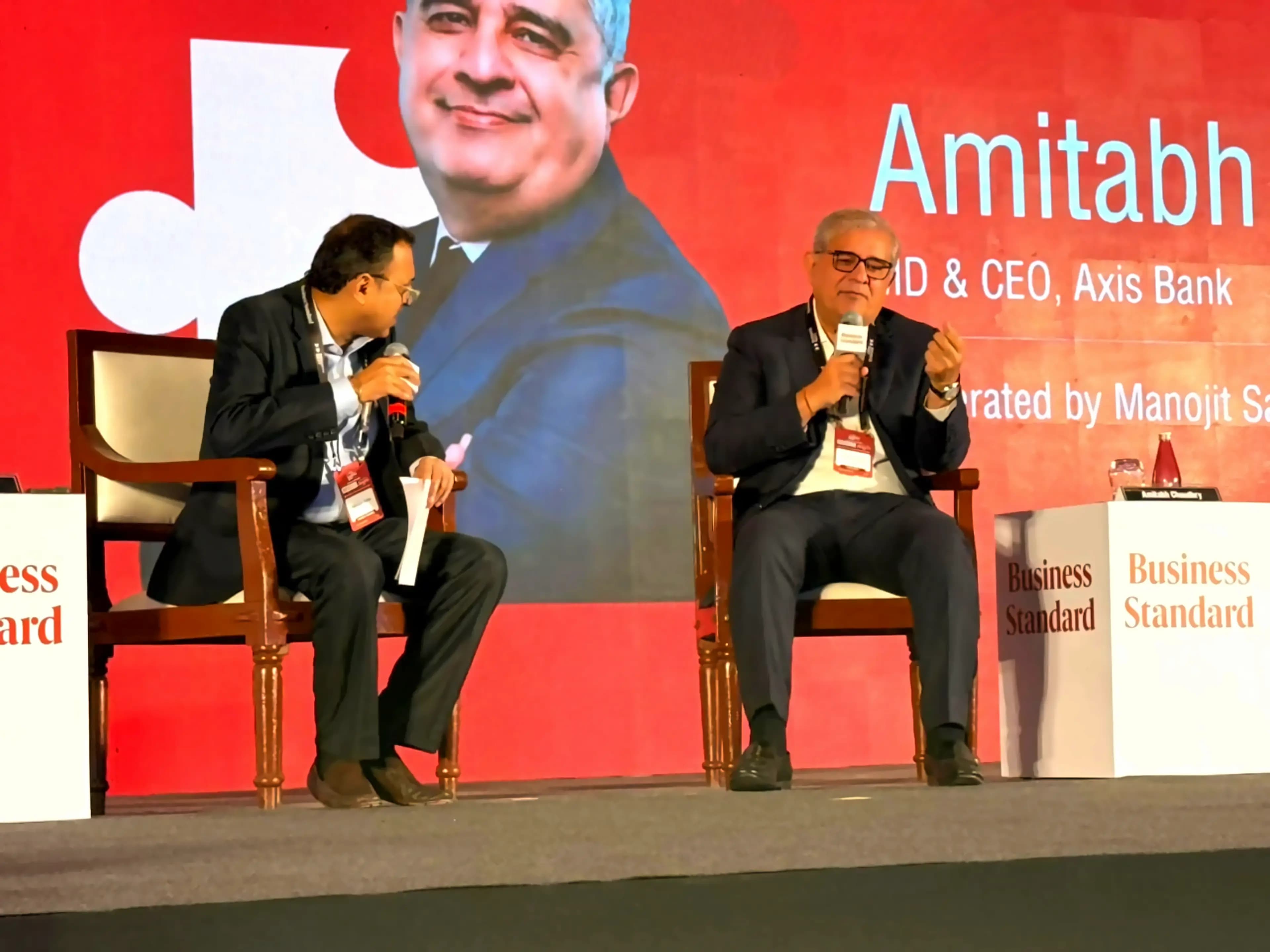
India's banking sector is entering a more challenging phase as tighter liquidity, rising deposit costs, and expectations of higher interest rates put pressure on lenders, even as credit demand remains strong, according to Axis Bank CEO Amitabh Chaudhry at the Business Standard BFSI Insight Summit 2026. Banks had initially expected liquidity conditions to remain comfortable for a couple of quarters following inflows of around $14.3 billion through the foreign currency non-resident (FCNR) deposit scheme, but the Reserve Bank of India subsequently absorbed some of the excess liquidity, pushing up incremental deposit rates. Chaudhry warned that higher deposit rates could increase banks' funding costs, while rising borrowing costs could affect credit demand and repayment capacity. The market has already started reacting, with city rates increasing and corporates demanding higher rates on non-retail term deposits.
Chaudhry expects credit growth to ease in the second half as the favourable base effect from the first half fades, though several structural factors will continue supporting lending across the economy. Longer working capital cycles, higher inventory requirements, and increased costs of purchasing goods are raising businesses' financing needs, while infrastructure investment and demand for project finance could provide further support. The expansion of banking services into underserved areas offers scope for additional lending, with Chaudhry noting that retail lending is expected to grow faster than wholesale lending over the next 18-24 months, provided risks remain manageable. However, he cautioned that higher interest rates could temporarily weigh on overall credit growth. Despite strong credit expansion, Chaudhry believes the Indian banking system is better placed to withstand asset quality stress than during the previous high-growth lending cycle, with capital levels around 500 basis points higher and provision coverage ratios rising from 40-45% to 70-75% at most banks.
Despite strong credit expansion, Chaudhry believes the Indian banking system is better placed to withstand asset quality stress than during the previous high-growth lending cycle. Capital levels are around 500 basis points higher than during the earlier cycle, while provision coverage ratios have risen from around 40-45% to 70-75% at most banks. Greater information-sharing and improved monitoring have made it harder for lenders to delay recognising deteriorating loans, with the expected introduction of new expected credit loss (ECL) norms from April further strengthening this approach. Chaudhry emphasized that managing risk is the biggest skill in the banking system and stressed the need to balance growth ambitions with emerging vulnerabilities. The current credit growth cycle is very different from the past, with four or five major differences including more broad-based growth, better capitalization, improved underwriting through greater data availability, and stronger credit-risk frameworks.