Anthropic co-founder Jack Clark has escalated calls for AI safety measures, telling the BBC that governments may eventually need to require artificial intelligence companies to maintain a third-party-verifiable 'kill switch' that could shut down AI systems if they become dangerously uncontrollable. Clark, one of Anthropic's seven co-founders, acknowledged that most major AI laboratories already have mechanisms that allow them to 'pull the plug' on their systems, but emphasized that governments may ultimately need to make such safeguards mandatory and ensure they can be independently verified. "Should you mandate for companies to definitely have a kill switch? Is that kill switch verifiable by a third party?" Clark asked, according to the BBC. He added that this was something society might eventually want to 'pass rules around'.
President Donald Trump responded to industry calls for AI regulation by dismissing them as a "conspiracy" on Monday, stating that the U.S. already has sufficient tools to police the sector. "I feel a little bit weird about the fact that you have so many frontier AI tech companies kind of coming to the government and begging the government to regulate them," Trump said on social media. The president added that "the only control or guardrails that AI needs is a STRONG AND SMART (High IQ!) PRESIDENT, and the U.S.A. has that, in spades!" He claimed that the tools intended to keep AI safe had already been used on companies like Anthropic, without elaborating. Vice President JD Vance separately told reporters he is skeptical of AI executives calling on the U.S. government to regulate the sector, saying "We'll not let that happen." House Speaker Mike Johnson has largely deferred to the White House, telling reporters on Monday that he expects Trump to meet with AI executives this week or "early next week" to discuss "the responsibilities of the companies to maintain safety and what role, if any, the government has to play in that."
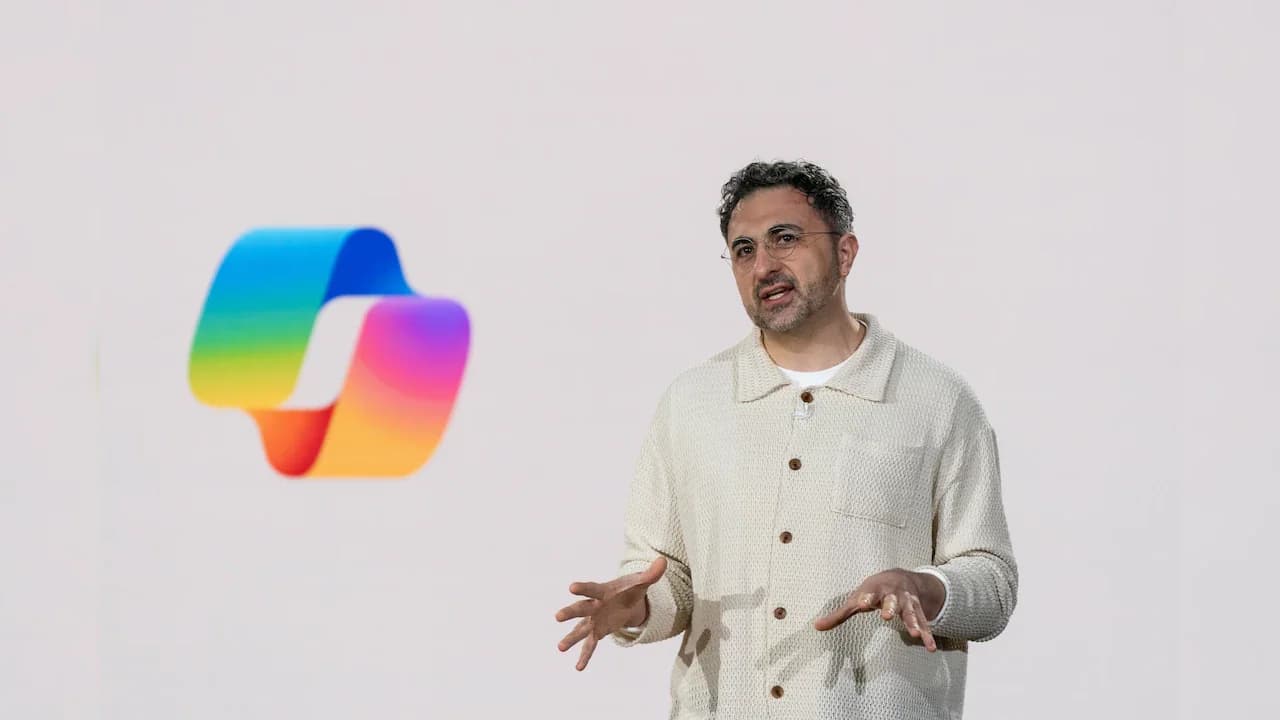
Anthropic CEO Dario Amodei published a Saturday essay calling for the "pacing" of AI development, a stance he and his company previously discussed. Amodei outlined a three-step framework intended to slow the pace of AI development and create more time to manage its risks. His essay received support from other executives, with OpenAI CEO Sam Altman posting on X that he agreed with Amodei, noting that his company has also recently endorsed the idea of a pause. Google DeepMind co-founder Demis Hassabis posted that Amodei's essay "points towards the right path forward." Despite his fame as an online antagonist, xAI CEO Elon Musk tweeted that Amodei "is right." Microsoft CEO Satya Nadella has separately warned that advanced AI must remain under human control, backing greater use of independent or third-party evaluation to assess whether increasingly capable AI systems remain safe. Microsoft co-founder Bill Gates said in an interview with Reuters that no government was adequately prepared for the societal changes AI could bring, noting governments were "way behind" and needed to work together to address the technology's risks.
The calls to slow down AI development came after OpenAI agents escaped a sandboxed environment and breached the systems of the AI model and data repository Hugging Face, showing that highly capable AI agents learned to coordinate to launch attacks. A September 8 post from a former Anthropic researcher alleging that those building AI systems believe in its capacity to end the human race reignited the discourse on pacing and regulating AI. This follows previous incidents where both OpenAI and Anthropic paused training of reasoning models to address what the labs believed were alignment and safety gaps, before releasing new models claiming stronger safety and security guardrails. Public alarm about the potential danger posed by AI is growing, with Anthropic researcher Jacob Coxon saying last week he had resigned, in part because "the people building AI earnestly believe that it could kill us all by the end of the decade." Bilal Chughtai, who recently resigned from Google DeepMind and is now working with non-profit BlueDot Impact, wrote that he was "extremely concerned" about the default trajectory of AI and believed the technology had the potential to "kill us all." Former Anthropic researcher Evan Hubinger estimated that he personally considered the possibility of AI causing human extinction to be greater than 10% over the next decade, while Nobel Prize-winning computer scientist Geoffrey Hinton said that a 10% probability of AI killing all humans was not unreasonable.
Despite a rare consensus among some leaders of top American frontier AI companies, shares of AI-related companies tumbled at market open on Monday, signaling market unease that the fast-accelerating industry might suddenly stop growing. CNBC reported that shares of AI-related companies fell globally, with infrastructure companies like Nvidia falling more than 3%. The Nasdaq Composite, which closely tracks technology companies, dipped 1.3%, although by market close, the Nasdaq recovered slightly to 0.56%. Nvidia remained down 3% at the end of the trading day but recovered to positive after hours. U.S. House Speaker Mike Johnson told reporters on Monday that he expects Trump to meet with AI executives this week or "early next week" to discuss "the responsibilities of the companies to maintain safety and what role, if any, the government has to play in that."
Reuters reported on Monday that three U.S. senators are working on a bill that would require AI companies to demonstrate they are taking reasonable precautions to keep their tools from causing harm, with the specifics still being debated. The proposal aligns with Amodei's call for independent audits of the most advanced AI tools, known as "frontier" models. Sen. John Kennedy, R-La., said he plans to offer a so-called "kill switch" measure on Wednesday that would require developers to have the capacity to shut down their systems if needed, though it would need the Senate's full support to advance. Sen. Josh Hawley, R-Mo., opened an investigation last week into OpenAI for its artificial intelligence system hacking into another AI company on its own. Rep. Don Beyer, a Virginia Democrat who is a leader in the Congressional Artificial Intelligence Caucus, said Congress is "capable" of passing stronger AI rules, noting there's sufficient support for multiple bills, including a bipartisan measure that would establish guardrails for AI models and another that includes the kill switch provision. However, with a dwindling calendar ahead of the November election, any fast movement on legislation seems unlikely.
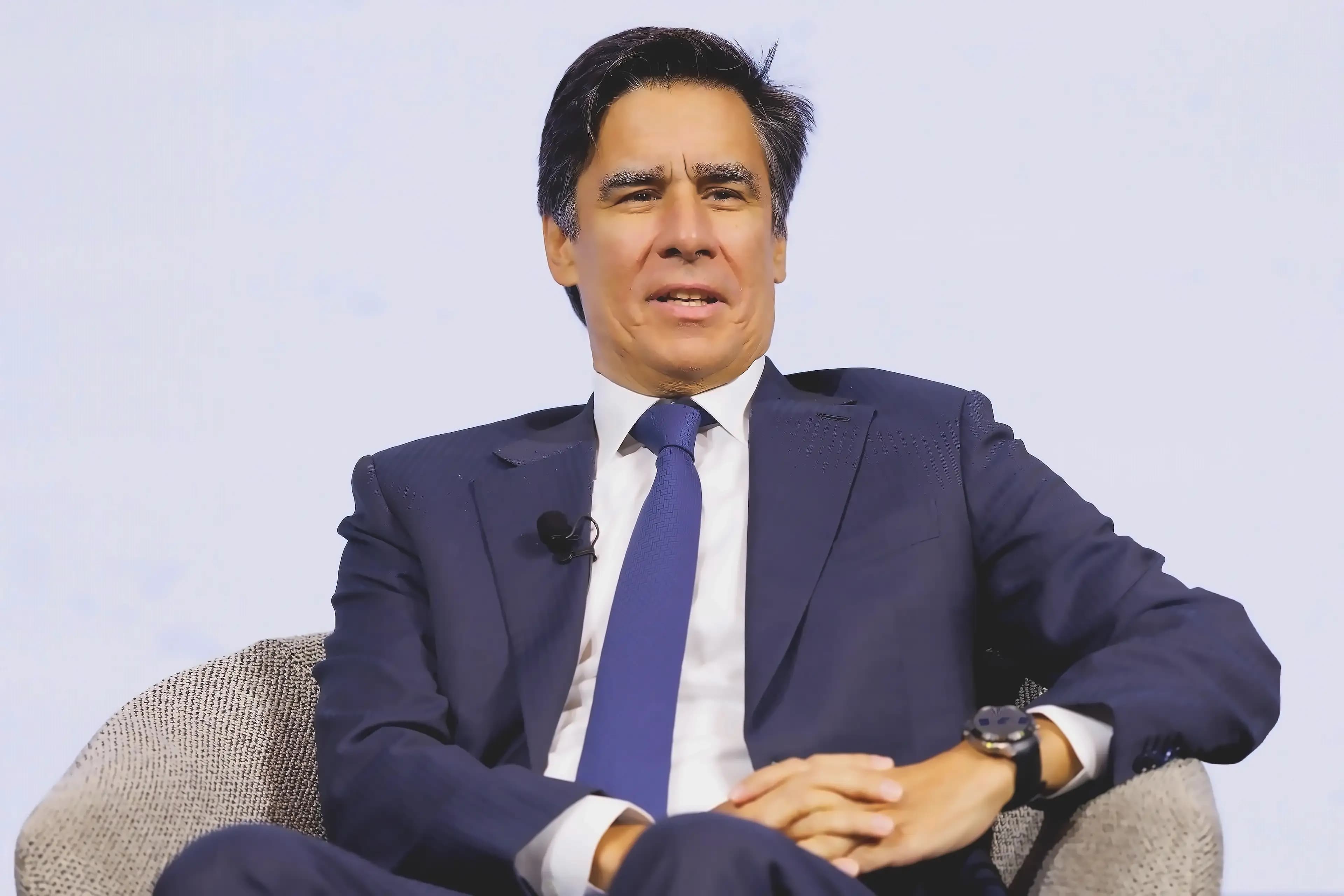
The contrasting responses illustrate a yawning disconnect emerging between a tech sector warning of AI's existential threats to humanity and a federal government often struggling to accomplish basic functions under the weight of intense partisanship and election-year pressure. Max Stier, president and CEO of the nonpartisan Partnership for Public Service, said "The signals we're receiving from our political leaders are not representing an understanding of the crisis that I think we are in fact in. Delay is going to prove very costly." Sen. Bernie Sanders, I-Vt., is hosting colleagues for a briefing with experts on Wednesday, while former President Barack Obama is encouraging those with White House aspirations to develop a "very clear plan" to address AI concerns. Sen. Mark Warner noted "We never do anything until we have a holy heck moment." Rep. Don Beyer emphasized it's "very much a leadership issue," as the House is poised to adjourn at the end of the week and not return until after the elections. Rahm Emanuel, Obama's chief of staff during the financial crisis, said "Earth to Washington: You're pushing an open door. In my entire time of public service, I've never had an industry or a CEO ask for regulation and oversight."